Top 15 in Politics & Social Sciences
Week of August 31, 2026

by Bob Woodward
In Obama’s Wars, Bob Woodward provides the most intimate and sweeping portrait yet of the young president as commander in chief. Drawing on internal memos, classified documents, meeting notes and hundreds of hours of interviews with most of the key players, including the president, Woodward tells the inside story of Obama making the critical decisions on the Afghanistan War, the secret campaign in Pakistan and the worldwide fight against terrorism. At the core of Obama’s Wars is the unsettled division between the civilian leadership in the White House and the United States military as the president is thwarted in his efforts to craft an exit plan for the Afghanistan War. “So what’s my option?” the president asked his war cabinet, seeking alternatives to the Afghanistan commander’s request for 40,000 more troops in late 2009. “You have essentially given me one option. ...It’s unacceptable.” “Well,” Secretary of Defense Robert Gates finally said, “Mr. President, I think we owe you that option.” It never came. An untamed Vice President Joe Biden pushes relentlessly to limit the military mission and avoid another Vietnam. The vice president frantically sent half a dozen handwritten memos by secure fax to Obama on the eve of the final troop decision. President Obama’s ordering a surge of 30,000 troops and pledging to start withdrawing U.S. forces by July 2011 did not end the skirmishing. General David Petraeus, the new Afghanistan commander, thinks time can be added to the clock i

by Clair Wills
Where previous histories of Ireland in the war years have focused on high politics, That Neutral Island mines deeper layers of experience. Stories, letters, and diaries illuminate this small country as it suffered rationing, censorship, the threat of invasion, and a strange detachment from the war.

by Sasha Issenberg
Journalist Sash Issenberg traces sushi's journey from Tokyo street snack to global delicacy, in this fascinating history. Issenberg examines not just the foodstuff itself, but the history, economics and businesses behind the famous fish recipes. It covers topics including the birth of modern sushi, the mysterious underworld of pirates and the tuna black market, Nobu Matsuhisa and what sushi chefs really do behind the bar. It jumps from Mediterranean docks to tuna-auctions to cargo holds to Shanghai streets, all the while making a surprising case against eating local.

by Gananath Obeyesekere
In this radical reexamination of the notion of cannibalism, Gananath Obeyesekere offers a fascinating and convincing argument that cannibalism is mostly "cannibal talk," a discourse on the Other engaged in by both indigenous peoples and colonial intruders that results in sometimes funny and sometimes deadly cultural misunderstandings. Turning his keen intelligence to Polynesian societies in the early periods of European contact and colonization, Obeyesekere deconstructs Western eyewitness accounts, carefully examining their origins and treating them as a species of fiction writing and seamen's yarns. Cannibalism is less a social or cultural fact than a mythic representation of European writing that reflects much more the realities of European societies and their fascination with the practice of cannibalism, he argues. And while very limited forms of cannibalism might have occurred in Polynesian societies, they were largely in connection with human sacrifice and carried out by a select community in well-defined sacramental rituals. Cannibal Talk considers how the colonial intrusion produced a complex self-fulfilling prophecy whereby the fantasy of cannibalism became a reality as natives on occasion began to eat both Europeans and their own enemies in acts of "conspicuous anthropophagy."

by Max J. Skidmore
What exactly has Bill Clinton been doing since he left office? What can he expect to accomplish? What have his predecessors in his position done? Many presidents have had enormous impacts on the course of history after their terms ended, but not until After the White House by Max J. Skidmore has their role been examined. Thirty-two completed their terms. Four became presidential candidates again (one was even elected), two served in Congress, one abandoned his country to accept election to the Confederate Congress, one became Chief Justice, and one has the unique distinction of having his First Lady become a United States senator. Former presidents almost always remain influential, but their post-term activities have received little attention or scrutiny until now.

by Pippa Norris
The belief that religion was dying became the conventional wisdom in the social sciences during most of the 20th century. However, religion has not disappeared and is unlikely to do so, and the secularization thesis needs updating. This text develops a theory of secularization and existential security.

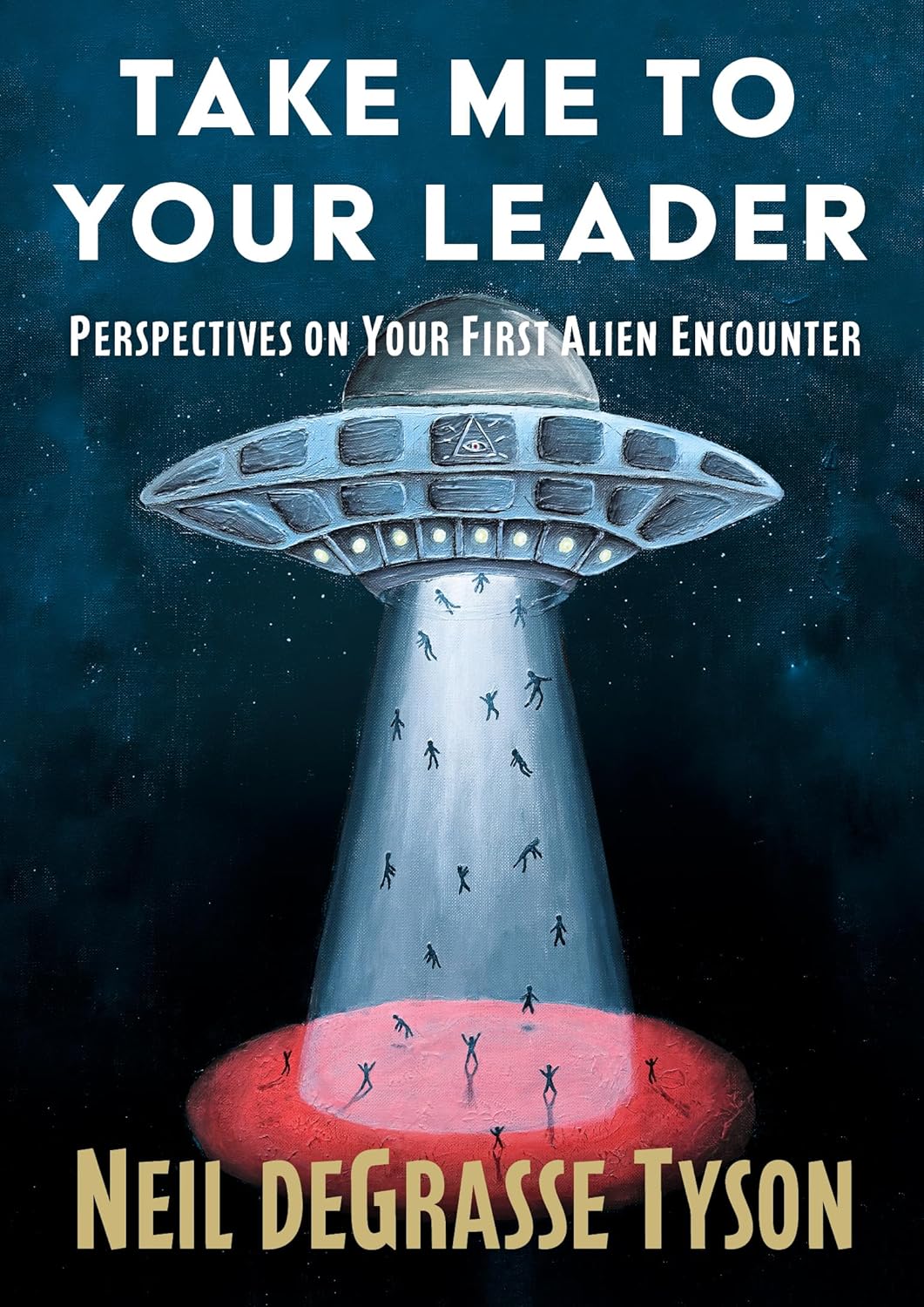
by Neil deGrasse Tyson
The culmination of a lifetime of fascination and speculation, Tyson applies the universal laws of physics to make the case for what aliens might look like, act like, how they might travel, what they might think. Should such an event occur, Tyson offers useful etiquettte tips for your first close encounter.
by Leslie A White
Provides information on the anthropology of modern capitalism. Drawing out on classic formulations of social organization, cultural evolution, and the relationship between technology, ecology, and culture, this work traces an expanse of history from the earliest forms of capitalism to the inner workings of contemporary democratic institutions

by Ellen Seiter
Based on four years of experience teaching computers to 8-12 year olds, media scholar Ellen Seiter offers parents and educators practical advice on what children need to know about the Internet and when they need to know it. The Internet Playground argues that, contrary to the promises of technology boosters, teaching with computers is very difficult. Seiter points out that the Internet today resembles a mall more than it does a library. While children love to play online games, join fan communities, and use online chat and instant messaging, the Internet is also an appallingly aggressive marketer to children and, as this book passionately argues, an educational boondoggle.

by Helen Thomas
White House journalist for more than five decades chronicles her work covering all of the presidents since John F. Kennedy. Shares personal reminiscences of the U.S. leaders as well as of the first ladies. Bestseller.

by Sŭng-ho Kwŏn
This important new study argues that an historical analysis of the labour-management policies of the Korean family conglomerates, or chaebol, is essential for a complete understanding of the dynamics of South Korean industrial relations. Focusing on the labour-management strategies of the Hyundai Business Group, the book offers a new perspective on the Asian 'tiger' economy.

by A. L. Dallapiccola
Hindu myths have been adapted over the centuries to incorporate new or revised characters, and they continue to play a central role in modern Indian life. Retold here in their colorful and dramatic splendor, the Hindu myths touch on the key narrative themes of creation, preservation, destruction, delusion, and the bestowal of grace.
by Eddie S. Glaude Jr.
The New York Times bestselling author of Begin Again confronts America’s unfinished story in this blistering reassessment of race, freedom, and the myths that bind us. “A thoughtful, insightful, beautifully written book that is timely and welcomed in these perilous times.”—Bryan Stevenson, #1 New York Times bestselling author of Just Mercy “Eddie S. Glaude Jr. opens a necessary conversation as we reflect on the meaning of our country’s 250th anniversary.”—Annette Gordon-Reed, Pulitzer Prize– and National Book Award–winning author of The Hemingses of Monticello Celebrated public intellectual Eddie S. Glaude, Jr. presents a groundbreaking analysis of the vicious cycles of American history and the country’s enduring refusal to face its true nature—especially at the moments when national anniversaries steer us back toward the mythology meant to disguise the truth. America, U.S.A., deliberately formulated and beautifully written, details a heart-wrenching exploration of America’s legacy. It is a magnificently complex combination of lessons and voices—from W.E.B. DuBois and John Dos Passos to Herman Melville and Martin Luther King, Jr.—that, together, paint a sprawling and honest tableau of the United States, its complicated past, and ever more tenuous future. Glaude’s is a powerful voice of conscience in our tumultuous world. He pulls no punches, calling on us to interrogate our conceptions of innocence and freedom and the stories we tell ourselves about our past and present. Centered around the major celebrations of America’s milestone birthdays across 250 years of history, the book offers a riveting look at the battles over who has a stake in writing the American story. Devastatingly candid, profoundly moving, and deeply reflective, America, U.S.A. is a shining meditation on how we must reckon with a grim past in order to strive for the better angels of our future.

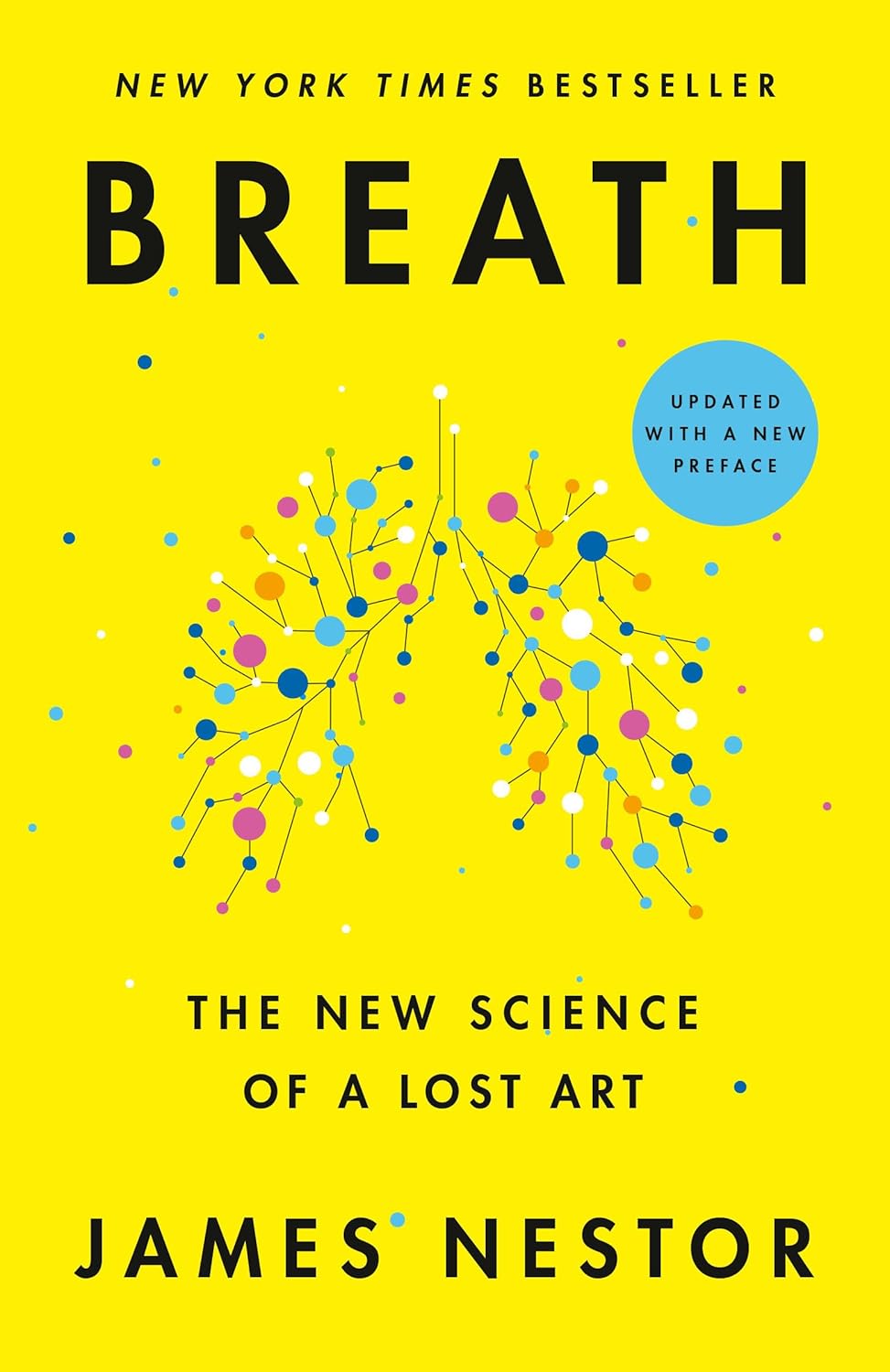
by James Nestor
NOW IN PAPERBACK – THE MILLION COPY NEW YORK TIMES BESTSELLER, FEATURING NEW MATERIAL "I highly recommend this book." —Wim Hof “A fascinating scientific, cultural, spiritual and evolutionary history of the way humans breathe—and how we’ve all been doing it wrong for a long, long time.” —Elizabeth Gilbert "This book is amazing. “ —Joe Rogan No matter what you eat, how much you exercise, how skinny or young or wise you are, none of it matters if you’re not breathing properly. There is nothing more essential to our health and well-being than breathing: take air in, let it out, repeat twenty-five thousand times a day. Yet, as a species, humans have lost the ability to breathe correctly, with grave consequences. Journalist James Nestor travels the world to figure out what went wrong and how to fix it. The answers aren’t found in pulmonology labs, as we might expect, but in the muddy digs of ancient burial sites, secret Soviet facilities, New Jersey choir schools, and the smoggy streets of São Paulo. Nestor tracks down men and women exploring the hidden science behind ancient breathing practices like Pranayama, Sudarshan Kriya, and Tummo and teams up with pulmonary tinkerers to scientifically test long-held beliefs about how we breathe. Modern research is showing us that making even slight adjustments to the way we inhale and exhale can jump-start athletic performance; rejuvenate internal organs; halt snoring, asthma, and autoimmune disease; and even straighten scoliotic spines. None of this should be possible, and yet it is. Drawing on thousands of years of medical texts and recent cutting-edge studies in pulmonology, psychology, biochemistry, and human physiology, Breath turns the conventional wisdom of what we thought we knew about our most basic biological function on its head. You will never breathe the same again.