Autobiography
Top 15 in Autobiography
Week of September 21, 2026
Top 15 in Autobiography
Week of September 21, 2026

by Jeannette Walls
The child of an alcoholic father and an eccentric artist mother discusses her family's nomadic upbringing, during which she and her siblings fended for themselves while their parents outmaneuvered bill collectors and the authorities.

by Carl Reiner
The award-winning actor and director recalls the major events in his life through a series of short stories, including "Sidney Bechet and His Jazz Band Meet Franz Kafka" and "Mary Tyler Moore Made Me Quake."

by Bunnie Xo
From the trailer parks of Vegas to the mansions of Nashville, Bunnie Xo has lived a lot of lives and seen the darkest sides of humanity. Her memoir, Stripped Down: Unfiltered and Unapologetic, is cold, clear evidence that no one is irredeemable. With a heavy dose of humor and a refreshing sense of self-awareness, Bunnie pulls no punches as she shares her journey of redemption while offering some homespun wisdom to those who need a little saving themselves. Alisa DeFord, known to her millions of fans as Bunnie Xo, started at the bottom and spent the first part of her life falling even deeper. Now, Bunnie Xo is one of today's most successful podcasters and has paved her way through the entertainment industry as the owner of Dumb Blonde Productions, building an empire with heart and personality at the forefront. Stripped Down is the story of how Bunnie Xo rose to the top, how she used her own wiles to reach her goals, how she knew redemption was up to her--and that no one could hand it to her--and a message to anyone who needs advice on breaking their own cycles. Hilarious, earnest, thought-provoking, and occasionally downright shocking, Stripped Down is a modern-day rag-to-riches story and a message of hope to anyone struggling to redeem themselves.

by John D. Barbour
In Versions of Deconversion John Barbour examines the work of a broad selection of authors in order to discover the reasons for their loss of faith and to analyze the ways in which they have interpreted that loss. For some the experience of deconversion led to another religious faith, some turned to atheism or agnosticism, and others used deconversion as a metaphor or analogy to interpret an experience of personal transformation. The loss of faith is closely related to such vital ethical and theological concerns as the role of conscience, the assessment of religious communities, the dialectical relationship between faith and doubt, and the struggle to reconcile faith with intellectual and moral integrity. This book shows the persistence and the vitality of the theme of deconversion in autobiography, and it demonstrates how the literary form and structure of autobiography are shaped by ethical critique and religious reflection. Versions of Deconversion should appeal at once to scholars in the fields of religious studies and theology who are concerned with narrative texts, to literary critics and specialists on autobiography, and to a wider audience interested in the ethical and religious significance of autobiography.

by Kathleen Hart
Here for the first time is a book devoted exclusively to the topic of women's autobiography in nineteenth-century France. Tracing the rise of autobiography in relation to women's domestic confinement, Kathleen Hart demonstrates how Flora Tristan, George Sand, and Louise Michel transformed the genre. Inspired by Romantic socialism, each of these remarkable autobiographers links the story of her personal development to socio-historic change. In the wake of the 1830 Revolution, Tristan chronicles social unrest as she relates her progressive transformation into humanity's "Woman Guide" in Peregrinations of a Pariah (1838). Writing in the aftermath of the 1848 Revolution, Sand consolidates her role as a mediator between the rich and the poor in Story of My Life (1854). A legend of the 1871 Paris Commune, Michel establishes herself as the poet and prophet of a mythical Revolution yet to come in her Memoirs (1886). Exploring the dynamic interplay between revolution and feminist acts of self-affirmation, Revolution and Women's Autobiography in Nineteenth-Century France will appeal to scholars of history, French culture, literature, and women's studies.

by Margaret Morganroth Gullette
Reveals that aging doesn't start in our chromosomes, but in midlife downsizing, the erosion of workplace seniority, threats to Social Security, or media portrayals of "aging Xers" and "greedy" Baby Boomers. To combat the forces aging us prematurely, Gullette invites us to change our attitudes, our life storytelling, and our society. An impassioned manifesto against the pernicious ideologies that steal hope from every stage of our lives. [publisher web site].

by Helen Thomas
White House journalist for more than five decades chronicles her work covering all of the presidents since John F. Kennedy. Shares personal reminiscences of the U.S. leaders as well as of the first ladies. Bestseller.

by Jennette McCurdy
A memoir by American former actress and singer Jennette McCurdy about her career as a child actress and her difficult relationship with her abusive mother who died in 2013

by 増田小夜
Home to the New York Yankees, the Bronx Zoo, and the Grand Concourse, the Bronx was at one time a haven for upwardly mobile second-generation immigrants eager to leave the crowded tenements of Manhattan in pursuit of the American dream. Once hailed as a "wonder borough" of beautiful homes, parks, and universities, the Bronx became--during the 1960s and 1970s--a national symbol of urban deterioration. Thriving neighborhoods that had long been home to generations of families dissolved under waves of arson, crime, and housing abandonment, turning blocks of apartment buildings into gutted, graffiti-covered shells and empty, trash-filled lots. In this revealing history of the Bronx, Evelyn Gonzalez describes how the once-infamous New York City borough underwent one of the most successful and inspiring community revivals in American history. From its earliest beginnings as a loose cluster of commuter villages to its current status as a densely populated home for New York's growing and increasingly more diverse African American and Hispanic populations, this book shows how the Bronx interacted with and was affected by the rest of New York City as it grew from a small colony on the tip of Manhattan into a sprawling metropolis. This is the story of the clattering of elevated subways and the cacophony of crowded neighborhoods, the heady optimism of industrial progress and the despair of economic recession, and the vibrancy of ethnic cultures and the resilience of local grassroots coali

by Edward Abbey
An account of the author's experiences, observations, and reflections as a seasonal park ranger in southeast Utah.

by Larry McMurtry
In a prolific life of singular literary achievement, Larry McMurtry has succeeded in a variety of genres: in coming-of-age novels likeThe Last Picture Show; in collections of essays likeIn a Narrow Grave; and in the reinvention of the Western on a grand scale in his Pulitzer Prize-winning novel,Lonesome Dove. Now, inBooks: A Memoir, McMurtry writes about his endless passion for books: as a boy growing up in a largely "bookless" world; as a young man devouring the vastness of literature with astonishing energy; as a fledgling writer and family man; and above all, as one of America's most prominent bookmen. He takes us on his journey to becoming an astute, adventurous book scout and collector who would eventually open stores of rare and collectible editions in Georgetown, Houston, and finally, in his previously "bookless" hometown of Archer City, Texas. In this work of extraordinary charm, grace, and good humor, McMurtry recounts his life as both a reader and a writer, how the countless books he has read worked to form his literary tastes, while giving us a lively look at the eccentrics who collect, sell, or simply lust after rare volumes.Books: A Memoiris like the best kind of diary -- full of McMurtry's wonderful anecdotes, amazing characters, engaging gossip, and shrewd observations about authors, book people, literature, and the author himself. At once chatty, revealing, and deeply satisfying, Books is, like McMurtry, erudite, life loving, and filled with excellent stories.

by Ann Cvetkovich
Ann Cvetkovich combines memoir and cultural critique in search of ways of writing about depression as a public cultural and political phenomenon rather than as a personal medical pathology.
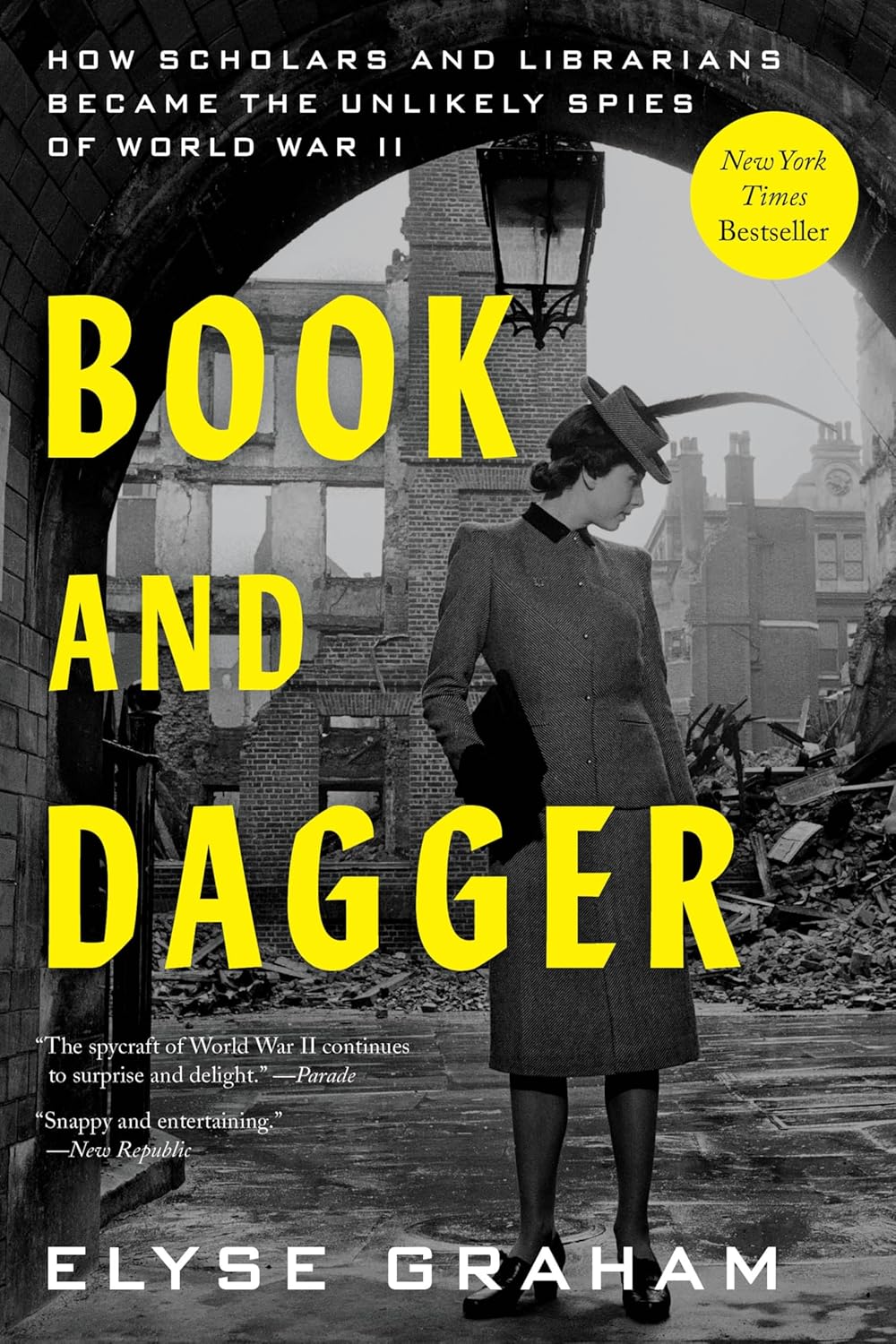
by Elyse Graham
The untold story of the academics who became OSS spies, invented modern spycraft, and helped turn the tide of the war At the start of WWII, the U.S. found itself in desperate need of an intelligence agency. The Office of Strategic Services (OSS), a precursor to today's CIA, was quickly formed--and, in an effort to fill its ranks with experts, the OSS turned to academia for recruits. Suddenly, literature professors, librarians, and historians were training to perform undercover operations and investigative work--and these surprising spies would go on to profoundly shape both the course of the war and our cultural institutions with their efforts. In Book and Dagger, Elyse Graham draws on personal histories, letters, and declassified OSS files to tell the story of a small but connected group of humanities scholars turned spies. Among them are Joseph Curtiss, a literature professor who hunted down German spies and turned them into double agents; Sherman Kent, a smart-mouthed history professor who rose to become the head of analysis for all of Europe and Africa; and Adele Kibre, an archivist who was sent to Stockholm to secretly acquire documents for the OSS. These unforgettable characters would ultimately help lay the foundations of modern intelligence and transform American higher education when they returned after the war. Thrillingly paced and rigorously researched, Book and Dagger is an inspiring and gripping true story about a group of academics who helped beat the Nazis--a tale that reveals the indelible power of the humanities to change the world.

by Adam Carolla
Carolla's comedic gospel of modern America rips into the absurdity of the culture that made Steve Miller a rock star, demonized the peanut butter-and-jelly sandwich, and put its citizens at the mercy of a bunch of minimum-wagers with axes to grind.

by Jeannette Walls
Now a major motion picture from Lionsgate starring Brie Larson, Woody Harrelson, and Naomi Watts. MORE THAN SEVEN YEARS ON THE NEW YORK TIMES BESTSELLER LIST The perennially bestselling, extraordinary, one-of-a-kind, “nothing short of spectacular” (Entertainment Weekly) memoir from one of the world’s most gifted storytellers. The Glass Castle is a remarkable memoir of resilience and redemption, and a revelatory look into a family at once deeply dysfunctional and uniquely vibrant. When sober, Jeannette’s brilliant and charismatic father captured his children’s imagination, teaching them physics, geology, and how to embrace life fearlessly. But when he drank, he was dishonest and destructive. Her mother was a free spirit who abhorred the idea of domesticity and didn’t want the responsibility of raising a family. The Walls children learned to take care of themselves. They fed, clothed, and protected one another, and eventually found their way to New York. Their parents followed them, choosing to be homeless even as their children prospered. The Glass Castle is truly astonishing—a memoir permeated by the intense love of a peculiar but loyal family.