Top 15 in Business
Week of October 26, 2026

by Sharaf Sabri
In the evolutionary process of Saudi Arabia, the period beginning with the seventies marked by the 'oil revolution' can be described as the turning point. With this began a phase of consolidation and institutionalisation of the royal government. One important development having bearing on its nation building project has been the participation of the Royal Family members in economic activities of the country. Since the seventies, over the last three decades, it is clearly visible that the engagement of the Saudi Royal Family in economy and business has grown not only in volume but in form also. This study has attemped to look at the sprawling business activities of the Royal Family members, not merely as a profile but relate it to the evolutionary context. The first major study that examines the gradual process of emerging entrepreneurship in the Saudi Royal Family. It highlights the role of the royal entrepreneurs in the development of the Saudi private sector. The study shows that their investments have created a positive climate for the growth of entrepreneurship, especially productive entrepreneurship, on the Saudi business scene. An indispensable store-house of detailed account of the investments made by more that 600 royal members, including princesses in 1050 Saudi companies. Supported with 28 pages of index and 14 tables, this data-packed book is a bonanza for businessmen, diplomats, laymen, and all those interested in Saudi Arabia and its Royal Family. A must-have boo

by John Fraser Hart
Few Americans know much about contemporary farming, which has evolved dramatically over the past few decades. In The Changing Scale of American Agriculture, the award-winning geographer and landscape historian John Fraser Hart describes the transformation of farming from the mid-twentieth century, when small family farms were still viable, to the present, when a farm must sell at least $250,000 of farm products each year to provide an acceptable level of living for a family. The increased scale of agriculture has outmoded the Jeffersonian ideal of small, self-sufficient farms. In the past farmers kept a variety of livestock and grew several crops, but modern family farms have become highly specialized in producing a single type of livestock or one or two crops. As farms have become larger and more specialized, their number has declined. Hart contends that modern family farms need to become integrated into tightly orchestrated food-supply chains in order to thrive, and these complex new organizations of large-scale production require managerial skills of the highest order. According to Hart, this trend is not only inevitable, but it is beneficial, because it produces the food American consumers want to buy at prices they can afford. Although Hart provides the statistics and clear analysis such a study requires, his book focuses on interviews with farmers: those who have shifted from mixed crop-and-livestock farming to cash-grain farming in the Midwest agricultural heartland; b

by Paul F. J. Eagles
This report tells how to ensure that tourism follows a sustainable path and that it contributes to the sustainable management of protected areas. Guidelines are presented to help readers understand protected area tourism and its management, and practical suggestions are based on theory and practice from around the world. Coverage includes biodiversity and conservation, planning for protected area tourism, culturally sensitive design and operation, visitor management, and human resources. There is no subject index. Eagles teaches at the University of Waterloo, Canada. Annotation copyrighted by Book News, Inc., Portland, OR.

by Thomas A. Bass
The author of The Eudaemonic Pie now reveals the inspiration, motivations, and aspirations of the world's greatest scientists. The scientists interviewed in this collection have changed the rules of the game--altered our perception of reality and the language used to describe it.
by Peter G. Northouse
The Fourth Edition of Peter G. Northouse’s bestselling Introduction to Leadership: Concepts and Practice provides readers with a clear overview of the complexities of practicing leadership and concrete strategies for becoming better leaders. The text is organized around key leader responsibilities such as creating a vision, establishing a constructive climate, listening to outgroup members, and overcoming obstacles. Three interactive components in every chapter—self-assessment questionnaires, observational exercises, and reflection and action worksheets—get readers actively involved in applying leadership concepts to their own lives. Grounded in leadership theory and the latest research, the fully updated, highly practical Fourth Edition includes a new chapter on how leaders can embrace diversity and inclusion, as well as new material on the dark side of leadership and a new ethical leadership style questionnaire.

by Chris Voss, Tahl Raz
A former international hostage negotiator for the FBI offers a new, field-tested approach to high-stakes negotiations—whether in the boardroom or at home. After a stint policing the rough streets of Kansas City, Missouri, Chris Voss joined the FBI, where his career as a hostage negotiator brought him face-to-face with a range of criminals, including bank robbers and terrorists. Reaching the pinnacle of his profession, he became the FBI’s lead international kidnapping negotiator. Never Split the Difference takes you inside the world of high-stakes negotiations and into Voss’s head, revealing the skills that helped him and his colleagues succeed where it mattered most: saving lives. In this practical guide, he shares the nine effective principles—counterintuitive tactics and strategies—you too can use to become more persuasive in both your professional and personal life. Life is a series of negotiations you should be prepared for: buying a car, negotiating a salary, buying a home, renegotiating rent, deliberating with your partner. Taking emotional intelligence and intuition to the next level, Never Split the Difference gives you the competitive edge in any discussion.

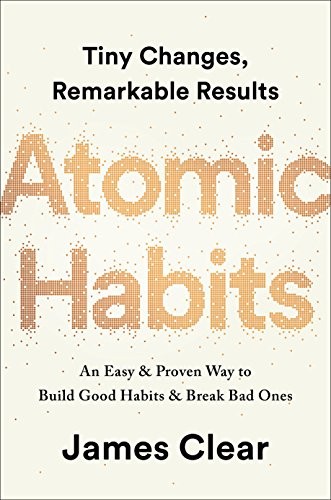
by James Clear
The #1 New York Times bestseller. Over 25 million copies sold! Translated into 60+ languages! Tiny Changes, Remarkable Results No matter your goals, Atomic Habits offers a proven framework for improving--every day. James Clear, one of the world's leading experts on habit formation, reveals practical strategies that will teach you exactly how to form good habits, break bad ones, and master the tiny behaviors that lead to remarkable results. If you're having trouble changing your habits, the problem isn't you. The problem is your system. Bad habits repeat themselves again and again not because you don't want to change, but because you have the wrong system for change. You do not rise to the level of your goals. You fall to the level of your systems. Here, you'll get a proven system that can take you to new heights...
by Benoit Daviron
Can developing countries trade their way out of poverty? International trade has grown dramatically in the last two decades in the global economy, and trade is an important source of revenue in developing countries. Yet, many low-income countries have been producing and exporting tropical commodities for a long time. They are still poor. This book is a major analytical contribution to understanding commodity production and trade, as well as putting forward policy-relevant suggestions for ‘solving’ the commodity problem. Through the study of the global value chain for coffee, the authors recast the ‘development problem’ for countries relying on commodity exports in entirely new ways. They do so by analysing the so-called coffee paradox – the coexistence of a ‘coffee boom’ in consuming countries and of a ‘coffee crisis’ in producing countries. New consumption patterns have emerged with the growing importance of specialty, fair trade and other ‘sustainable’ coffees. In consuming countries, coffee has become a fashionable drink and coffee bar chains have expanded rapidly. At the same time, international coffee prices have fallen dramatically and producers receive the lowest prices in decades. This book shows that the coffee paradox exists because what farmers sell and what consumers buy are becoming increasingly ‘different’ coffees. It is not material quality that contemporary coffee consumers pay for, but mostly symbolic quality and in-person services. As long as coffee farmers

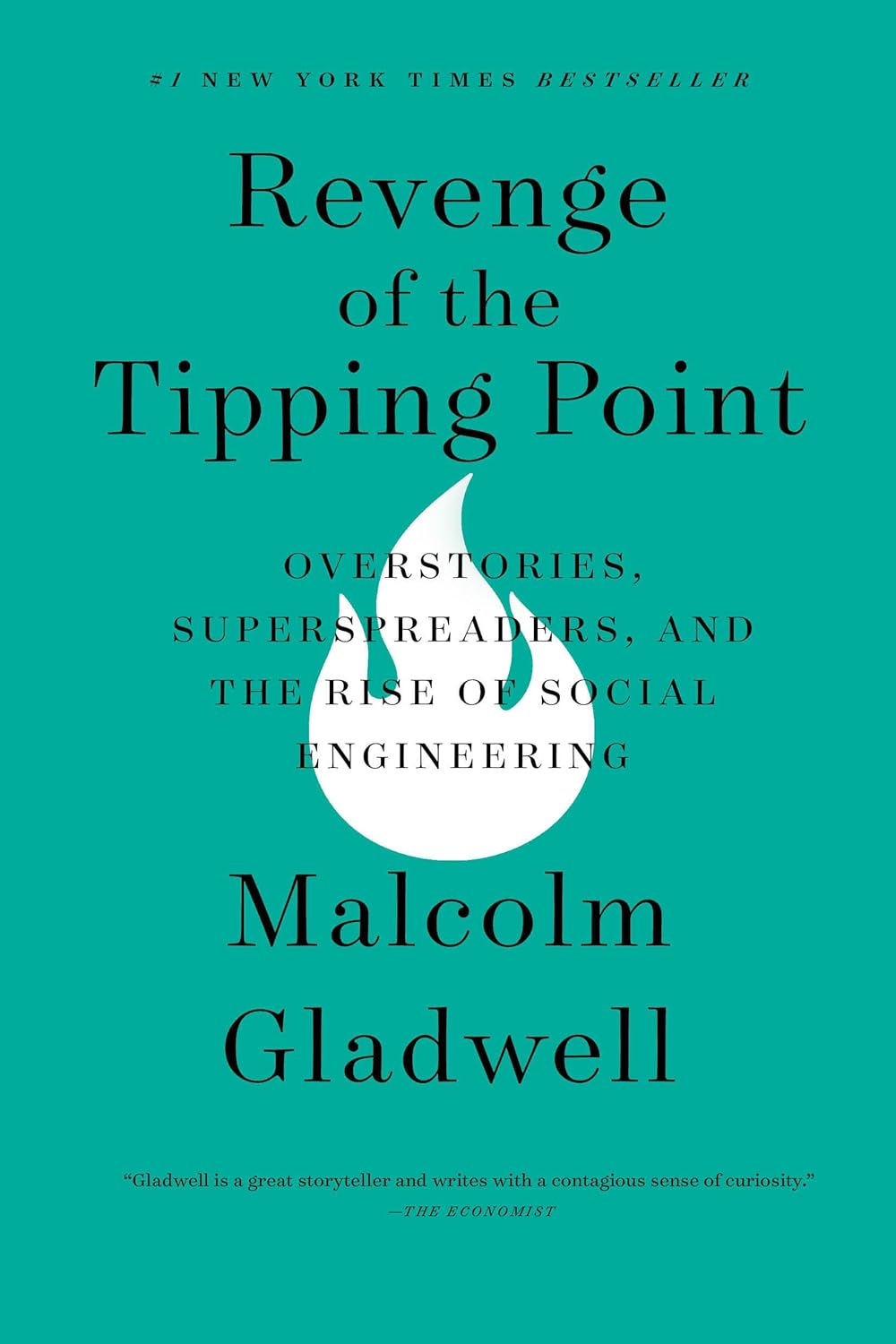
by Malcolm Gladwell
Twenty-five years after the publication of his groundbreaking first book, Malcolm Gladwell returns with "curiosity and humor" in this New York Times bestseller that reframes the lessons of The Tipping Point in a startling and revealing light (Shannon Carlin). Why is Miami...Miami? What does the heartbreaking fate of the cheetah tell us about the way we raise our children? Why do Ivy League schools care so much about sports? What is the Magic Third, and what does it mean for racial harmony? In this provocative new work, Malcolm Gladwell returns for the first time in twenty-five years to the subject of social epidemics and tipping points, this time with the aim of explaining the dark side of contagious phenomena. Through a series of riveting stories, Gladwell traces the rise of a new and troubling form of social engineering. He takes us to the streets of Los Angeles to meet the world's most successful bank robbers, rediscovers a forgotten television show from the 1970s that changed the world, visits the site of a historic experiment on a tiny cul-de-sac in northern California, and offers an alternate history of two of the biggest epidemics of our day: COVID and the opioid crisis. Revenge of the Tipping Point is Gladwell's most personal book yet. With his characteristic mix of storytelling and social science, he offers a guide to making sense of the contagions of modern world. It's time we took tipping points seriously. Most Anticipated in: AARP| Associated Press| Time Magazine | Oprah Daily | Chicago Tribune | Literary Hub | Publishers Weekly | Publishers Lunch
by Claude M. Bristol
"One of the greatest inspirational and motivational books ever written." — Norman Vincent Peale In this bestselling self-help book, a successful businessman reveals the secrets behind harnessing the unlimited energies of the subconscious. Millions of readers have benefited from these visualization techniques, which show you how to turn your thoughts and dreams into actions that can lead to enhanced income, happier relationships, increased effectiveness, heightened influence, and improved peace of mind. World War I veteran Claude M. Bristol (1891–1951) wrote The Magic of Believing to help former soldiers adjust to civilian life. A pioneer of the New Thought movement and a popular motivational speaker, Bristol addressed those in all walks of life, from politicians and leaders to performers and salespeople. His timeless message of the powers of focused thinking and self-affirmation remains a vital source of inspiration and a practical path to achievement.
by Warren G. Bennis
Uncovers the elements of creative collaboration by examining six of the century's most extraordinary groups and distill their successful practices into lessons that virtually any organization can learn and commit to in order to transform its own management into a collaborative and successful group of leaders. Paper. DLC: Organizational effectiveness - Case studies.

by Tom Kelley
IDEO, the widely admired, award-winning design and development firm that brought the world the Apple mouse, Polaroid's I-Zone instant camera, the Palm V, and hundreds of other cutting-edge products and services, reveals its secrets for fostering a culture and process of continuous innovation. There isn't a business in America that doesn't want to be more creative in its thinking, products, and processes. At many companies, being first with a concept and first to market are critical just to survive. In The Art of Innovation, Tom Kelley, general manager of the Silicon Valley based design firm IDEO, takes readers behind the scenes of this wildly imaginative and energized company to reveal the strategies and secrets it uses to turn out hit after hit. IDEO doesn't buy into the myth of the lone genius working away in isolation, waiting for great ideas to strike. Kelley believes everyone can be creative, and the goal at his firm is to tap into that wellspring of creativity in order to make innovation a way of life. How does it do that? IDEO fosters an atmosphere conducive to freely expressing ideas, breaking the rules, and freeing people to design their own work environments. IDEO's focus on teamwork generates countless breakthroughs, fueled by the constant give-and-take among people ready to share ideas and reap the benefits of the group process. IDEO has created an intense, quick-turnaround, brainstorm-and-build process dubbed "the Deep Dive." In entertaining anecdotes, Kelley ill

by Chip Heath
#1 NEW YORK TIMES BESTSELLER • ONE MILLION COPIES SOLD! The ultimate guide to making changes and following through, from the authors of Made to Stick and Decisive—hailed as “witty and instructive” (The Wall Street Journal), “packed with examples and hands-on tools that will get you moving right away” (BusinessWeek) Why is it so hard to make lasting changes in our companies, in our communities, and in our own lives? The primary obstacle is a conflict that's built into our brains, say Chip and Dan Heath. Psychologists have discovered that our minds are ruled by two different systems—the rational mind and the emotional mind—that compete for control. The rational mind wants a great beach body; the emotional mind wants that Oreo cookie. The rational mind wants to change something at work; the emotional mind loves the comfort of the existing routine. This tension can doom a change effort—but if it is overcome, change can come quickly. In Switch, the Heaths show how everyday people—employees and managers, parents and nurses—have united both minds and, as a result, achieved dramatic results: • the lowly medical interns who managed to defeat an entrenched, decades-old medical practice that was endangering patients • the home-organizing guru who developed a simple technique for overcoming the dread of housekeeping • the manager who transformed a lackadaisical customer-support team into service zealots by removing a standard tool of customer service In a compelling, story-driven narrati
by Janet V. Denhardt
The New Public Service: Serving, not Steering provides a framework for the many voices calling for the reaffirmation of democratic values, citizenship, and service in the public interest. It is organized around a set of seven core principles: (1) serve citizens, not customers; (2) seek the public interest; (3) value citizenship and public service above entrepreneurship; (4) think strategically, act democratically; (5) recognize that accountability isn’t simple; (6) serve, rather than steer; and (7) value people, not just productivity. The New Public Service asks us to think carefully and critically about what public service is, why it is important, and what values ought to guide what we do and how we do it. It celebrates what is distinctive, important, and meaningful about public service and considers how we might better live up to those ideals and values. The revised fourth edition includes a new chapter that examines how the role and significance of these New Public Service values have expanded in practice and research over the past 15 years. Although the debate about governance will surely continue for many years, this compact, clearly written volume both provides an important framework for a public service based on citizen discourse and the public interest and demonstrates how these values have been put into practice. It is essential reading fo students and serious practitioners in public administration and public policy.

by Philip M. Parker
He presents evidence that long-run growth can be attributed to variances in hypothalmic activity."--BOOK JACKET.