
Top 15 in Politics & Social Sciences
by Jean Bodin
Contains four chapters from Jean Bodin's classic text "Six Livres de la Republique". These chapters form the core of the work, detailing Bodin's theory of sovereignty, which contended that the entire power of the state should be vested in a single individual or group.

The Instant New York Times Bestseller "Pollan’s real genius—the word is not too strong—remains intact. That is his uncanny ability to scent the direction in which the culture is headed. He did it with food and psychedelics, and now, though A World Appears focuses on AI only intermittently, he has done it again." —Charles Finch, The Atlantic From the #1 New York Times bestselling author of How to Change Your Mind, a panoptic exploration of consciousness—what it is, who has it, and why—and a meditation on the essence of our humanity When it comes to the phenomenon that is consciousness, there is one point on which scientists, philosophers, and artists all agree: it feels like something to be us.

by Bob Woodward
In Obama’s Wars, Bob Woodward provides the most intimate and sweeping portrait yet of the young president as commander in chief. Drawing on internal memos, classified documents, meeting notes and hundreds of hours of interviews with most of the key players, including the president, Woodward tells the inside story of Obama making the critical decisions on the Afghanistan War, the secret campaign in Pakistan and the worldwide fight against terrorism. At the core of Obama’s Wars is the unsettled division between the civilian leadership in the White House and the United States military as the president is thwarted in his efforts to craft an exit plan for the Afghanistan War. “So what’s my option?” the president asked his war cabinet, seeking alternatives to the Afghanistan commander’s request for 40,000 more troops in late 2009. “You have essentially given me one option. ...It’s unacceptable.” “Well,” Secretary of Defense Robert Gates finally said, “Mr. President, I think we owe you that option.” It never came. An untamed Vice President Joe Biden pushes relentlessly to limit the military mission and avoid another Vietnam. The vice president frantically sent half a dozen handwritten memos by secure fax to Obama on the eve of the final troop decision. President Obama’s ordering a surge of 30,000 troops and pledging to start withdrawing U.S. forces by July 2011 did not end the skirmishing. General David Petraeus, the new Afghanistan commander, thinks time can be added to the clock i

by Clair Wills
Where previous histories of Ireland in the war years have focused on high politics, That Neutral Island mines deeper layers of experience. Stories, letters, and diaries illuminate this small country as it suffered rationing, censorship, the threat of invasion, and a strange detachment from the war.
When war broke out in Europe in 1914, it surprised a European population enjoying the most beautiful summer in memory. For nearly a century since, historians have debated the causes of the war. Some have cited the assassination of Archduke Franz Ferdinand; others have concluded it was unavoidable. In Europe’s Last Summer, David Fromkin provides a different answer: hostilities were commenced deliberately. In a riveting re-creation of the run-up to war, Fromkin shows how German generals, seeing war as inevitable, manipulated events to precipitate a conflict waged on their own terms. Moving deftly between diplomats, generals, and rulers across Europe, he makes the complex diplomatic negotiations accessible and immediate. Examining the actions of individuals amid larger historical forces, this is a gripping historical narrative and a dramatic reassessment of a key moment in the twentieth-century.

by Sŭng-ho Kwŏn
This important new study argues that an historical analysis of the labour-management policies of the Korean family conglomerates, or chaebol, is essential for a complete understanding of the dynamics of South Korean industrial relations. Focusing on the labour-management strategies of the Hyundai Business Group, the book offers a new perspective on the Asian 'tiger' economy.

by Pippa Norris
The belief that religion was dying became the conventional wisdom in the social sciences during most of the 20th century. However, religion has not disappeared and is unlikely to do so, and the secularization thesis needs updating. This text develops a theory of secularization and existential security.

A respected economist shares a collection of his columns from "The New York Times" that analyzes the course of the American economy, looking at the collapse of fiscal responsibility, corporate scandals, and how the nation can get back on track.

Journalist Sash Issenberg traces sushi's journey from Tokyo street snack to global delicacy, in this fascinating history. Issenberg examines not just the foodstuff itself, but the history, economics and businesses behind the famous fish recipes. It covers topics including the birth of modern sushi, the mysterious underworld of pirates and the tuna black market, Nobu Matsuhisa and what sushi chefs really do behind the bar. It jumps from Mediterranean docks to tuna-auctions to cargo holds to Shanghai streets, all the while making a surprising case against eating local.

A renowned Washington, D.C.-based psychoanalyst examines George W. Bush's public persona and asks serious questions about whether he's fit for the office he holds.

What exactly has Bill Clinton been doing since he left office? What can he expect to accomplish? What have his predecessors in his position done? Many presidents have had enormous impacts on the course of history after their terms ended, but not until After the White House by Max J. Skidmore has their role been examined. Thirty-two completed their terms. Four became presidential candidates again (one was even elected), two served in Congress, one abandoned his country to accept election to the Confederate Congress, one became Chief Justice, and one has the unique distinction of having his First Lady become a United States senator. Former presidents almost always remain influential, but their post-term activities have received little attention or scrutiny until now.
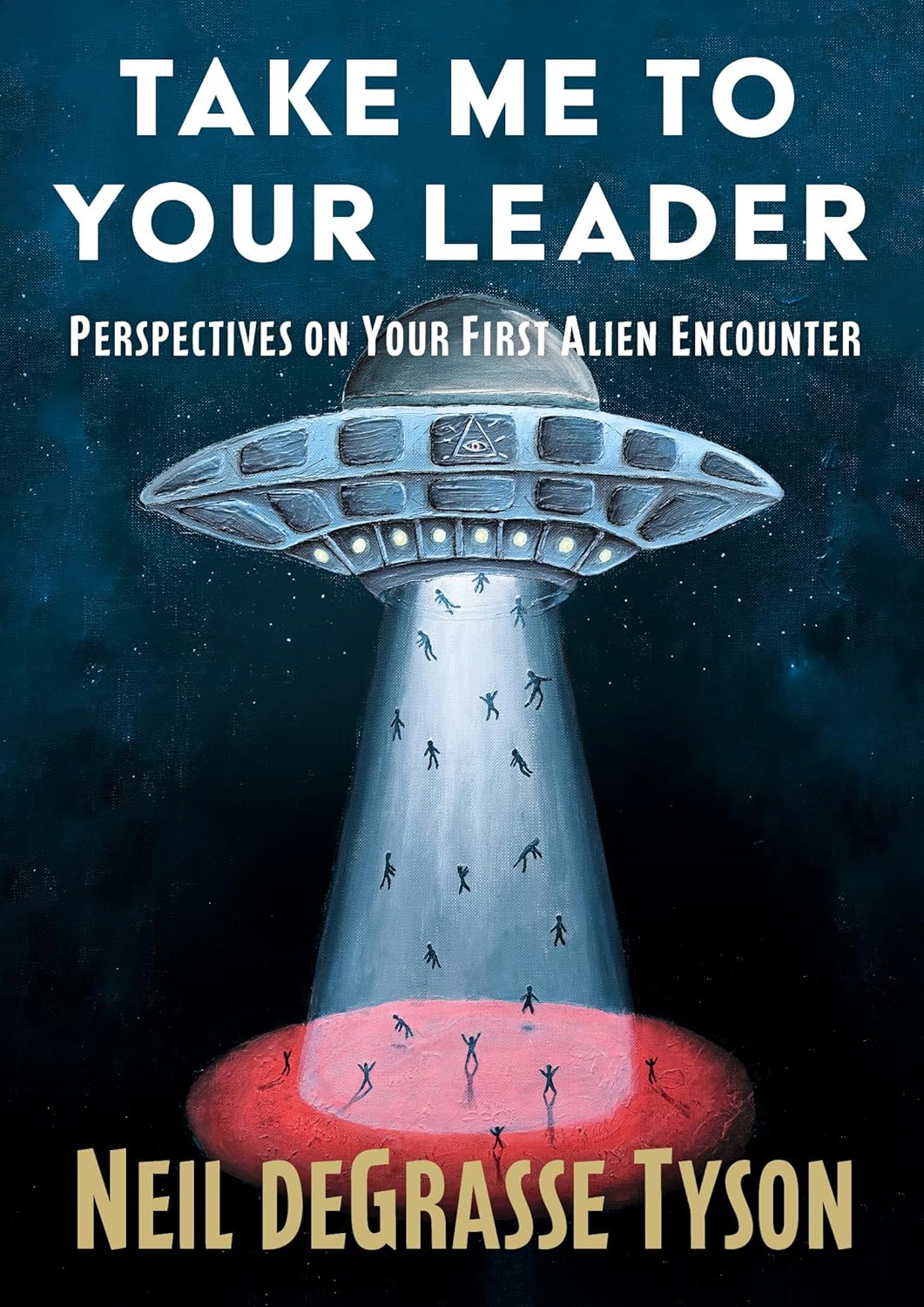
The culmination of a lifetime of fascination and speculation, Tyson applies the universal laws of physics to make the case for what aliens might look like, act like, how they might travel, what they might think. Should such an event occur, Tyson offers useful etiquettte tips for your first close encounter.
The New York Times bestselling author of Begin Again confronts America’s unfinished story in this blistering reassessment of race, freedom, and the myths that bind us. “A thoughtful, insightful, beautifully written book that is timely and welcomed in these perilous times.”—Bryan Stevenson, #1 New York Times bestselling author of Just Mercy “Eddie S. Glaude Jr. opens a necessary conversation as we reflect on the meaning of our country’s 250th anniversary.”—Annette Gordon-Reed, Pulitzer Prize– and National Book Award–winning author of The Hemingses of Monticello Celebrated public intellectual Eddie S. Glaude, Jr. presents a groundbreaking analysis of the vicious cycles of American history and the country’s enduring refusal to face its true nature—especially at the moments when national anniversaries steer us back toward the mythology meant to disguise the truth. America, U.S.A., deliberately formulated and beautifully written, details a heart-wrenching exploration of America’s legacy. It is a magnificently complex combination of lessons and voices—from W.E.B. DuBois and John Dos Passos to Herman Melville and Martin Luther King, Jr.—that, together, paint a sprawling and honest tableau of the United States, its complicated past, and ever more tenuous future. Glaude’s is a powerful voice of conscience in our tumultuous world. He pulls no punches, calling on us to interrogate our conceptions of innocence and freedom and the stories we tell ourselves about our past and present. Centered around the major celebrations of America’s milestone birthdays across 250 years of history, the book offers a riveting look at the battles over who has a stake in writing the American story. Devastatingly candid, profoundly moving, and deeply reflective, America, U.S.A. is a shining meditation on how we must reckon with a grim past in order to strive for the better angels of our future.

Annotation Michael Dillon challenges the dominant paradigm on which the theory of international relations is based. Looking back and considering Greek tragedy and the ideas of Heidegger, he offers us insights into how we understand security and insecurity.
