Autobiography
Top 15 in Autobiography
Week of June 15, 2026
Top 15 in Autobiography
Week of June 15, 2026
by Lena Dunham
In this rowdy, frank reflection on illness, fame, sex, and everything in between, the remarkable mind behind the hit series Girls and the bestselling author of Not That Kind of Girl asks whether fulfilling her creative ambitions has been worth the pain. For the last decade, as she’s spent countless hours in doctor’s waiting rooms searching for diagnoses, treatments, and relief, being the owner and operator of Lena Dunham’s body has felt, as she puts it, “like towing a wrecked car across town at midnight.” It’s not easy dragging a wrecked car anywhere, much less to the Met Gala while sewn into a gold lamé corset. Or to the set of the hit show that you—as a twenty-five-year-old—are writing, directing, producing, and starring in. Or to the White House, the Golden Globes, or your publicist’s office to discuss the latest internet disaster

by Langston Hughes
This book chronicles the life of Hughes, who came of age early in the 1920s in the two great playgrounds of the decade: Harlem and Paris.

by Helen Thomas
White House journalist for more than five decades chronicles her work covering all of the presidents since John F. Kennedy. Shares personal reminiscences of the U.S. leaders as well as of the first ladies. Bestseller.

by Adam Carolla
The comedian, actor, television host, podcast king, and New York Times bestselling author of President Me, Not Taco Bell Material, and In Fifty Years We’ll All Be Chicks now lays down the law on the plight of the modern parent. Parents, do you often think that if your kids had to grow up the way you did—without iPads, 70-inch flatscreen TVs, American Girl dolls, and wifi in the climate controlled minivan—that they might actually be better off? Do you feel underappreciated or ignored? Do you worry you’re raising a bunch of spoiled softies who will never know how to do anything themselves—because you do everything for them? If you answered yes to any of these questions, you need Daddy, Stop Talking. Adam rips parenthood a new one, telling it straight about what adults must do if they don’t want to have to support their kids forever. Using his own crappy childhood as a cautionary tale, and touting the pitfalls of the kind of helicopter parenting so pervasive today, Daddy, Stop Talking is the only parenting book you should ever read. Here, too, is sage advice to Adam’s own kids—and to future parents—on what matters most: dating; drinking and drugs; buying your first house and car; puberty; and what kind of assholes his kids (and yours) should avoid becoming. Even if his own son and daughter pretty much ignore everything he says, you shouldn’t. And you’re welcome. Again.

by Adam Carolla
The popular podcaster and author of the best-selling In Fifty Years We'll All Be Chicks collects new favorite rants about things that drive him crazy, sharing stories from his underdog youth that offer insight into his views and career. 100,000 first printing.

by Jeannette Walls
The child of an alcoholic father and an eccentric artist mother discusses her family's nomadic upbringing, during which she and her siblings fended for themselves while their parents outmaneuvered bill collectors and the authorities.

by Thayil Kim
The memoir by co-founding member of Soundgarden and lead guitarist Kim Thayil about one of the 1990s' signature rock bands From Soundgarden's humble beginnings manifesting grunge in Seattle's beer-soaked punk clubs to their revered status today as rock icons, the band's journey has been nothing short of extraordinary. In A Screaming Life, founding member and guitar god Kim Thayil goes backstage to introduce the band that fearlessly pushed the boundaries of rock, invented a new genre, and amassed fervent fans from every corner of the world. Thayil shares the story of how he and his Soundgarden bandmates--Hiro Yamamoto, Ben Shepherd, Matt Cameron, and Chris Cornell--faced the triumphs and challenges on the road to their meteoric rise. His storytelling channels the essence of Soundgarden's era-defining sound--one that's supercharged with raw creativity and unapologetic lyrics--and explores the ways that Soundgarden was shaped by the diverse backgrounds of its creators: Thayil's Indian heritage and founding bassist Hiro Yamamoto's Japanese background added unique dimensions to the band's identity, influencing not only their music but also their experiences in the industry. For Soundgarden fans and '90s alternative rock enthusiasts, A Screaming Life not only gives behind-the-scenes access to one of the most revered bands, but it also demonstrates the power music and its creators have to transform culture.
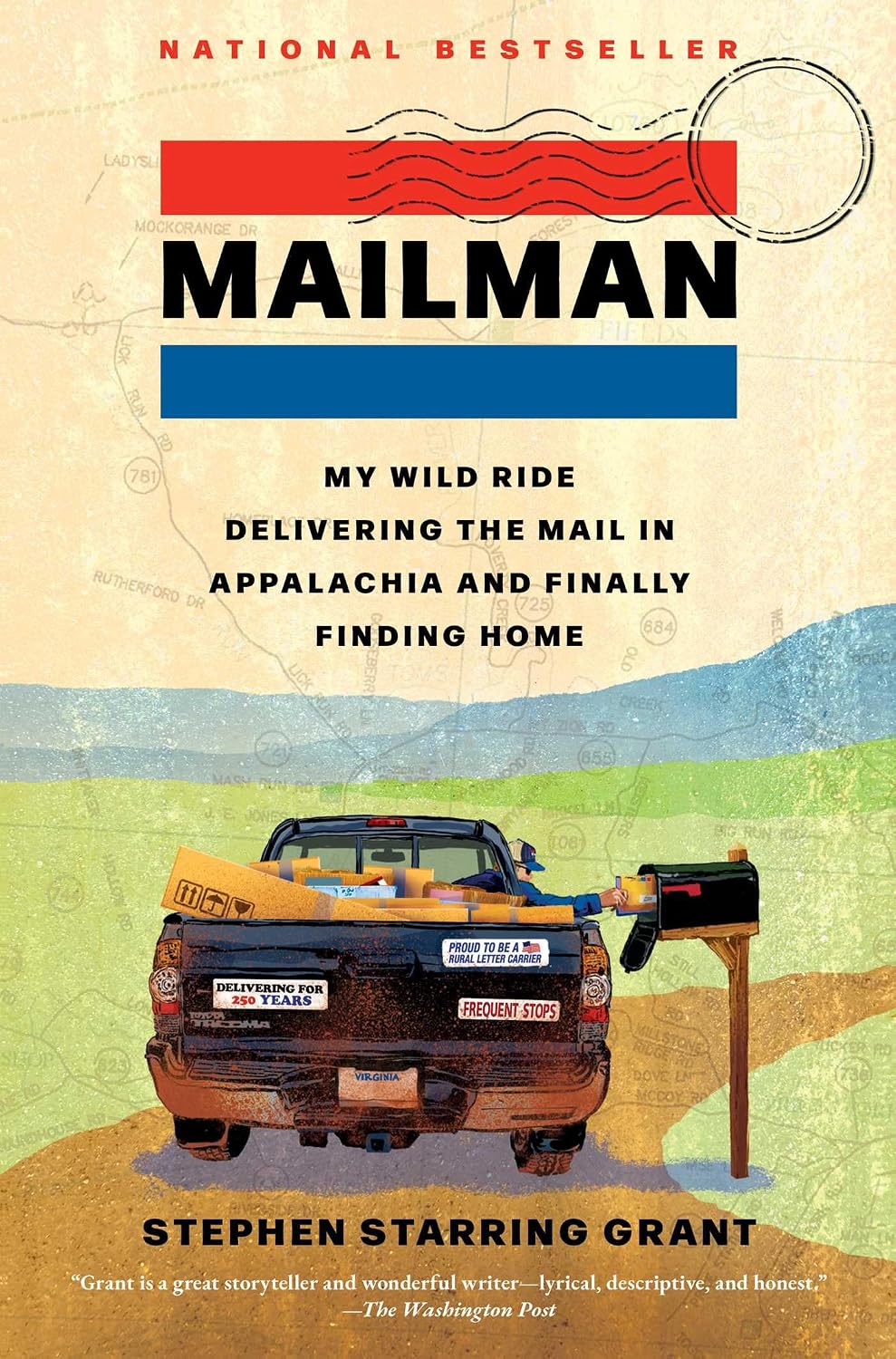
by Stephen Starring Grant
An uproarious and “utterly charming” (The Washington Post) memoir by a mailman in the Blue Ridge Mountains of Virginia, who found that working for the post office saved his life, taught him who he was, gave him purpose, and educated him deeply about a country he loves but had lost touch with. Steve Grant was laid off in March of 2020. He was fifty and had cancer, so he needed health insurance, fast. Which is how he found himself a rural letter carrier in Appalachia, back in his old hometown. Suddenly, he was the guy with the goods, delivering dog food and respirators and lube and heirloom tomato seeds and Lord of the Rings replica swords. He transported chicken feed to grandmothers living alone in the mountains and forded a creek with a refrigerator on his back. But while he carried the mail, he also carried a whole lot more than just the mail, including a family legacy of rage and the anxiety of having lost his identity along with his corporate job. And yet, slowly, surrounded by a quirky but devoted band of letter carriers, working this different kind of job, Grant found himself becoming a different kind of person. He became a lifeline for lonely people, providing fleeting moments of human contact and the assurance that our government still cares. He embraced the thrill of tackling new challenges, the pride of contributing to something greater than himself, the joy of camaraderie, and the purpose found in working hard for his family and doing a small, good thing for his community.

by Paul Auster
Nathan Glass, a middle-aged man estranged from his friends and family, returns to Brooklyn hoping to mend his broken relationships and finally deal with the ghosts of his past.

by John D. Barbour
In Versions of Deconversion John Barbour examines the work of a broad selection of authors in order to discover the reasons for their loss of faith and to analyze the ways in which they have interpreted that loss. For some the experience of deconversion led to another religious faith, some turned to atheism or agnosticism, and others used deconversion as a metaphor or analogy to interpret an experience of personal transformation. The loss of faith is closely related to such vital ethical and theological concerns as the role of conscience, the assessment of religious communities, the dialectical relationship between faith and doubt, and the struggle to reconcile faith with intellectual and moral integrity. This book shows the persistence and the vitality of the theme of deconversion in autobiography, and it demonstrates how the literary form and structure of autobiography are shaped by ethical critique and religious reflection. Versions of Deconversion should appeal at once to scholars in the fields of religious studies and theology who are concerned with narrative texts, to literary critics and specialists on autobiography, and to a wider audience interested in the ethical and religious significance of autobiography.
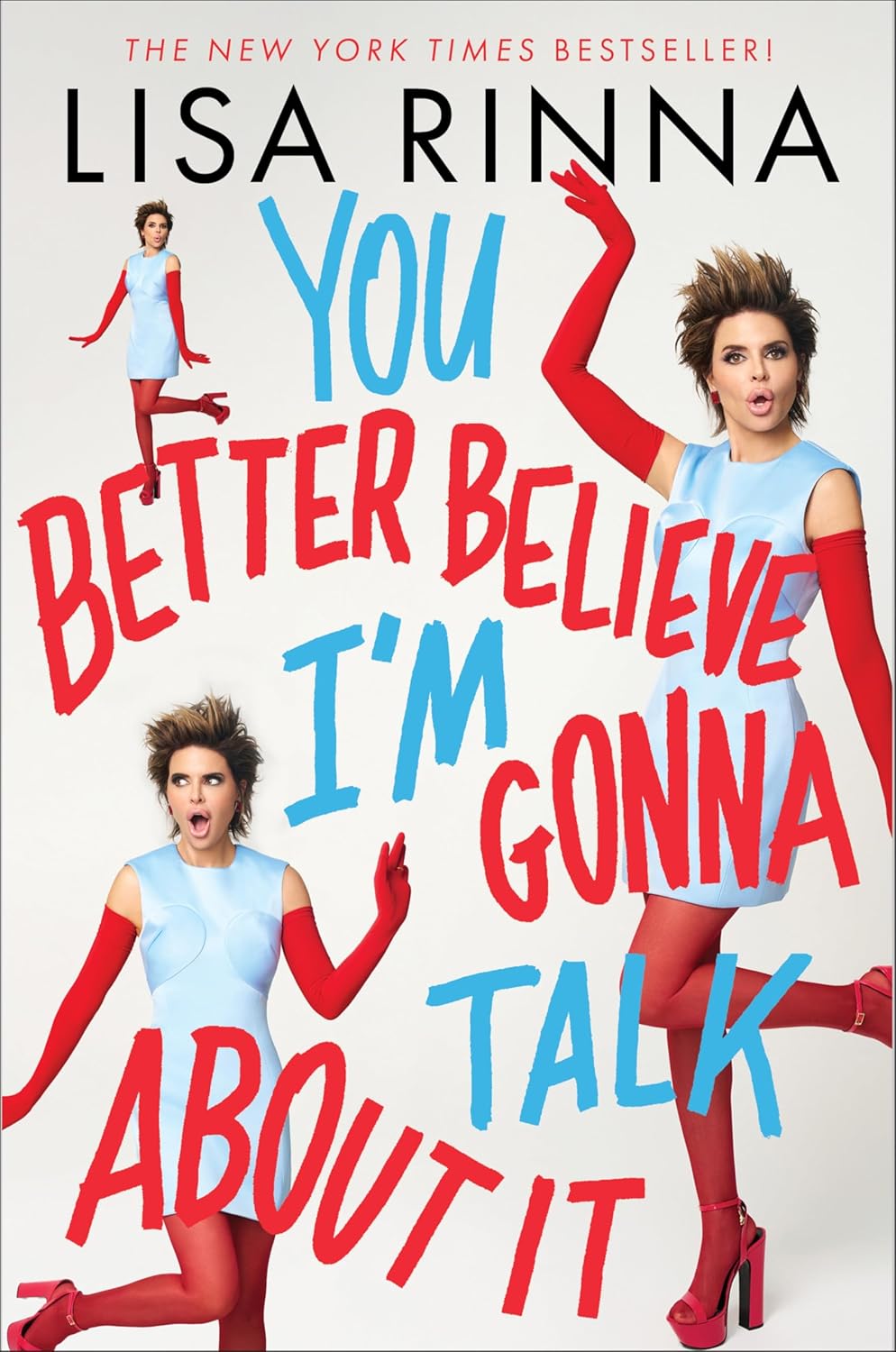
by Lisa Rinna
From the New York Times bestselling author and breakout star of The Traitors comes the first memoir from beloved actress, Housewife, and pop culture icon, Lisa Rinna. From her career, to her personal life, she's spilling ALL the tea! If she's experienced it... you better believe she's gonna talk about it! "This mouth has gotten me in so much trouble." --Lisa Rinna For decades, Lisa Rinna has been captivating audiences--whether as a soap opera icon, reality TV powerhouse, fearless social media provocateur or slaying in haute couture down the catwalks of Paris. But even though she's always said it like she means it, there's still so much more to the woman whose lips launched a thousand memes. In You Better Believe I'm Gonna Talk About It, Lisa peels back the curtain on her rollercoaster career and her unapologetic approach to life, dishing on the highs, the lows, and the "did-she-really-just-say-that?" moments that made her a household name. Yes, she's spilling all the tea from the soundstages of Days of Our Lives to the drama of The Real Housewives of Beverly Hills, but she's also opening up about what it means to grow older in an industry obsessed with youth, the lessons she's learned about reinvention, parenting a daughter with a chronic illness, keeping her well-documented marriage alive and healthy, and being forced to grieve in public after the loss of her mother and beloved Beverly Hills fan favorite, Lois. Bold, brash, refreshingly honest, and told with her signature wit and candor, You Better Believe I'm Gonna Talk About It is the story of a woman who understands that you go the furthest by playing by your own rules. It's the story of a woman who realizes aging is just a chance at a new chapter. It's the story of a Hollywood icon who refuses to let the world script her story for her. And she's owning every bit of it, baby!

by Margo V. Perkins
A study of three Black Power narratives as instruments for radical social change.

by Rob Nixon
V.S. Naipaul stands as the most lionized literary mediator between First and Third World experience and is ordinarily viewed as possessing a unique authority on the subject of cross-cultural relations in the post-colonial era. In contesting this orthodox reading of his work, Nixon argues that Naipaul is more than simply an unduly influential writer. He has become a regressive Western institution, articulating a set of values that perpetuates political interests and representational modes that have their origin in the high imperial age. Nixon uses Naipaul's travel writing to probe the core theoretical issues raised by cross-cultural representation along metropolitan-periphery lines. With reference to economic theories of dependency, he critiques the vision, popularized by Naipaul, of the post-colonial world as divided between mimic and parasitic Third World nations on the one hand and, on the other, the benignly creative societies of the West.

by Belle Burden
INSTANT #1 NEW YORK TIMES BESTSELLER • “Burden’s searing, probing memoir explores . . . what she learned about intimacy and her own spirit.”—People “A beautifully written instant classic. Strangers is gripping and heartbreaking and a must-read for every wife—and husband.”—Graydon Carter “Asks us to examine life’s most perplexing questions: Can we see the invisible fault lines in a marriage or truly know the people closest to us?”—Lori Gottlieb It was a great love story, one for the ages. The speed of our beginning and the speed of our ending felt like matching bookends. They both came out of nowhere. He wanted it, he wanted me. And then he didn’t. In March 2020, Belle Burden was safe and secure with her family at their house on Martha’s Vineyard, navigating the early days of the pandemic together—building fires in the late afternoons, drinking whisky sours, making roast chicken. Then, with no warning or explanation, her husband of twenty years announced that he was leaving her. Overnight, her caring, steady partner became a man she hardly recognized. He exited his life with her like an actor shrugging off a costume. In Strangers, Burden revisits her marriage, searching for clues that her husband was not who she always thought he was. As she examines her relationship through a new lens, she reckons with her own family history and the lessons she intuited about how a woman is expected to behave in the face of betrayal. Through all of it, she is transformed. The discreet, compliant woman she once was—someone nicknamed “Belle the Good”—gives way to someone braver, someone determined to use her voice. With unflinching honesty and profound grace, Burden charts a path through heartbreak to show the power of a woman who refuses to give up on love. Strangers is a stunning, deeply moving, compulsively readable memoir heralding the arrival of a thrilling new literary talent.

by Kathleen Hart
Here for the first time is a book devoted exclusively to the topic of women's autobiography in nineteenth-century France. Tracing the rise of autobiography in relation to women's domestic confinement, Kathleen Hart demonstrates how Flora Tristan, George Sand, and Louise Michel transformed the genre. Inspired by Romantic socialism, each of these remarkable autobiographers links the story of her personal development to socio-historic change. In the wake of the 1830 Revolution, Tristan chronicles social unrest as she relates her progressive transformation into humanity's "Woman Guide" in Peregrinations of a Pariah (1838). Writing in the aftermath of the 1848 Revolution, Sand consolidates her role as a mediator between the rich and the poor in Story of My Life (1854). A legend of the 1871 Paris Commune, Michel establishes herself as the poet and prophet of a mythical Revolution yet to come in her Memoirs (1886). Exploring the dynamic interplay between revolution and feminist acts of self-affirmation, Revolution and Women's Autobiography in Nineteenth-Century France will appeal to scholars of history, French culture, literature, and women's studies.