Top 15 in Science
Week of June 15, 2026
by Paul Robbins
An accessible, focused exploration of the field of political ecology The third edition of Political Ecology spans this sprawling field, using grounded examples and careful readings of current literature. While the study of political ecology is sometimes difficult to fathom, owing to its breadth and diversity, this resource simplifies the discussion by reducing the field down into a few core questions and arguments. These points clearly demonstrate how critical theory can make pragmatic contributions to the fields of conservation, development, and environmental management. The latest edition of this seminal work is also more closely focused, with references to recent work from around the world. Further, Political Ecology raises critical questions about “traditional” approaches to environmental questions and problems. This new edition: Includes international work in the field coming out of Europe, Latin America, and Asia Explains political ecology and its tendency to disrupt the environmental research and practice by both advancing and undermining associated fields of study Contains contributions from a wide range of diverse backgrounds and expertise Offers a resource that is written in highly-accessible, straightforward language Outlines the frontiers of the field and frames climate change and the end of population growth with the framework of political ecology An excellent resource for undergraduates and academics, the third edition of Political Ecology offers an updated edit

by Rachel Carson
Presents Rachel Carson's 1962 environmental classic "Silent Spring," which identified the dangers of indiscriminate pesticide use; and includes an introduction by biographer Linda Lear and an afterword by scientist Edward O. Wilson.
by Stephen P. Maran
When the International Astronomical Union (IAU) adopted a new definition of a "planet" in August 2006, Pluto became a dwarf planet, drawing a divisive line in science and public opinions. The controversy of whether Pluto is a planet continues years later, and passion about the decision remains, pitting scientist against scientist and invoking sentiments and nostalgia from the rest of the world. With the IAU definition, the future of space objects is forever changed. Learn how this resolution came to be and what it means for astronomy, who implemented it and who is against it, and whether it's the first or millionth time the world's view of astronomy has rotated on its axis. Written by an astronomer and educator who voted for the IAU resolution—Laurence A. Marschall—and a NASA scientist who supported the opposing petition that resulted—Stephen P. Maran—Pluto Confidential leaves no perspective out and no asteroid unturned in the Pluto debate. A telescopic look inside the book: History of planetary disputes, including why Jupiter almost wasn't acknowledged What Bode's Law is and how it has influenced observations Who discovered Pluto and how it was named The Kuiper Belt and its role in what it means to be a planet Beyond Pluto and the eight distinguished planets
by Juan M Bilbao
Peripheral nerve analysis is a challenging task for pathologists, given the advent of new diagnoses and techniques of analysis and the impact of molecular genetics. This book presents a simple, logical method for constructing a differential diagnosis based on pathology and clinical presentation. It also provides advice on the selection of ancillary molecular, immunohistochemical and genetic techniques to establish a definitive diagnosis. Clear, authoritative guidance is offered on diagnosis of the full range of neuropathies with the aid of a wealth of high-quality color photomicrographs and electron micrographs. The pathologist will benefit greatly from the identification of a variety of artifacts and normal structures occasionally encountered in nerve biopsies that need to be distinguished from specific pathologic alterations. This user-friendly, practical text will be an invaluable aid in achieving the most specific diagnosis possible.

by Timothy Snyder
#1 NEW YORK TIMES BESTSELLER • A “bracing” (Vox) guide for surviving and resisting America’s turn towards authoritarianism, from “a rising public intellectual unafraid to make bold connections between past and present” (The New York Times) “Timothy Snyder reasons with unparalleled clarity, throwing the past and future into sharp relief. He has written the rare kind of book that can be read in one sitting but will keep you coming back to help regain your bearings.”—Masha Gessen The Founding Fathers tried to protect us from the threat they knew, the tyranny that overcame ancient democracy. Today, our political order faces new threats, not unlike the totalitarianism of the twentieth century. We are no wiser than the Europeans who saw democracy yield to fascism, Nazism, or communism. Our one advantage is that we might learn from their experience. On Tyranny is a call to arms and a guide to resistance, with invaluable ideas for how we can preserve our freedoms in the uncertain years to come.

by Max Born
A Nobel Prize-winning physicist explains the historical background and scientific principles of Einstein's famous theory

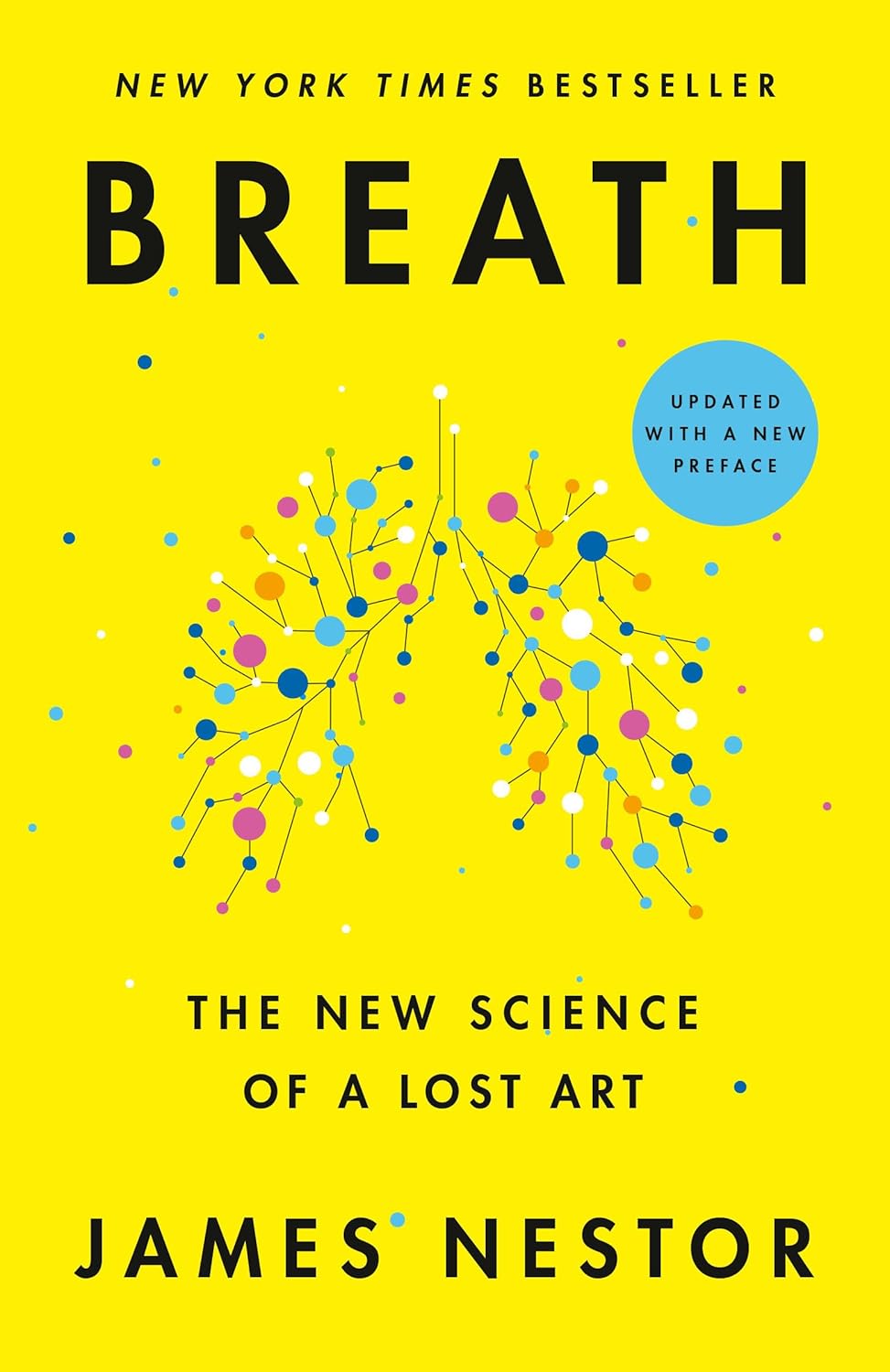
by James Nestor
NOW IN PAPERBACK – THE MILLION COPY NEW YORK TIMES BESTSELLER, FEATURING NEW MATERIAL "I highly recommend this book." —Wim Hof “A fascinating scientific, cultural, spiritual and evolutionary history of the way humans breathe—and how we’ve all been doing it wrong for a long, long time.” —Elizabeth Gilbert "This book is amazing. “ —Joe Rogan No matter what you eat, how much you exercise, how skinny or young or wise you are, none of it matters if you’re not breathing properly. There is nothing more essential to our health and well-being than breathing: take air in, let it out, repeat twenty-five thousand times a day. Yet, as a species, humans have lost the ability to breathe correctly, with grave consequences. Journalist James Nestor travels the world to figure out what went wrong and how to fix it. The answers aren’t found in pulmonology labs, as we might expect, but in the muddy digs of ancient burial sites, secret Soviet facilities, New Jersey choir schools, and the smoggy streets of São Paulo. Nestor tracks down men and women exploring the hidden science behind ancient breathing practices like Pranayama, Sudarshan Kriya, and Tummo and teams up with pulmonary tinkerers to scientifically test long-held beliefs about how we breathe. Modern research is showing us that making even slight adjustments to the way we inhale and exhale can jump-start athletic performance; rejuvenate internal organs; halt snoring, asthma, and autoimmune disease; and even straighten scoliotic spines. None of this should be possible, and yet it is. Drawing on thousands of years of medical texts and recent cutting-edge studies in pulmonology, psychology, biochemistry, and human physiology, Breath turns the conventional wisdom of what we thought we knew about our most basic biological function on its head. You will never breathe the same again.

by Hans Kuhn
Principles of Physical Chemistry, Second Edition uniquely uses simple physical models as well as rigorous treatments for understanding molecular and supramolecular systems and processes. In this way the presentation assists students in developing an intuitive understanding of the subjects as well as skill in quantitative manipulations. The unifying nature of physical chemistry is emphasized in the book by its organization - beginning with atoms and molecules, and proceeding to molecular assemblies of increasing complexity, ending with the emergence of matter that carries information, i.e. the origin of life, a physicochemical process of unique importance. The aim is to show the broad scope and coherence of physical chemistry.

by Joseph Warren Dauben
One of the greatest revolutions in mathematics occurred when Georg Cantor (1845-1918) promulgated his theory of transfinite sets. This revolution is the subject of Joseph Dauben's important studythe most thorough yet writtenof the philosopher and mathematician who was once called a "corrupter of youth" for an innovation that is now a vital component of elementary school curricula. Set theory has been widely adopted in mathematics and philosophy, but the controversy surrounding it at the turn of the century remains of great interest. Cantor's own faith in his theory was partly theological. His religious beliefs led him to expect paradoxes in any concept of the infinite, and he always retained his belief in the utter veracity of transfinite set theory. Later in his life, he was troubled by recurring attacks of severe depression. Dauben shows that these played an integral part in his understanding and defense of set theory.
by Ernst Cassirer
This provocative volume, one of the most important interpretive works on the philosophical thought of the Renaissance, has long been regarded as a classic in its field. Ernst Cassirer here examines the changes brewing in the early stages of the Renaissance, tracing the interdependence of philosophy, language, art, and science; the newfound recognition of individual consciousness; and the great thinkers of the period—from da Vinci and Galileo to Pico della Mirandola and Giordano Bruno. The Individual and the Cosmos in Renaissance Philosophy discusses the importance of fifteenth-century philosopher Nicholas Cusanus, the concepts of freedom and necessity, and the subject-object problem in Renaissance thought. “This fluent translation of a scholarly and penetrating original leaves little impression of an attempt to show that a ‘spirit of the age’ or ‘spiritual essence of the time’ unifies and expresses itself in all aspects of society or culture.”—Philosophy

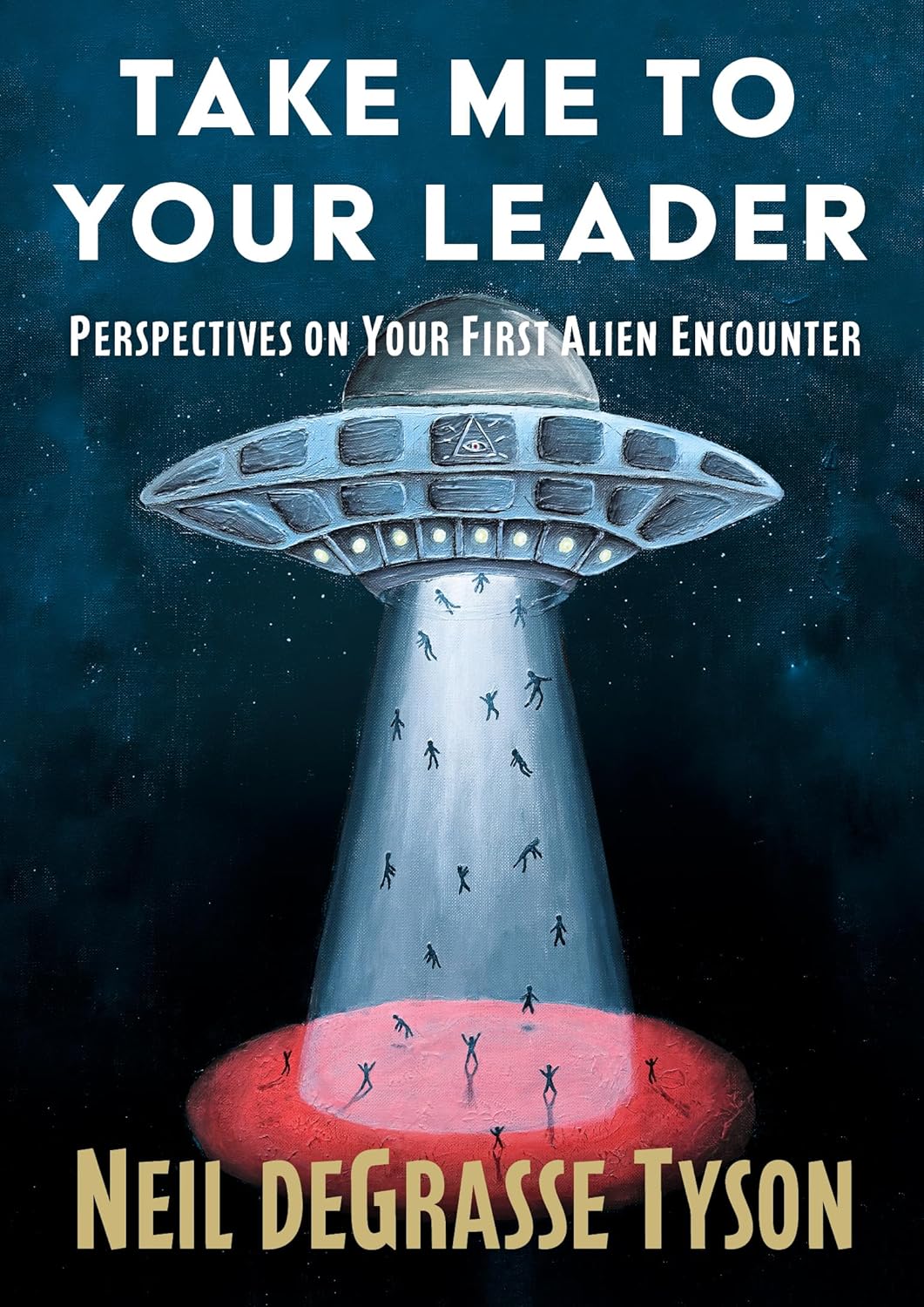
by Neil deGrasse Tyson
The culmination of a lifetime of fascination and speculation, Tyson applies the universal laws of physics to make the case for what aliens might look like, act like, how they might travel, what they might think. Should such an event occur, Tyson offers useful etiquettte tips for your first close encounter.

by Charles Coulston Gillispie
By the end of the eighteenth century, the French dominated the world of science. And although science and politics had little to do with each other directly, there were increasingly frequent intersections. This is a study of those transactions between science and state, knowledge and power--on the eve of the French Revolution. Charles Gillispie explores how the links between science and polity in France were related to governmental reform, modernization of the economy, and professionalization of science and engineering.

by David Bohm
This advanced undergraduate-level text presents the quantum theory in terms of qualitative and imaginative concepts, followed by specific applications worked out in mathematical detail.