Top 15 in History
Week of July 27, 2026

by Roderick D. Bush
An "Indispensable" Book of The Black World Today website A fresh new look at the Black Power movement and its leaders Much has been written about the Black Power movement in the United States. Most of this work, however, tends to focus on the personalities of the movement. In We Are Not What We Seem, Roderick D. Bush takes a fresh look at Black Power and other African American social movements with a specific emphasis on the role of the urban poor in the struggle for Black rights. Bush traces the trajectory of African American social movements from the time Booker T. Washington to the present, providing an integrated discussion of class. He addresses questions crucial to any understanding of Black politics: Is the Black Power movement simply another version of the traditional American ethnic politics, or does it have wider social import? What role has the federal government played in implicitly grooming social conservatives like Louis Farrakhan to assume leadership positions as opposed to leftist, grassroots, class-oriented leaders? Bush avoids the traditional liberal and social democratic approaches in favor of a more universalistic perspective that offers new insights into the history of Black movements in the U.S.

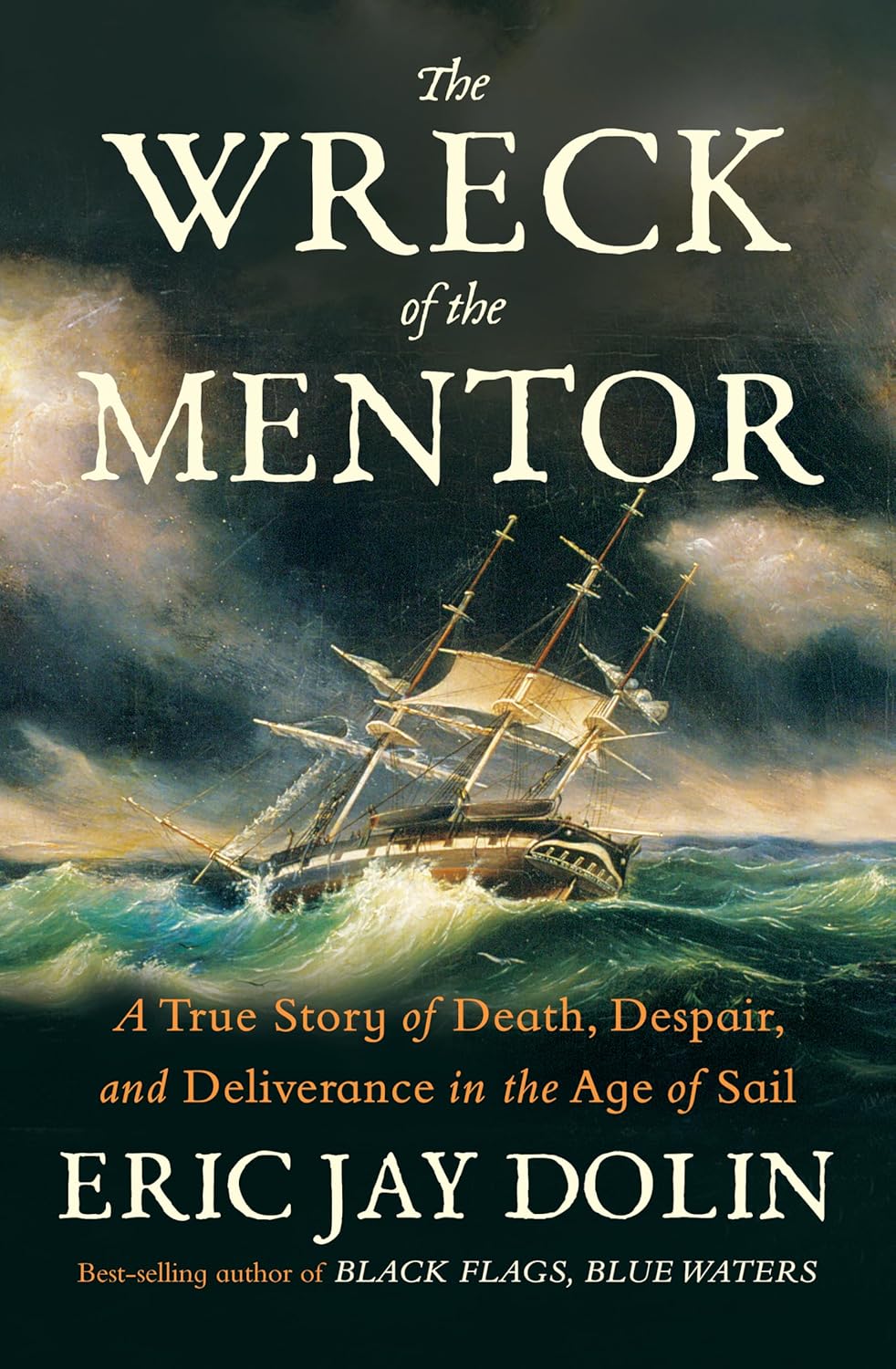
by Eric Jay Dolin
New York Times - "The Nonfiction Everyone Will Be Talking About in 2026" An astonishing true story--one of the most gripping maritime sagas of the nineteenth century--told by our era's "expert literary steersman" (Washington Post).

by Neal Bascomb
With the intrigue of a detective story, "Hunting Eichmann" follows the Nazi as he escapes two American POW camps, hides in the mountains, and builds an anonymous life in Buenos Aires, before finally being captured and brought to trial.

by Ronald Herbert Sack
Images of Nebuchadnezzar attempts to probe the diversity of cultural attitudes reflected in the characterizations of this famous king through an examination of both the original cuneiform sources as well as the accounts of chronographers written in Greek, Roman, and medieval times. Included in this revised and expanded second edition are two new chapters that examine both Nebuchadnezzar's administrative policies and the impact that his death had on both contemporary and later cultures. Both the positive and negative images of the king are explored, with conclusions being developed as to what the authors of the various surviving accounts actually thought the king really was. In the process, the whole nature of historiography in the ancient world is analyzed, and a number of broad conclusions are developed. Anyone who has ever read Second Kings or the books of Daniel and Jeremiah of the Old Testament is familiar with the name of Nebuchadnezzar, the king of Babylon who conquered the kingdom of Judah and destroyed Solomon's temple. As the second member of the Chaldean dynasty of Mesopotamia (626-539 B.C.), he ruled for forty-three years (605-562 B.C.), during which time he also led military campaigns into Syria and Lebanon. He also organized a number of building projects that were to transform Babylon into one of the seven wonders of the ancient world. Among his noteworthy achievements were the construction of massive fortification walls around Babylon, the refurbishing of Marduk

by James L. Gelvin
"A novel study. Mass politics are central to our century, and Gelvin brings them to life in a readable narrative. This book adds a new dimension to an ongoing and important debate in the field."—Leila Fawaz, author of An Occasion for War

by Neil Baldwin
Meticulously researched and entertainingly written, this will make readers, regardless of their politics, proud of America's intellectual heritage over the past 400 years.
by Michael Bronski
A revised and expanded edition of the first book to cover the entirety of lesbian, gay, bisexual, and transgender history, from pre-1492 to the present In this new edition of A Queer History of the United States, Michael Bronski’s classic book now covers 500 years, bringing queer history into the 21st century and further illuminates how profoundly the LGBTQ+ life and people have shaped America. Drawing upon primary documents, literature, and popular culture, Bronski weaves a comprehensive tapestry of LGBTQ+ history, providing startling examples of unknown or ignored aspects of our collective past. From the ineffectiveness of sodomy laws in the colonies, to how rock music and youth culture unintentionally engendered the devastating backlash against gay rights in the late 1970s; from individuals such as Robert Treat Paine and Ezekiel Dodge, Harvard classmates in 1774 who formed a deep, loving relationship and wrote passionate love letters to one another to Lucy Hicks Andersen, a married African American socialite and celebrity chef in Oxnard, California, whose story appeared in Time magazine in 1945 after her transgender identity became known, Bronski covers an eclectic breadth of facts and stories. This revised edition includes details on the evolution of the transgender liberation movement, the upsurge of vibrant queer movements of color, the groundbreaking emergence of new sexual and gender identities, and concludes by analyzing the current conservative backlash against LGBT

by Michel Foucault
Michel Foucault examines the archeology of madness in the West from 1500 to 1800 - from the late Middle Ages, when insanity was still considered part of everyday life and fools and lunatics walked the streets freely, to the time when such people began to be considered a threat, asylums were first built, and walls were erected between the "insane" and the rest of humanity.

by Helen Thomas
White House journalist for more than five decades chronicles her work covering all of the presidents since John F. Kennedy. Shares personal reminiscences of the U.S. leaders as well as of the first ladies. Bestseller.

by Helmut Glenk
German pioneers who developed settlements and businesses in Palestine - revolutionising agricultural production during late 19th and early 20th centuries. Their ventures contributed significantly to the modernisation of Palestine and ultimately Israel.

by Tan Koon San
Dynastic China: An Elementary History surveys four millennia of China’s history. It traced commentaries from the mythological period of Pangu, creator of the Chinese universe, and the Goddess Nuwa, creator of the Chinese people, through to the legendary periods of the Xia, Shang and Zhou dynasties to subsequent succeeding dynasties from the Qin Dynasty (221 BC) to the end of the Qing Dynasty (1912 AD). It weaved through brutal political intrigues and conspiracies of China’s imperial existence. The persistent enthronement of child emperors for the benefits of power-hungry eunuchs, dowagers, members of the imperial clans, generals and warlords formed a large part of the narrative. Encrypted within are salient elements of Chinese philosophical precepts, civilisation values, and political ideals. The core concepts that mould the idea of tian xia 天 下 (all under heaven) and tian ming 天 命 (Mandate of Heaven), and how these guided Chinese perception of their world are painstakingly explained. The profound influence of Confucianism and the functional adoption of the Legalist framework in statecraft are imparted in the context of practicality and idealism. So too is the complementary notion of natural dualities, the Yin-Yang (阴 阳) harmony of contradictions. How these filtered through from philosophy to cultural values are deftly introduced. Imperial obsessions with frontier threats are also incisively presented. So are the diplomatic statecraft of matrimonial kinship, tributary exchang

by John Fraser Hart
Few Americans know much about contemporary farming, which has evolved dramatically over the past few decades. In The Changing Scale of American Agriculture, the award-winning geographer and landscape historian John Fraser Hart describes the transformation of farming from the mid-twentieth century, when small family farms were still viable, to the present, when a farm must sell at least $250,000 of farm products each year to provide an acceptable level of living for a family. The increased scale of agriculture has outmoded the Jeffersonian ideal of small, self-sufficient farms. In the past farmers kept a variety of livestock and grew several crops, but modern family farms have become highly specialized in producing a single type of livestock or one or two crops. As farms have become larger and more specialized, their number has declined. Hart contends that modern family farms need to become integrated into tightly orchestrated food-supply chains in order to thrive, and these complex new organizations of large-scale production require managerial skills of the highest order. According to Hart, this trend is not only inevitable, but it is beneficial, because it produces the food American consumers want to buy at prices they can afford. Although Hart provides the statistics and clear analysis such a study requires, his book focuses on interviews with farmers: those who have shifted from mixed crop-and-livestock farming to cash-grain farming in the Midwest agricultural heartland; b
by Douglas E. Schoen
The Nixon Effect examines the 37th president’s political legacy in broad-ranging ways that make clear, for the first time, the breadth and duration of his influence on American political life. The book argues that Nixon is the key political figure in postwar American politics in multiple ways, some barely acknowledged until now. His legacy includes a generational shift in the ideological orientations of both the Republican and Democratic parties; the Nixon influence, both intentional and unintentional, was to push both parties further out to their ideological poles. So stark was Nixon’s influence on party identities that it shaped the hardened partisan polarization in Washington today and the evolution of what has come to be called Red and Blue America. Stemming in part from this, and also from Nixon’s scorched-earth political warfare and eventually his Watergate scandal, we have also seen the evolution of politics as war, where adversaries and ideological opponents are seen as evil or unpatriotic. Finally, Nixon’s pioneering tactics—from the identification of the Silent Majority to the Southern Strategy, from “triangulating” between both parties and claiming the political center to launching the culture war with attacks on “elites” in media, academia, and the courts—have shaped political communications and strategy ever since. Other books have argued for Nixon’s importance, but Douglas E. Schoen’s is the first to take into account the full range of this fascinating man’s inf

by Tad Stoermer
Revisit the Salem Witch Trials, the Underground Railroad, and other resistance movements of American history to get a bold new understanding of how resistance shaped our past—and how its principles can change our future. The United States was shaped by resistance—but not in the way we’ve been taught. The Revolution did not secure liberty; it opened the door to either liberty or oppression, where only white men enjoyed all of the benefits and protections of citizenship. In A Resistance History of the United States, public historian Tad Stoermer shows how from the very beginning, that tension—between the ideals of resistance and the realities of power—has defined America more than the Enlightenment ideals enshrined in the Declaration of Independence and the Constitution. Utililizing powerful storytelling to focus on key—and often lesser-known—moments in American history, this book reveals the truth of how resistance movements from Colonial times have opposed the powers that be. Stoermer covers an impressive roster of pivotal movements, with each chapter identifying a key resistance movement and principle meant to inspire contemporary readers, including: Bacon’s Rebellion/Metacomet’s War (1676) Salem Witch Trials (1692) The Black Loyalists (1783) The Underground Railroad (1850) Through these and many more examples, Stoermer dismantles the mythologies that pass for American history—exposing the curated nostalgia, moral evasions, and institutional silences that have long protected abusive power. What emerges is an essential look at how we can take lessons from the past to understand, and effectively respond to, the injustices we face today.

by Jorunn Jacobsen Buckley
The Mandaeans were a gnostic sect that arose in the Middle East around the same time as Christianity. This text examines the lives and religion of contemporary Mandaeans and provides an introduction to the religion, showing how its ancient texts inform the living religion, and vice versa.