Top 15 in Science
Week of August 17, 2026
by Stephen P. Maran
When the International Astronomical Union (IAU) adopted a new definition of a "planet" in August 2006, Pluto became a dwarf planet, drawing a divisive line in science and public opinions. The controversy of whether Pluto is a planet continues years later, and passion about the decision remains, pitting scientist against scientist and invoking sentiments and nostalgia from the rest of the world. With the IAU definition, the future of space objects is forever changed. Learn how this resolution came to be and what it means for astronomy, who implemented it and who is against it, and whether it's the first or millionth time the world's view of astronomy has rotated on its axis. Written by an astronomer and educator who voted for the IAU resolution—Laurence A. Marschall—and a NASA scientist who supported the opposing petition that resulted—Stephen P. Maran—Pluto Confidential leaves no perspective out and no asteroid unturned in the Pluto debate. A telescopic look inside the book: History of planetary disputes, including why Jupiter almost wasn't acknowledged What Bode's Law is and how it has influenced observations Who discovered Pluto and how it was named The Kuiper Belt and its role in what it means to be a planet Beyond Pluto and the eight distinguished planets

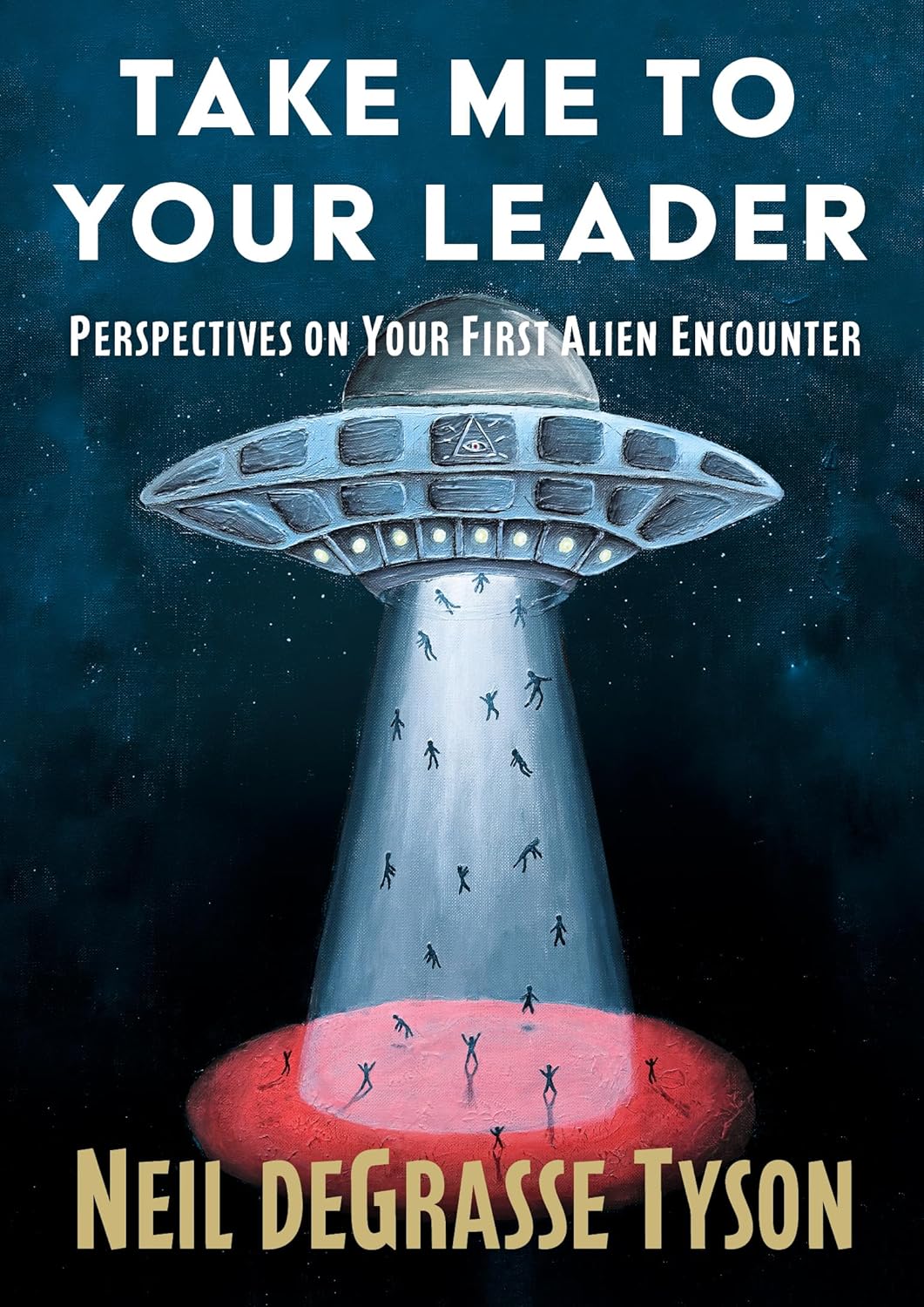
by Neil deGrasse Tyson
The culmination of a lifetime of fascination and speculation, Tyson applies the universal laws of physics to make the case for what aliens might look like, act like, how they might travel, what they might think. Should such an event occur, Tyson offers useful etiquettte tips for your first close encounter.

by Gina Bari Kolata
"Scientists have recently discovered shards of the flu virus in human remains frozen in the Arctic tundra and in scraps of tissue preserved in a government warehouse. In Flu, Gina Kolata, reporter for The New York Times, unravels the mystery of this lethal virus with the high drama of a great adventure story. From Alaska to Norway, from the streets of Hong Kong to the corridors of the White House, Kolata tracks the race to recover the live pathogen and probes the fear that has impelled government policy. She delves into the history of the flu and previous epidemics, profiles the experts hot on the trail and the amateurs woefully misguided, and details the science and the latest understanding of this mortal disease."--BOOK JACKET.Title Summary field provided by Blackwell North America, Inc. All Rights Reserved

by Sara Blair
"The Harlem riot of 1935 not only signaled the end of the Harlem Renaissance; it made black America's cultural capital an icon for the challenges of American modernity. Luring photographers interested in socially conscious, journalistic and aesthetic representation, post-Renaissance Harlem helped give rise to America's full-blown image culture and its definitive genre, documentary. Arguing for Harlem as a crossroads between writers and the image, Sara Blair explores its power for canonical writers, whose work was responsive to the changing meanings and uses of photographs. She examines literary engagements with photography from the 1930s to the 1970s and beyond." --Book Jacket.

by Joseph Warren Dauben
One of the greatest revolutions in mathematics occurred when Georg Cantor (1845-1918) promulgated his theory of transfinite sets. This revolution is the subject of Joseph Dauben's important studythe most thorough yet writtenof the philosopher and mathematician who was once called a "corrupter of youth" for an innovation that is now a vital component of elementary school curricula. Set theory has been widely adopted in mathematics and philosophy, but the controversy surrounding it at the turn of the century remains of great interest. Cantor's own faith in his theory was partly theological. His religious beliefs led him to expect paradoxes in any concept of the infinite, and he always retained his belief in the utter veracity of transfinite set theory. Later in his life, he was troubled by recurring attacks of severe depression. Dauben shows that these played an integral part in his understanding and defense of set theory.

by Rachel Carson
Presents Rachel Carson's 1962 environmental classic "Silent Spring," which identified the dangers of indiscriminate pesticide use; and includes an introduction by biographer Linda Lear and an afterword by scientist Edward O. Wilson.

by Tom Beer
The second edition of Environmental Oceanography is the first textbook to link the needs of the coastal oceanographer and the environmental practitioner. The ever-increasing human impact on the environment, and particularly on the coastal zone, has led governments to carefully examine the environmental implications of development proposals. This book provides the background needed to undertake coastal oceanographic investigations and sets them in context by incorporating case studies and sample problems based on the author's experience as an environmental consultant.

by Barbara McQuade
The New York Times bestselling author and former U.S. Attorney offers a piercing exposé on the escalating threat of far-right politics—and a clear roadmap for saving our democracy. In The Fix, McQuade draws on her decades of experience as a federal prosecutor to reveal how systems of organized crime and political opportunism exploit the levers of power—using corruption, cruelty, and chaos as tools to dominate institutions and eliminate accountability. With clarity, precision, and moral force, she exposes the tactics of today’s far-right MAGA system: information warfare, aggressive retribution, conformism enforced by fear, and pervasive dismantling of legal checks and balances necessary to defend the public interest and uphold justice. Weaving together courtroom stories, real-time political analysis, and cautionary lessons from history and democratic backsliding abroad, McQuade makes the case that the threats we face are not future possibilities—they’re already here. Yet The Fix is not just a warning; it is a call to action. In the book’s final chapters, McQuade outlines common-sense reforms and strategies that can reclaim the rule of law and recenter democracy with the power of the people. Accessible, eye-opening, and grounded in constitutional faith, The Fix is essential reading for everyone concerned about the future of America—and ready to work together to take a stand for it.
by Juan M Bilbao
Peripheral nerve analysis is a challenging task for pathologists, given the advent of new diagnoses and techniques of analysis and the impact of molecular genetics. This book presents a simple, logical method for constructing a differential diagnosis based on pathology and clinical presentation. It also provides advice on the selection of ancillary molecular, immunohistochemical and genetic techniques to establish a definitive diagnosis. Clear, authoritative guidance is offered on diagnosis of the full range of neuropathies with the aid of a wealth of high-quality color photomicrographs and electron micrographs. The pathologist will benefit greatly from the identification of a variety of artifacts and normal structures occasionally encountered in nerve biopsies that need to be distinguished from specific pathologic alterations. This user-friendly, practical text will be an invaluable aid in achieving the most specific diagnosis possible.

by Max Born
A Nobel Prize-winning physicist explains the historical background and scientific principles of Einstein's famous theory

by Michael A. Nielsen
One of the most cited books in physics of all time, Quantum Computation and Quantum Information remains the best textbook in this exciting field of science. This 10th anniversary edition includes an introduction from the authors setting the work in context. This comprehensive textbook describes such remarkable effects as fast quantum algorithms, quantum teleportation, quantum cryptography and quantum error-correction. Quantum mechanics and computer science are introduced before moving on to describe what a quantum computer is, how it can be used to solve problems faster than 'classical' computers and its real-world implementation. It concludes with an in-depth treatment of quantum information. Containing a wealth of figures and exercises, this well-known textbook is ideal for courses on the subject, and will interest beginning graduate students and researchers in physics, computer science, mathematics, and electrical engineering.
by Eddie S. Glaude Jr.
The New York Times bestselling author of Begin Again confronts America’s unfinished story in this blistering reassessment of race, freedom, and the myths that bind us. “A thoughtful, insightful, beautifully written book that is timely and welcomed in these perilous times.”—Bryan Stevenson, #1 New York Times bestselling author of Just Mercy “Eddie S. Glaude Jr. opens a necessary conversation as we reflect on the meaning of our country’s 250th anniversary.”—Annette Gordon-Reed, Pulitzer Prize– and National Book Award–winning author of The Hemingses of Monticello Celebrated public intellectual Eddie S. Glaude, Jr. presents a groundbreaking analysis of the vicious cycles of American history and the country’s enduring refusal to face its true nature—especially at the moments when national anniversaries steer us back toward the mythology meant to disguise the truth. America, U.S.A., deliberately formulated and beautifully written, details a heart-wrenching exploration of America’s legacy. It is a magnificently complex combination of lessons and voices—from W.E.B. DuBois and John Dos Passos to Herman Melville and Martin Luther King, Jr.—that, together, paint a sprawling and honest tableau of the United States, its complicated past, and ever more tenuous future. Glaude’s is a powerful voice of conscience in our tumultuous world. He pulls no punches, calling on us to interrogate our conceptions of innocence and freedom and the stories we tell ourselves about our past and present. Centered around the major celebrations of America’s milestone birthdays across 250 years of history, the book offers a riveting look at the battles over who has a stake in writing the American story. Devastatingly candid, profoundly moving, and deeply reflective, America, U.S.A. is a shining meditation on how we must reckon with a grim past in order to strive for the better angels of our future.

by Hans Kuhn
Principles of Physical Chemistry, Second Edition uniquely uses simple physical models as well as rigorous treatments for understanding molecular and supramolecular systems and processes. In this way the presentation assists students in developing an intuitive understanding of the subjects as well as skill in quantitative manipulations. The unifying nature of physical chemistry is emphasized in the book by its organization - beginning with atoms and molecules, and proceeding to molecular assemblies of increasing complexity, ending with the emergence of matter that carries information, i.e. the origin of life, a physicochemical process of unique importance. The aim is to show the broad scope and coherence of physical chemistry.

by Charles Coulston Gillispie
By the end of the eighteenth century, the French dominated the world of science. And although science and politics had little to do with each other directly, there were increasingly frequent intersections. This is a study of those transactions between science and state, knowledge and power--on the eve of the French Revolution. Charles Gillispie explores how the links between science and polity in France were related to governmental reform, modernization of the economy, and professionalization of science and engineering.

by Thomas A. Bass
The author of The Eudaemonic Pie now reveals the inspiration, motivations, and aspirations of the world's greatest scientists. The scientists interviewed in this collection have changed the rules of the game--altered our perception of reality and the language used to describe it.