Top 15 in Science
Week of August 10, 2026

by Navjot S. Sodhi
Conservation Biology for All provides cutting-edge but basic conservation science to a global readership. A series of authoritative chapters have been written by the top names in conservation biology with the principal aim of disseminating cutting-edge conservation knowledge as widely as possible. Important topics such as balancing conversion and human needs, climate change, conservation planning, designing and analyzing conservation research, ecosystem services, endangered species management, extinctions, fire, habitat loss, and invasive species are covered. Numerous textboxes describing additional relevant material or case studies are also included. The global biodiversity crisis is now unstoppable; what can be saved in the developing world will require an educated constituency in both the developing and developed world. Habitat loss is particularly acute in developing countries, which is of special concern because it tends to be these locations where the greatest species diversity and richest centres of endemism are to be found. Sadly, developing world conservation scientists have found it difficult to access an authoritative textbook, which is particularly ironic since it is these countries where the potential benefits of knowledge application are greatest. There is now an urgent need to educate the next generation of scientists in developing countries, so that they are in a better position to protect their natural resources.

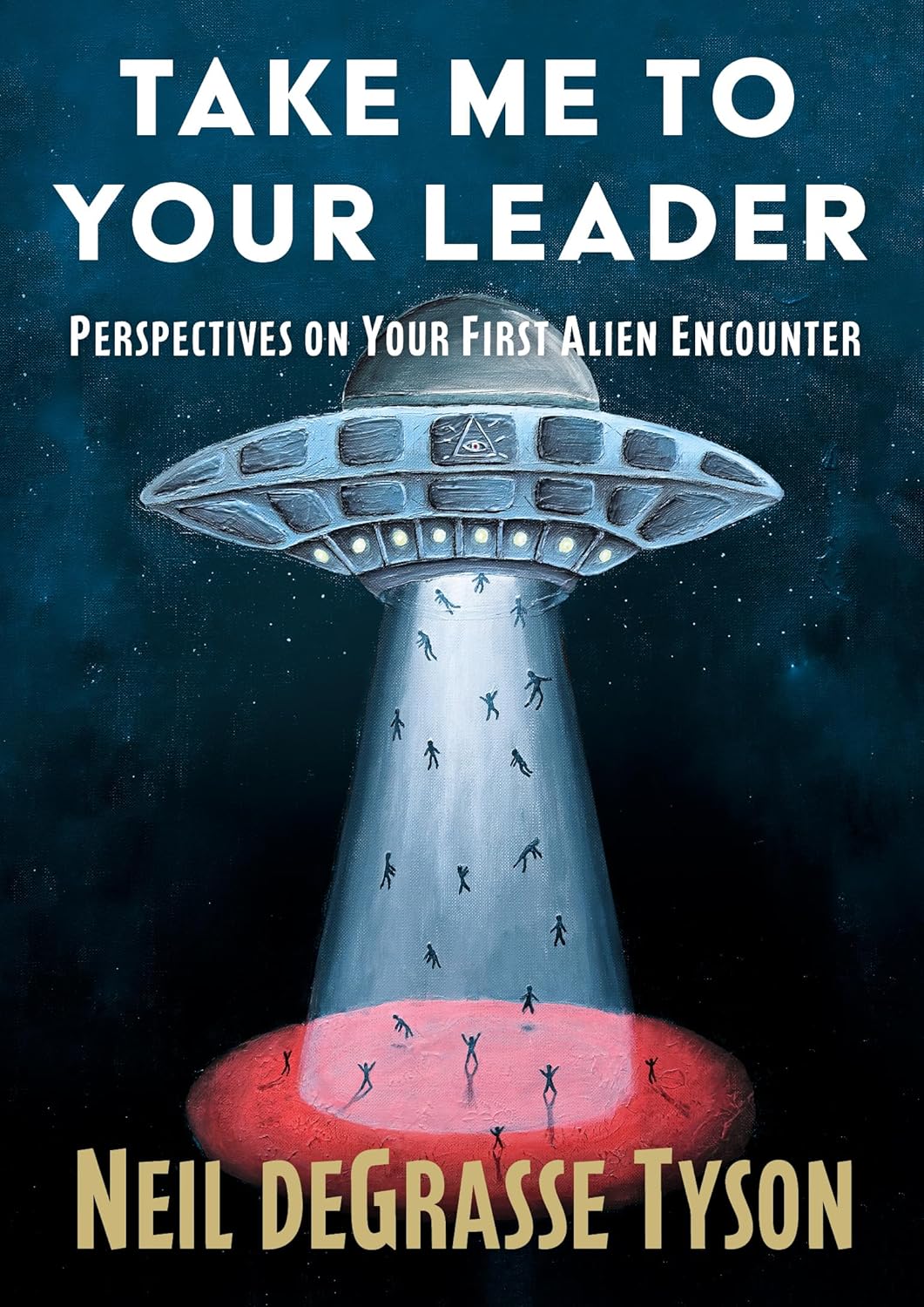
by Neil deGrasse Tyson
The culmination of a lifetime of fascination and speculation, Tyson applies the universal laws of physics to make the case for what aliens might look like, act like, how they might travel, what they might think. Should such an event occur, Tyson offers useful etiquettte tips for your first close encounter.

by Rachel Carson
Presents Rachel Carson's 1962 environmental classic "Silent Spring," which identified the dangers of indiscriminate pesticide use; and includes an introduction by biographer Linda Lear and an afterword by scientist Edward O. Wilson.

by Timothy Snyder
#1 NEW YORK TIMES BESTSELLER • A “bracing” (Vox) guide for surviving and resisting America’s turn towards authoritarianism, from “a rising public intellectual unafraid to make bold connections between past and present” (The New York Times) “Timothy Snyder reasons with unparalleled clarity, throwing the past and future into sharp relief. He has written the rare kind of book that can be read in one sitting but will keep you coming back to help regain your bearings.”—Masha Gessen The Founding Fathers tried to protect us from the threat they knew, the tyranny that overcame ancient democracy. Today, our political order faces new threats, not unlike the totalitarianism of the twentieth century. We are no wiser than the Europeans who saw democracy yield to fascism, Nazism, or communism. Our one advantage is that we might learn from their experience. On Tyranny is a call to arms and a guide to resistance, with invaluable ideas for how we can preserve our freedoms in the uncertain years to come.

by Michael Pollan
The Instant New York Times Bestseller "Pollan’s real genius—the word is not too strong—remains intact. That is his uncanny ability to scent the direction in which the culture is headed. He did it with food and psychedelics, and now, though A World Appears focuses on AI only intermittently, he has done it again." —Charles Finch, The Atlantic From the #1 New York Times bestselling author of How to Change Your Mind, a panoptic exploration of consciousness—what it is, who has it, and why—and a meditation on the essence of our humanity When it comes to the phenomenon that is consciousness, there is one point on which scientists, philosophers, and artists all agree: it feels like something to be us.

by Gina Bari Kolata
"Scientists have recently discovered shards of the flu virus in human remains frozen in the Arctic tundra and in scraps of tissue preserved in a government warehouse. In Flu, Gina Kolata, reporter for The New York Times, unravels the mystery of this lethal virus with the high drama of a great adventure story. From Alaska to Norway, from the streets of Hong Kong to the corridors of the White House, Kolata tracks the race to recover the live pathogen and probes the fear that has impelled government policy. She delves into the history of the flu and previous epidemics, profiles the experts hot on the trail and the amateurs woefully misguided, and details the science and the latest understanding of this mortal disease."--BOOK JACKET.Title Summary field provided by Blackwell North America, Inc. All Rights Reserved
by Ernst Cassirer
This provocative volume, one of the most important interpretive works on the philosophical thought of the Renaissance, has long been regarded as a classic in its field. Ernst Cassirer here examines the changes brewing in the early stages of the Renaissance, tracing the interdependence of philosophy, language, art, and science; the newfound recognition of individual consciousness; and the great thinkers of the period—from da Vinci and Galileo to Pico della Mirandola and Giordano Bruno. The Individual and the Cosmos in Renaissance Philosophy discusses the importance of fifteenth-century philosopher Nicholas Cusanus, the concepts of freedom and necessity, and the subject-object problem in Renaissance thought. “This fluent translation of a scholarly and penetrating original leaves little impression of an attempt to show that a ‘spirit of the age’ or ‘spiritual essence of the time’ unifies and expresses itself in all aspects of society or culture.”—Philosophy

by David Bohm
This advanced undergraduate-level text presents the quantum theory in terms of qualitative and imaginative concepts, followed by specific applications worked out in mathematical detail.

by Sara Blair
"The Harlem riot of 1935 not only signaled the end of the Harlem Renaissance; it made black America's cultural capital an icon for the challenges of American modernity. Luring photographers interested in socially conscious, journalistic and aesthetic representation, post-Renaissance Harlem helped give rise to America's full-blown image culture and its definitive genre, documentary. Arguing for Harlem as a crossroads between writers and the image, Sara Blair explores its power for canonical writers, whose work was responsive to the changing meanings and uses of photographs. She examines literary engagements with photography from the 1930s to the 1970s and beyond." --Book Jacket.
by Eddie S. Glaude Jr.
The New York Times bestselling author of Begin Again confronts America’s unfinished story in this blistering reassessment of race, freedom, and the myths that bind us. “A thoughtful, insightful, beautifully written book that is timely and welcomed in these perilous times.”—Bryan Stevenson, #1 New York Times bestselling author of Just Mercy “Eddie S. Glaude Jr. opens a necessary conversation as we reflect on the meaning of our country’s 250th anniversary.”—Annette Gordon-Reed, Pulitzer Prize– and National Book Award–winning author of The Hemingses of Monticello Celebrated public intellectual Eddie S. Glaude, Jr. presents a groundbreaking analysis of the vicious cycles of American history and the country’s enduring refusal to face its true nature—especially at the moments when national anniversaries steer us back toward the mythology meant to disguise the truth. America, U.S.A., deliberately formulated and beautifully written, details a heart-wrenching exploration of America’s legacy. It is a magnificently complex combination of lessons and voices—from W.E.B. DuBois and John Dos Passos to Herman Melville and Martin Luther King, Jr.—that, together, paint a sprawling and honest tableau of the United States, its complicated past, and ever more tenuous future. Glaude’s is a powerful voice of conscience in our tumultuous world. He pulls no punches, calling on us to interrogate our conceptions of innocence and freedom and the stories we tell ourselves about our past and present. Centered around the major celebrations of America’s milestone birthdays across 250 years of history, the book offers a riveting look at the battles over who has a stake in writing the American story. Devastatingly candid, profoundly moving, and deeply reflective, America, U.S.A. is a shining meditation on how we must reckon with a grim past in order to strive for the better angels of our future.

by Joseph Warren Dauben
One of the greatest revolutions in mathematics occurred when Georg Cantor (1845-1918) promulgated his theory of transfinite sets. This revolution is the subject of Joseph Dauben's important studythe most thorough yet writtenof the philosopher and mathematician who was once called a "corrupter of youth" for an innovation that is now a vital component of elementary school curricula. Set theory has been widely adopted in mathematics and philosophy, but the controversy surrounding it at the turn of the century remains of great interest. Cantor's own faith in his theory was partly theological. His religious beliefs led him to expect paradoxes in any concept of the infinite, and he always retained his belief in the utter veracity of transfinite set theory. Later in his life, he was troubled by recurring attacks of severe depression. Dauben shows that these played an integral part in his understanding and defense of set theory.

by Tom Beer
The second edition of Environmental Oceanography is the first textbook to link the needs of the coastal oceanographer and the environmental practitioner. The ever-increasing human impact on the environment, and particularly on the coastal zone, has led governments to carefully examine the environmental implications of development proposals. This book provides the background needed to undertake coastal oceanographic investigations and sets them in context by incorporating case studies and sample problems based on the author's experience as an environmental consultant.

by Thomas A. Bass
The author of The Eudaemonic Pie now reveals the inspiration, motivations, and aspirations of the world's greatest scientists. The scientists interviewed in this collection have changed the rules of the game--altered our perception of reality and the language used to describe it.