Education & Teaching
Top 15 in Education & Teaching
Week of August 10, 2026
Top 15 in Education & Teaching
Week of August 10, 2026

by Lisa D. Delpit
An updated edition of the award-winning analysis of the role of race in the classroom features a new author introduction and framing essays by Herbert Kohl and Charles Payne, in an account that shares ideas about how teachers can function as "cultural transmitters" in contemporary schools and communicate more effectively to overcome race-related academic challenges. Original.
by Dorothy Faulkner
This book explores children's social relationships in and out of the classroom. Chapters focus on the growing importance of children's friendships and how these influence social participation and development later on in life. Issues such as peer rejection, bullying and adolescent development are analysed from both psychological and sociological perspectives. The book concludes with a re-examination of cultural concepts of childhood, child development and the nature of children's autonomy.

by Steven Brint
For use as the core text for Sociology of Education courses offered in Sociology Departments and Social Foundations of Education courses offered in Schools of Education. ""Schools and Societies is a gem of volume that combines in one comprehensive text superb theoretical acuity and scholarly judgment, a keen sense of the connection of research to policy, and a breadth of coverage that reflects the multidimensionality of education as an institution in a manner rare in social-scientific treatments of education. It deserves to be the leading survey of this field for a long time to come." Paul DiMaggio, Princeton University
by Andrew Drummond
Published in 1790, Maurice Benyovszky’s posthumous memoir was an instant sensation. A tale of exploration and adventure beginning with his daring escape from a Siberian prison and ending with his coronation as King of Madagascar, it was translated into several languages and adapted for the theatre and opera. This book explores the veracity of this memoir and, more broadly, the challenges faced by the explorers of the age and the brutality of colonisation. The self-styled Hungarian Baron Maurice Auguste Aladar Benyovszky, Counsellor to the Duke of Saxony and Colonel in the service of the Queen of Hungary, was in fact only confirmed to have been an officer in a regiment of the Polish Confederation of Bar. While he did escape from Russian captors and subsequently travel to Japan, Formosa, China and Madagascar, many of his exploits were wildly exaggerated or simply invented. Andrew Drummond reveals an alternative picture of events by looking at statements from Benyovszky’s travelling companions and sceptical officials as well as contemporary documents from the places he claimed to have visited, untangling the truth behind his stories and examining what these stories can nonetheless tell us about the era in which Benyovszky lived. Witty and engagingly written, this book is fascinating reading for anyone interested in eighteenth-century colonial history and the story of early European and Russian explorers.

by Samuel C. Prescott
This book is more than formal history. It is a personal report, an essay in interpretation and remembrance which is important both for what it tells about MIT's first half-century and for what it tells about what Dean Prescott found important and interesting in that half-century.Dean Prescott was associated with the Institute for nearly two thirds of a century. He knew the Institute from the vantage points of student, teacher, department head, dean, alumnus, and parent. He had a formative influence on its policy-making and was an articulate protagonist of the Institute's program and policies. He viewed MIT's formative years not only with an expert's understanding but out of a deep sense of loyalty and devotion. This book is a testament of faith in an institution, an earnest statement of the author's abiding belief in the staff, students, and alumni he has known. Dean Prescott's account begins four years before the first instruction was given on February 20, 1865 at "Boston Tech" in the vicinity of Copley Square, Boston and concludes with the Institute's establishment in Cambridge in 1916.
by Dafna Lemish
Bringing together the leading researchers on children, adolescents, and the media, this books offers their cutting-edge, ‘big picture’ ideas for the future of research and scholarship in the field. Individual chapters focus on topics such as the role of big data in media research, digital literacy, parenting in the era of mobile media, media diversity in the digital age, the impact of media on child development, children’s digital rights, the implications of ‘intelligent’ characters and parasocial relationships, and the effectiveness of transmedia for informal education. Several chapters also explore the theoretical and methodological challenges facing children’s media researchers. Offering new directions for research, the contributors consider the implications of the changing media landscape for parents, educators, advocates, and producers. Leading scholars from North America, Europe and Asia, grounded in different theoretical and methodological traditions, join forces to discuss the impact of growing up in a media- saturated world, and to stimulate thinking about the field of children and media in unexpected ways. This book was originally published as two special issues of the Journal of Children and Media.

by Cowie, Helen
This book provides a valuable resource for anyone responsible for the emotional well-being of children and young people. It focuses on the importance of fostering positive relationships in the school community as a whole, so that young people and adults feel empowered to challenge bullying when they encounter it and protect those involved.

by Eric J. Mash
This book's thoughtful and accurate balance of developmental, clinical-diagnostic, and experimental approaches to child and adolescent psychopathology is accessible to a broad range of readers. Up-to-date and forward-looking, the book continues to provide the most authoritative, scholarly, and comprehensive coverage of these subjects, tracing the developmental course of each disorder and showing how biological, psychological, and sociocultural factors interact with a child's environment. Coverage includes the DSM-IV-TR and dimensional approaches to classification as well as evidence-based assessment and treatment, contemporary research, and the latest theories related to the predominantly inattentive ADHD subtype, early-onset and the developmental propensity model of conduct disorder, the triple vulnerability model of anxiety, the tripartite model in children, depression, and autism.
by Simon T. Bailey
What separates good leaders from brilliant ones? How do you successfully move your school or district from mediocrity to brilliance? Drawing on their expertise in business and education, the authors provide a simple, sustainable framework that will help you overcome educational inertia to reach new heights of achievement. The authors use the forces of flight as a powerful metaphor: Weight: Discover your Personal Brilliance through self-discovery Lift: Engage Collaborative Brilliance through collaboration with all stakeholders Thrust: Drive Team Brilliance by encouraging smart risks and designing potent changes Reduce Drag: Expand Student Brilliance by unleashing imagination, resilience, and hope Download the free study guide at releasingleadershipbrilliance.com

by Manoj Sharma
Essentials of International Health provides an introduction to international health with a focus on epidemiological, political, behavioral, sociological, cultural, and medical dimensions in the field. The text covers problems concerning both developed and developing countries (with an emphasis on developing countries) and introduces population-based public health approaches to solving international health problems. Topics include historical perspectives, health indicators, role of culture and behavior, communicable diseases, non communicable diseases, malnutrition, nutritional deficiencies and obesity, environmental health and population issues, health of women, health of children, mental health, world health systems, and future issues in international health. This text is ideal for undergraduate students, introductory graduate classes, and practitioners interested in working in developing countries.
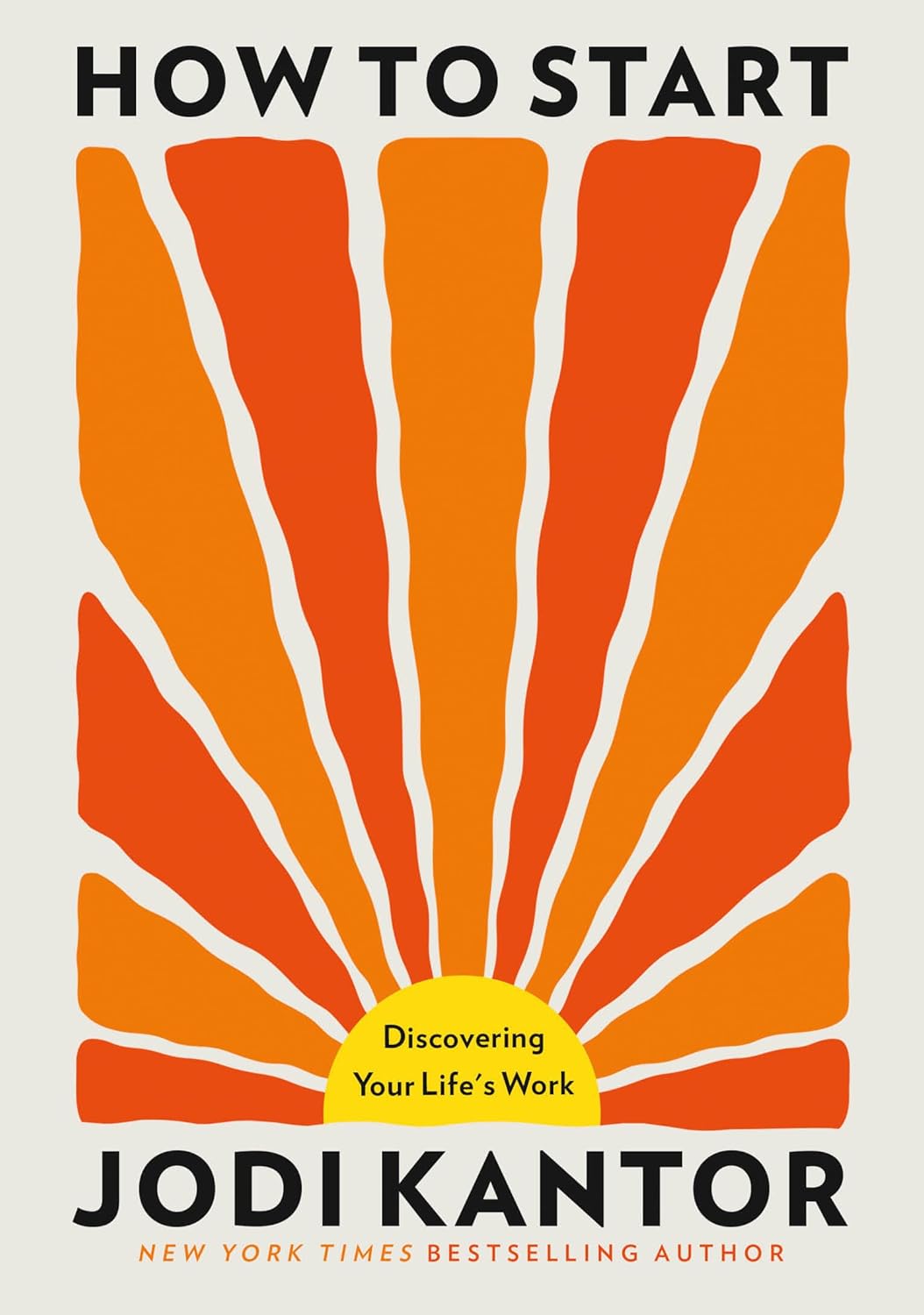
by Jodi Kantor
With warmth, honesty, and inspired wisdom, Pulitzer Prize winning journalist Jodi Kantor expands on her triumphant Columbia University commencement address, tackling the question, "How, in this environment, is anyone supposed to find and start their life's work?" Jodi Kantor's groundbreaking reporting has toppled media magnates, sparked reform worldwide, and foretold many of the unsettling changes we see in the workplace today. But before all of this, Kantor was kicked off her college newspaper. Society expects perfection, but Kantor knows those first professional steps are often rocky. She also knows that young people are facing new and frightening terrain, with political upheaval, skyrocketing costs of living, and the unknowns of AI. Kantor casts aside platitudes and false hope to offer tangible help. Work is how we spend much of our time. It's our engine of progress: how cancer therapies are invented, political campaigns won, thrilling art created and matched with an audience. Instead of letting cynicism take over, Kantor identifies two principles to help young people discover their life's work: craft and need. By pairing the two, they can navigate tough, sensitive choices: how to think about money. How much risk to take on. When to buck what others are saying. Powerful and provocative, How to Start is a statement of faith for young people as they make their way through uncertain times, offering wisdom, strategy, and a set of aspirations to launch their careers and last their whole lives.

by Melba Beals
Using the diary she kept as a teenager and through news accounts, Melba Pattillo Beals relives the harrowing year when she was selected as one of the first nine students to integrate Central High School in Little Rock, Arkansas, in 1957.

by George Saunders
NEW YORK TIMES BESTSELLER • This inspiring meditation on kindness from the author of Lincoln in the Bardo is based on his popular commencement address. Three months after George Saunders gave a graduation address at Syracuse University, a transcript of that speech was posted on the website of The New York Times, where its simple, uplifting message struck a deep chord. Within days, it had been shared more than one million times. Why? Because Saunders’s words tap into a desire in all of us to lead kinder, more fulfilling lives. Powerful, funny, and wise, Congratulations, by the way is an inspiring message from one of today’s most influential and original writers. Praise for Congratulations, by the way “As slender as a psalm, and as heavy.”—The New York Times “The graduating college senior in your life probably just wants money. But if you want to impart some heartfelt, plainspoken wisdom in addition to a check, you can't do much better than [Congratulations, by the way].”—Entertainment Weekly “The loving selflessness that [George Saunders] advises and the interconnectedness that he recognizes couldn’t be purer or simpler—or more challenging.”—Kirkus Reviews “Warm and tender.”—Publishers Weekly

by Anthony Sweeting
To reflect the development and history of education in Hong Kong, the author has collected a wide range of fascinating and illuminating material from different sources, and, wherever appropriate, has included his own commentaries. The book will be a valuable source of reference for educationalists and others who are interested in the development of education in Hong Kong.

by I. Edward Alcamo
Following in the successful footsteps of the "Anatomy" and the "Physiology Coloring Workbook", The Princeton Review introduces two new coloring workbooks to the line. Each book features 125 plates of computer-generated, state-of-the-art, precise, original artwork--perfect for students enrolled in allied health and nursing courses, psychology and neuroscience, and elementary biology and anthropology courses.