
Top 15 in Politics & Social Sciences
by Helen Thomas
White House journalist for more than five decades chronicles her work covering all of the presidents since John F. Kennedy. Shares personal reminiscences of the U.S. leaders as well as of the first ladies. Bestseller.
When war broke out in Europe in 1914, it surprised a European population enjoying the most beautiful summer in memory. For nearly a century since, historians have debated the causes of the war. Some have cited the assassination of Archduke Franz Ferdinand; others have concluded it was unavoidable. In Europe’s Last Summer, David Fromkin provides a different answer: hostilities were commenced deliberately. In a riveting re-creation of the run-up to war, Fromkin shows how German generals, seeing war as inevitable, manipulated events to precipitate a conflict waged on their own terms. Moving deftly between diplomats, generals, and rulers across Europe, he makes the complex diplomatic negotiations accessible and immediate. Examining the actions of individuals amid larger historical forces, this is a gripping historical narrative and a dramatic reassessment of a key moment in the twentieth-century.

by Jean Bodin
Contains four chapters from Jean Bodin's classic text "Six Livres de la Republique". These chapters form the core of the work, detailing Bodin's theory of sovereignty, which contended that the entire power of the state should be vested in a single individual or group.
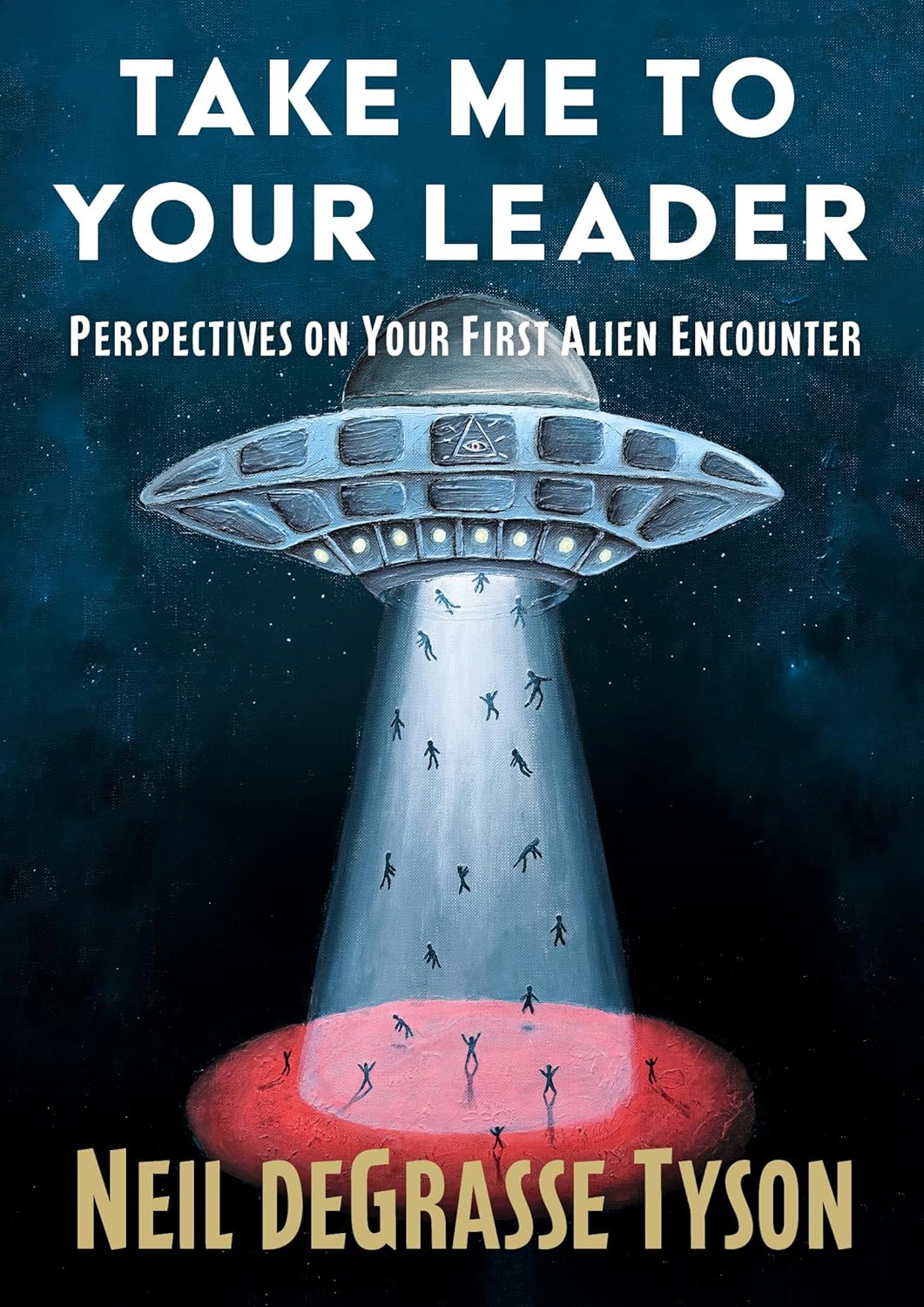
The culmination of a lifetime of fascination and speculation, Tyson applies the universal laws of physics to make the case for what aliens might look like, act like, how they might travel, what they might think. Should such an event occur, Tyson offers useful etiquettte tips for your first close encounter.

A renowned Washington, D.C.-based psychoanalyst examines George W. Bush's public persona and asks serious questions about whether he's fit for the office he holds.

by Pippa Norris
The belief that religion was dying became the conventional wisdom in the social sciences during most of the 20th century. However, religion has not disappeared and is unlikely to do so, and the secularization thesis needs updating. This text develops a theory of secularization and existential security.
Provides information on the anthropology of modern capitalism. Drawing out on classic formulations of social organization, cultural evolution, and the relationship between technology, ecology, and culture, this work traces an expanse of history from the earliest forms of capitalism to the inner workings of contemporary democratic institutions

The Instant New York Times Bestseller "Pollan’s real genius—the word is not too strong—remains intact. That is his uncanny ability to scent the direction in which the culture is headed. He did it with food and psychedelics, and now, though A World Appears focuses on AI only intermittently, he has done it again." —Charles Finch, The Atlantic From the #1 New York Times bestselling author of How to Change Your Mind, a panoptic exploration of consciousness—what it is, who has it, and why—and a meditation on the essence of our humanity When it comes to the phenomenon that is consciousness, there is one point on which scientists, philosophers, and artists all agree: it feels like something to be us.

In this radical reexamination of the notion of cannibalism, Gananath Obeyesekere offers a fascinating and convincing argument that cannibalism is mostly "cannibal talk," a discourse on the Other engaged in by both indigenous peoples and colonial intruders that results in sometimes funny and sometimes deadly cultural misunderstandings. Turning his keen intelligence to Polynesian societies in the early periods of European contact and colonization, Obeyesekere deconstructs Western eyewitness accounts, carefully examining their origins and treating them as a species of fiction writing and seamen's yarns. Cannibalism is less a social or cultural fact than a mythic representation of European writing that reflects much more the realities of European societies and their fascination with the practice of cannibalism, he argues. And while very limited forms of cannibalism might have occurred in Polynesian societies, they were largely in connection with human sacrifice and carried out by a select community in well-defined sacramental rituals. Cannibal Talk considers how the colonial intrusion produced a complex self-fulfilling prophecy whereby the fantasy of cannibalism became a reality as natives on occasion began to eat both Europeans and their own enemies in acts of "conspicuous anthropophagy."

by Neal Bascomb
With the intrigue of a detective story, "Hunting Eichmann" follows the Nazi as he escapes two American POW camps, hides in the mountains, and builds an anonymous life in Buenos Aires, before finally being captured and brought to trial.

by Clair Wills
Where previous histories of Ireland in the war years have focused on high politics, That Neutral Island mines deeper layers of experience. Stories, letters, and diaries illuminate this small country as it suffered rationing, censorship, the threat of invasion, and a strange detachment from the war.

Hindu myths have been adapted over the centuries to incorporate new or revised characters, and they continue to play a central role in modern Indian life. Retold here in their colorful and dramatic splendor, the Hindu myths touch on the key narrative themes of creation, preservation, destruction, delusion, and the bestowal of grace.

by Ellen Seiter
Based on four years of experience teaching computers to 8-12 year olds, media scholar Ellen Seiter offers parents and educators practical advice on what children need to know about the Internet and when they need to know it. The Internet Playground argues that, contrary to the promises of technology boosters, teaching with computers is very difficult. Seiter points out that the Internet today resembles a mall more than it does a library. While children love to play online games, join fan communities, and use online chat and instant messaging, the Internet is also an appallingly aggressive marketer to children and, as this book passionately argues, an educational boondoggle.

What exactly has Bill Clinton been doing since he left office? What can he expect to accomplish? What have his predecessors in his position done? Many presidents have had enormous impacts on the course of history after their terms ended, but not until After the White House by Max J. Skidmore has their role been examined. Thirty-two completed their terms. Four became presidential candidates again (one was even elected), two served in Congress, one abandoned his country to accept election to the Confederate Congress, one became Chief Justice, and one has the unique distinction of having his First Lady become a United States senator. Former presidents almost always remain influential, but their post-term activities have received little attention or scrutiny until now.
