Top 15 in Science
by Paul Robbins
An accessible, focused exploration of the field of political ecology The third edition of Political Ecology spans this sprawling field, using grounded examples and careful readings of current literature. While the study of political ecology is sometimes difficult to fathom, owing to its breadth and diversity, this resource simplifies the discussion by reducing the field down into a few core questions and arguments. These points clearly demonstrate how critical theory can make pragmatic contributions to the fields of conservation, development, and environmental management. The latest edition of this seminal work is also more closely focused, with references to recent work from around the world. Further, Political Ecology raises critical questions about “traditional” approaches to environmental questions and problems. This new edition: Includes international work in the field coming out of Europe, Latin America, and Asia Explains political ecology and its tendency to disrupt the environmental research and practice by both advancing and undermining associated fields of study Contains contributions from a wide range of diverse backgrounds and expertise Offers a resource that is written in highly-accessible, straightforward language Outlines the frontiers of the field and frames climate change and the end of population growth with the framework of political ecology An excellent resource for undergraduates and academics, the third edition of Political Ecology offers an updated edit

by Sara Blair
"The Harlem riot of 1935 not only signaled the end of the Harlem Renaissance; it made black America's cultural capital an icon for the challenges of American modernity. Luring photographers interested in socially conscious, journalistic and aesthetic representation, post-Renaissance Harlem helped give rise to America's full-blown image culture and its definitive genre, documentary. Arguing for Harlem as a crossroads between writers and the image, Sara Blair explores its power for canonical writers, whose work was responsive to the changing meanings and uses of photographs. She examines literary engagements with photography from the 1930s to the 1970s and beyond." --Book Jacket.
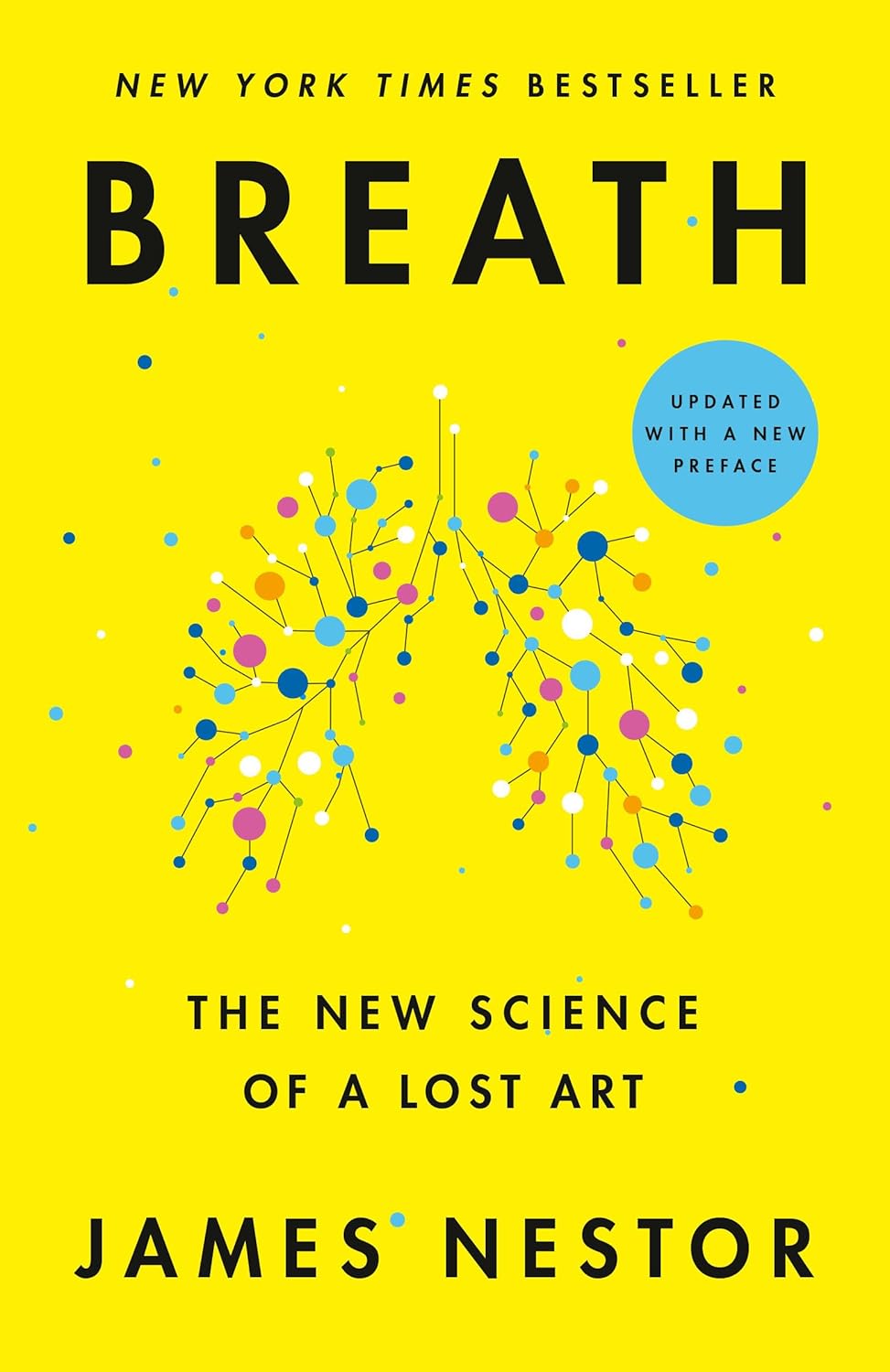
by James Nestor
NOW IN PAPERBACK – THE MILLION COPY NEW YORK TIMES BESTSELLER, FEATURING NEW MATERIAL "I highly recommend this book." —Wim Hof “A fascinating scientific, cultural, spiritual and evolutionary history of the way humans breathe—and how we’ve all been doing it wrong for a long, long time.” —Elizabeth Gilbert "This book is amazing. “ —Joe Rogan No matter what you eat, how much you exercise, how skinny or young or wise you are, none of it matters if you’re not breathing properly. There is nothing more essential to our health and well-being than breathing: take air in, let it out, repeat twenty-five thousand times a day. Yet, as a species, humans have lost the ability to breathe correctly, with grave consequences. Journalist James Nestor travels the world to figure out what went wrong and how to fix it. The answers aren’t found in pulmonology labs, as we might expect, but in the muddy digs of ancient burial sites, secret Soviet facilities, New Jersey choir schools, and the smoggy streets of São Paulo. Nestor tracks down men and women exploring the hidden science behind ancient breathing practices like Pranayama, Sudarshan Kriya, and Tummo and teams up with pulmonary tinkerers to scientifically test long-held beliefs about how we breathe. Modern research is showing us that making even slight adjustments to the way we inhale and exhale can jump-start athletic performance; rejuvenate internal organs; halt snoring, asthma, and autoimmune disease; and even straighten scoliotic spines. None of this should be possible, and yet it is. Drawing on thousands of years of medical texts and recent cutting-edge studies in pulmonology, psychology, biochemistry, and human physiology, Breath turns the conventional wisdom of what we thought we knew about our most basic biological function on its head. You will never breathe the same again.
The New York Times bestselling author of Begin Again confronts America’s unfinished story in this blistering reassessment of race, freedom, and the myths that bind us. “A thoughtful, insightful, beautifully written book that is timely and welcomed in these perilous times.”—Bryan Stevenson, #1 New York Times bestselling author of Just Mercy “Eddie S. Glaude Jr. opens a necessary conversation as we reflect on the meaning of our country’s 250th anniversary.”—Annette Gordon-Reed, Pulitzer Prize– and National Book Award–winning author of The Hemingses of Monticello Celebrated public intellectual Eddie S. Glaude, Jr. presents a groundbreaking analysis of the vicious cycles of American history and the country’s enduring refusal to face its true nature—especially at the moments when national anniversaries steer us back toward the mythology meant to disguise the truth. America, U.S.A., deliberately formulated and beautifully written, details a heart-wrenching exploration of America’s legacy. It is a magnificently complex combination of lessons and voices—from W.E.B. DuBois and John Dos Passos to Herman Melville and Martin Luther King, Jr.—that, together, paint a sprawling and honest tableau of the United States, its complicated past, and ever more tenuous future. Glaude’s is a powerful voice of conscience in our tumultuous world. He pulls no punches, calling on us to interrogate our conceptions of innocence and freedom and the stories we tell ourselves about our past and present. Centered around the major celebrations of America’s milestone birthdays across 250 years of history, the book offers a riveting look at the battles over who has a stake in writing the American story. Devastatingly candid, profoundly moving, and deeply reflective, America, U.S.A. is a shining meditation on how we must reckon with a grim past in order to strive for the better angels of our future.

by Tom Beer
The second edition of Environmental Oceanography is the first textbook to link the needs of the coastal oceanographer and the environmental practitioner. The ever-increasing human impact on the environment, and particularly on the coastal zone, has led governments to carefully examine the environmental implications of development proposals. This book provides the background needed to undertake coastal oceanographic investigations and sets them in context by incorporating case studies and sample problems based on the author's experience as an environmental consultant.

by Max Born
A Nobel Prize-winning physicist explains the historical background and scientific principles of Einstein's famous theory
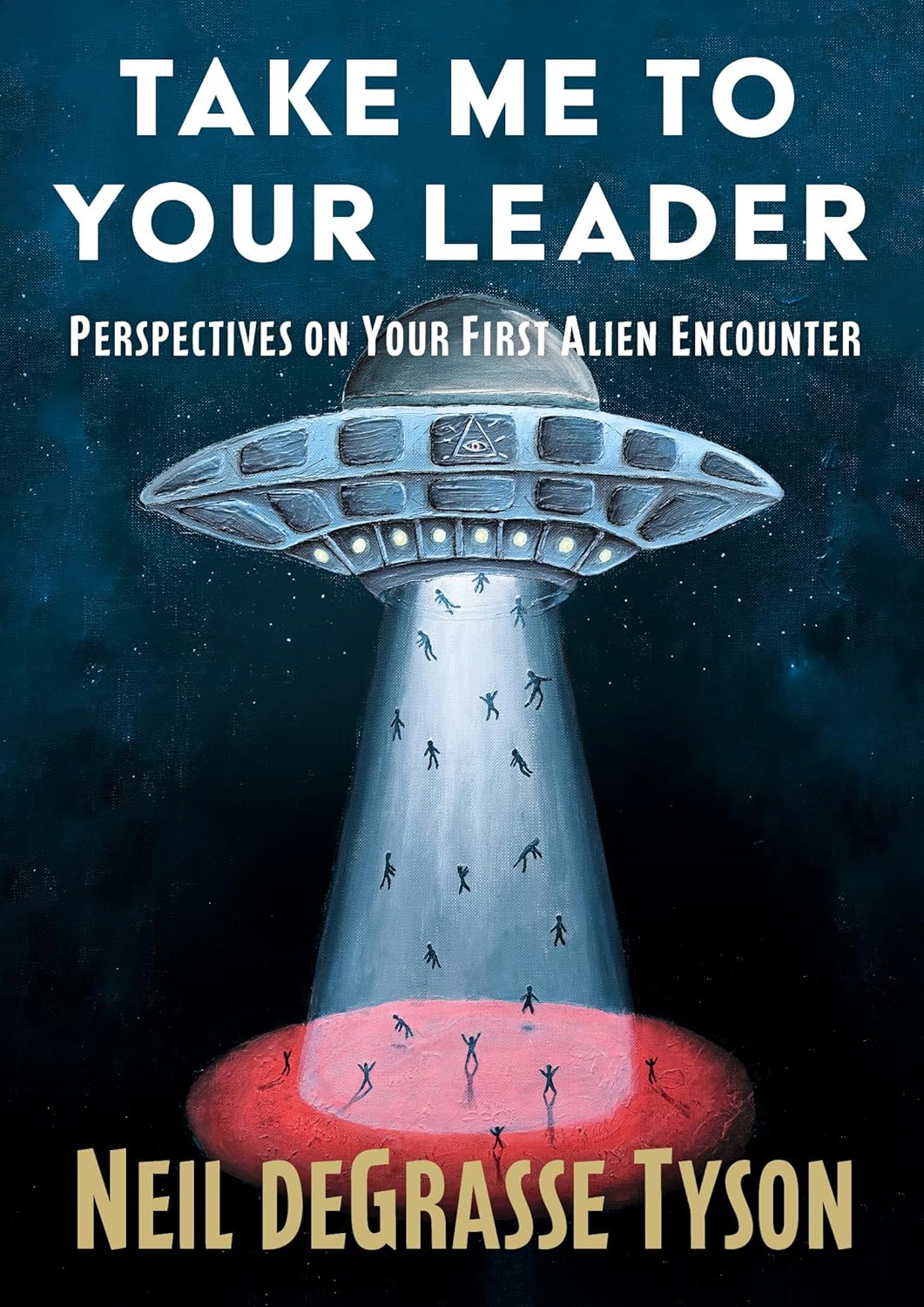
The culmination of a lifetime of fascination and speculation, Tyson applies the universal laws of physics to make the case for what aliens might look like, act like, how they might travel, what they might think. Should such an event occur, Tyson offers useful etiquettte tips for your first close encounter.

by Hans Moravec
"A dizzying display of intellect and wild imaginings by Moravec, a world-class roboticist who has himself developed clever beasts . . . Undeniably, Moravec comes across as a highly knowledgeable and creative talent--which is just what the field needs".--Kirkus Reviews.
This provocative volume, one of the most important interpretive works on the philosophical thought of the Renaissance, has long been regarded as a classic in its field. Ernst Cassirer here examines the changes brewing in the early stages of the Renaissance, tracing the interdependence of philosophy, language, art, and science; the newfound recognition of individual consciousness; and the great thinkers of the period—from da Vinci and Galileo to Pico della Mirandola and Giordano Bruno. The Individual and the Cosmos in Renaissance Philosophy discusses the importance of fifteenth-century philosopher Nicholas Cusanus, the concepts of freedom and necessity, and the subject-object problem in Renaissance thought. “This fluent translation of a scholarly and penetrating original leaves little impression of an attempt to show that a ‘spirit of the age’ or ‘spiritual essence of the time’ unifies and expresses itself in all aspects of society or culture.”—Philosophy
When the International Astronomical Union (IAU) adopted a new definition of a "planet" in August 2006, Pluto became a dwarf planet, drawing a divisive line in science and public opinions. The controversy of whether Pluto is a planet continues years later, and passion about the decision remains, pitting scientist against scientist and invoking sentiments and nostalgia from the rest of the world. With the IAU definition, the future of space objects is forever changed. Learn how this resolution came to be and what it means for astronomy, who implemented it and who is against it, and whether it's the first or millionth time the world's view of astronomy has rotated on its axis. Written by an astronomer and educator who voted for the IAU resolution—Laurence A. Marschall—and a NASA scientist who supported the opposing petition that resulted—Stephen P. Maran—Pluto Confidential leaves no perspective out and no asteroid unturned in the Pluto debate. A telescopic look inside the book: History of planetary disputes, including why Jupiter almost wasn't acknowledged What Bode's Law is and how it has influenced observations Who discovered Pluto and how it was named The Kuiper Belt and its role in what it means to be a planet Beyond Pluto and the eight distinguished planets

"Scientists have recently discovered shards of the flu virus in human remains frozen in the Arctic tundra and in scraps of tissue preserved in a government warehouse. In Flu, Gina Kolata, reporter for The New York Times, unravels the mystery of this lethal virus with the high drama of a great adventure story. From Alaska to Norway, from the streets of Hong Kong to the corridors of the White House, Kolata tracks the race to recover the live pathogen and probes the fear that has impelled government policy. She delves into the history of the flu and previous epidemics, profiles the experts hot on the trail and the amateurs woefully misguided, and details the science and the latest understanding of this mortal disease."--BOOK JACKET.Title Summary field provided by Blackwell North America, Inc. All Rights Reserved

The New York Times bestselling author and former U.S. Attorney offers a piercing exposé on the escalating threat of far-right politics—and a clear roadmap for saving our democracy. In The Fix, McQuade draws on her decades of experience as a federal prosecutor to reveal how systems of organized crime and political opportunism exploit the levers of power—using corruption, cruelty, and chaos as tools to dominate institutions and eliminate accountability. With clarity, precision, and moral force, she exposes the tactics of today’s far-right MAGA system: information warfare, aggressive retribution, conformism enforced by fear, and pervasive dismantling of legal checks and balances necessary to defend the public interest and uphold justice. Weaving together courtroom stories, real-time political analysis, and cautionary lessons from history and democratic backsliding abroad, McQuade makes the case that the threats we face are not future possibilities—they’re already here. Yet The Fix is not just a warning; it is a call to action. In the book’s final chapters, McQuade outlines common-sense reforms and strategies that can reclaim the rule of law and recenter democracy with the power of the people. Accessible, eye-opening, and grounded in constitutional faith, The Fix is essential reading for everyone concerned about the future of America—and ready to work together to take a stand for it.
Peripheral nerve analysis is a challenging task for pathologists, given the advent of new diagnoses and techniques of analysis and the impact of molecular genetics. This book presents a simple, logical method for constructing a differential diagnosis based on pathology and clinical presentation. It also provides advice on the selection of ancillary molecular, immunohistochemical and genetic techniques to establish a definitive diagnosis. Clear, authoritative guidance is offered on diagnosis of the full range of neuropathies with the aid of a wealth of high-quality color photomicrographs and electron micrographs. The pathologist will benefit greatly from the identification of a variety of artifacts and normal structures occasionally encountered in nerve biopsies that need to be distinguished from specific pathologic alterations. This user-friendly, practical text will be an invaluable aid in achieving the most specific diagnosis possible.

This book takes an integrated approach, using the principles of story structure to discuss every aspect of successful science writing, from the overall structure of a paper or proposal to individual sections, paragraphs, sentences, and words. It begins by building core arguments, analyzing why some stories are engaging and memorable while others are quickly forgotten, and proceeds to the elements of story structure, showing how the structures scientists and researchers use in papers and proposals fit into classical models. The book targets the internal structure of a paper, explaining how to write clear and professional sections, paragraphs, and sentences in a way that is clear and compelling.
