Top 15 in Business
Week of July 13, 2026

by Mel Robbins
National Bestseller! As seen on The Today Show! How to enrich your life and destroy doubt in 5 seconds. Throughout your life, you've had parents, coaches, teachers, friends and mentors who have pushed you to be better than your excuses and bigger than your fears. What if the secret to having the confidence and courage to enrich your life and work is simply knowing how to push yourself? Using the science of habits, riveting stories and surprising facts from some of the most famous moments in history, art and business, Mel Robbins will explain the power of a “push moment.” Then, she’ll give you one simple tool you can use to become your greatest self. It takes just five seconds to use this tool, and every time you do you’ll be in great company. More than 8 million people have watched Mel’s TEDx Talk, and executives inside of the world’s largest brands are using the tool to increase productivity, collaboration, and engagement. In The 5 Second Rule, you’ll discover it takes just five seconds to: Become confident Break the habit of procrastination and self-doubt Beat fear and uncertainty Stop worrying and feel happier Share your ideas with courage The 5 Second Rule is a simple, one-size-fits-all solution for the one problem we all face—we hold ourselves back. The secret isn’t knowing what to do—it’s knowing how to make yourself do it.

by Daniel Coyle
NEW YORK TIMES BESTSELLER • The author of The Talent Code unlocks the secrets of highly successful groups and provides tomorrow’s leaders with the tools to build a cohesive, motivated culture. “A truly brilliant, mesmerizing read that demystifies the magic of great groups.”—Adam Grant, author of Think Again A BLOOMBERG AND LIBRARY JOURNAL BEST BOOK OF THE YEAR Where does great culture come from? How do you build and sustain it in your group, or strengthen a culture that needs fixing? In The Culture Code, Daniel Coyle goes inside some of the world’s most successful organizations—including the U.S. Navy’s SEAL Team Six, IDEO, and the San Antonio Spurs—and reveals what makes them tick. He demystifies the culture-building process by identifying three key skills that generate cohesion and cooperation, and explains how diverse groups learn to function with a single mind. Drawing on examples that range from Internet retailer Zappos to the comedy troupe Upright Citizens Brigade to a daring gang of jewel thieves, Coyle offers specific strategies that trigger learning, spark collaboration, build trust, and drive positive change. Coyle unearths helpful stories of failure that illustrate what not to do, troubleshoots common pitfalls, and shares advice about reforming a toxic culture. Combining leading-edge science, on-the-ground insights from world-class leaders, and practical ideas for action, The Culture Code offers a roadmap for creating an environment where innovation flourishes, pro
by Janet V. Denhardt
The New Public Service: Serving, not Steering provides a framework for the many voices calling for the reaffirmation of democratic values, citizenship, and service in the public interest. It is organized around a set of seven core principles: (1) serve citizens, not customers; (2) seek the public interest; (3) value citizenship and public service above entrepreneurship; (4) think strategically, act democratically; (5) recognize that accountability isn’t simple; (6) serve, rather than steer; and (7) value people, not just productivity. The New Public Service asks us to think carefully and critically about what public service is, why it is important, and what values ought to guide what we do and how we do it. It celebrates what is distinctive, important, and meaningful about public service and considers how we might better live up to those ideals and values. The revised fourth edition includes a new chapter that examines how the role and significance of these New Public Service values have expanded in practice and research over the past 15 years. Although the debate about governance will surely continue for many years, this compact, clearly written volume both provides an important framework for a public service based on citizen discourse and the public interest and demonstrates how these values have been put into practice. It is essential reading fo students and serious practitioners in public administration and public policy.

by Charles Duhigg
NEW YORK TIMES BESTSELLER • MORE THAN 3 MILLION COPIES SOLD • This instant classic explores how we can change our lives by changing our habits. “Few [books] become essential manuals for business and living. The Power of Habit is an exception.”—Financial Times A WALL STREET JOURNAL AND FINANCIAL TIMES BEST BOOK OF THE YEAR In The Power of Habit, award-winning business reporter Charles Duhigg takes us to the thrilling edge of scientific discoveries that explain why habits exist and how they can be changed. Distilling vast amounts of information into engrossing narratives that take us from the boardrooms of Procter & Gamble to the sidelines of the NFL to the front lines of the civil rights movement, Duhigg presents a whole new understanding of human nature and its potential. At its core, The Power of Habit contains an exhilarating argument: The key to exercising regularly, losing weight, being more productive, and achieving success is understanding how habits work. As Duhigg shows, by harnessing this new science, we can transform our businesses, our communities, and our lives. With a new Afterword by the author

by Chris Voss, Tahl Raz
A former international hostage negotiator for the FBI offers a new, field-tested approach to high-stakes negotiations—whether in the boardroom or at home. After a stint policing the rough streets of Kansas City, Missouri, Chris Voss joined the FBI, where his career as a hostage negotiator brought him face-to-face with a range of criminals, including bank robbers and terrorists. Reaching the pinnacle of his profession, he became the FBI’s lead international kidnapping negotiator. Never Split the Difference takes you inside the world of high-stakes negotiations and into Voss’s head, revealing the skills that helped him and his colleagues succeed where it mattered most: saving lives. In this practical guide, he shares the nine effective principles—counterintuitive tactics and strategies—you too can use to become more persuasive in both your professional and personal life. Life is a series of negotiations you should be prepared for: buying a car, negotiating a salary, buying a home, renegotiating rent, deliberating with your partner. Taking emotional intelligence and intuition to the next level, Never Split the Difference gives you the competitive edge in any discussion.

by Dale Carnegie
This new edition of the most influential self-help book of the last century features updated information from the author's daughter, with timeless advice on topics such as effective communication and navigating social situations.

by Chip Heath
#1 NEW YORK TIMES BESTSELLER • ONE MILLION COPIES SOLD! The ultimate guide to making changes and following through, from the authors of Made to Stick and Decisive—hailed as “witty and instructive” (The Wall Street Journal), “packed with examples and hands-on tools that will get you moving right away” (BusinessWeek) Why is it so hard to make lasting changes in our companies, in our communities, and in our own lives? The primary obstacle is a conflict that's built into our brains, say Chip and Dan Heath. Psychologists have discovered that our minds are ruled by two different systems—the rational mind and the emotional mind—that compete for control. The rational mind wants a great beach body; the emotional mind wants that Oreo cookie. The rational mind wants to change something at work; the emotional mind loves the comfort of the existing routine. This tension can doom a change effort—but if it is overcome, change can come quickly. In Switch, the Heaths show how everyday people—employees and managers, parents and nurses—have united both minds and, as a result, achieved dramatic results: • the lowly medical interns who managed to defeat an entrenched, decades-old medical practice that was endangering patients • the home-organizing guru who developed a simple technique for overcoming the dread of housekeeping • the manager who transformed a lackadaisical customer-support team into service zealots by removing a standard tool of customer service In a compelling, story-driven narrati

by Peter F. Drucker
Management is an organized body of knowledge. "This book," in Peter Drucker'swords, "tries to equip the manager with the understanding, the thinking, the knowledge and the skills for today'sand also tomorrow's jobs." This management classic has been developed and tested during more than thirty years of teaching management in universities, in executive programs and seminars and through the author's close work with managers as a consultant for large and small businesses, government agencies, hospitals and schools. Drucker discusses the tools and techniques of successful management practice that have been proven effective, and he makes them meaningful and easily accessible.
by Benoit Daviron
Can developing countries trade their way out of poverty? International trade has grown dramatically in the last two decades in the global economy, and trade is an important source of revenue in developing countries. Yet, many low-income countries have been producing and exporting tropical commodities for a long time. They are still poor. This book is a major analytical contribution to understanding commodity production and trade, as well as putting forward policy-relevant suggestions for ‘solving’ the commodity problem. Through the study of the global value chain for coffee, the authors recast the ‘development problem’ for countries relying on commodity exports in entirely new ways. They do so by analysing the so-called coffee paradox – the coexistence of a ‘coffee boom’ in consuming countries and of a ‘coffee crisis’ in producing countries. New consumption patterns have emerged with the growing importance of specialty, fair trade and other ‘sustainable’ coffees. In consuming countries, coffee has become a fashionable drink and coffee bar chains have expanded rapidly. At the same time, international coffee prices have fallen dramatically and producers receive the lowest prices in decades. This book shows that the coffee paradox exists because what farmers sell and what consumers buy are becoming increasingly ‘different’ coffees. It is not material quality that contemporary coffee consumers pay for, but mostly symbolic quality and in-person services. As long as coffee farmers

by Thomas A. Bass
The author of The Eudaemonic Pie now reveals the inspiration, motivations, and aspirations of the world's greatest scientists. The scientists interviewed in this collection have changed the rules of the game--altered our perception of reality and the language used to describe it.
by Peter G. Northouse
The Fourth Edition of Peter G. Northouse’s bestselling Introduction to Leadership: Concepts and Practice provides readers with a clear overview of the complexities of practicing leadership and concrete strategies for becoming better leaders. The text is organized around key leader responsibilities such as creating a vision, establishing a constructive climate, listening to outgroup members, and overcoming obstacles. Three interactive components in every chapter—self-assessment questionnaires, observational exercises, and reflection and action worksheets—get readers actively involved in applying leadership concepts to their own lives. Grounded in leadership theory and the latest research, the fully updated, highly practical Fourth Edition includes a new chapter on how leaders can embrace diversity and inclusion, as well as new material on the dark side of leadership and a new ethical leadership style questionnaire.
by Todd G. Buchholz
An entertaining and widely-praised introduction to great economic thinkers throughout history, now in its fourth edition, with updates and commentary on the 2020 “great cessation,” Trump and Obama economic policies, the dominance of Amazon, and many other timely topics. Through the teachings of Adam Smith, Thomas Malthus, Karl Marx, John Maynard Keynes, Milton Friedman and more, renowned economist Todd Buchholz shows how age-old ideas still apply to our modern world. In this revised edition, Buchholz offers fascinating insights on the most relevant issues of 2021: climate change, free trade debates, the refugee crisis, growth and conflict in Russia and China, game theory, and behavioral economics. New Ideas from Dead Economists—found on the desks of university students, prime ministers, and Wall Street titans—is a riveting guide to understanding both the evolution of economic theory and our complex contemporary economy.

by Philip M. Parker
He presents evidence that long-run growth can be attributed to variances in hypothalmic activity."--BOOK JACKET.

by Malcolm Gladwell
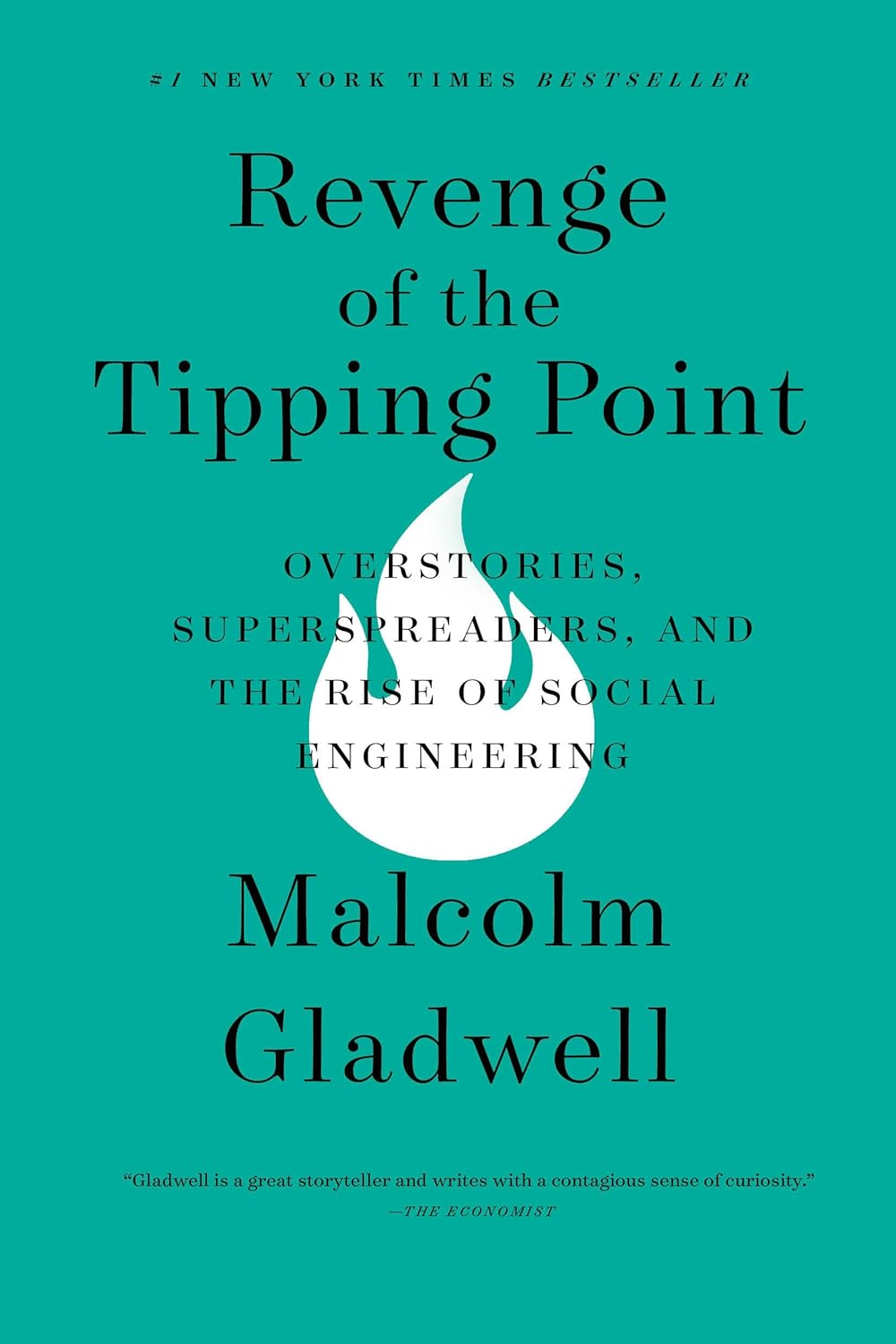
Twenty-five years after the publication of his groundbreaking first book, Malcolm Gladwell returns with "curiosity and humor" in this New York Times bestseller that reframes the lessons of The Tipping Point in a startling and revealing light (Shannon Carlin). Why is Miami...Miami? What does the heartbreaking fate of the cheetah tell us about the way we raise our children? Why do Ivy League schools care so much about sports? What is the Magic Third, and what does it mean for racial harmony? In this provocative new work, Malcolm Gladwell returns for the first time in twenty-five years to the subject of social epidemics and tipping points, this time with the aim of explaining the dark side of contagious phenomena. Through a series of riveting stories, Gladwell traces the rise of a new and troubling form of social engineering. He takes us to the streets of Los Angeles to meet the world's most successful bank robbers, rediscovers a forgotten television show from the 1970s that changed the world, visits the site of a historic experiment on a tiny cul-de-sac in northern California, and offers an alternate history of two of the biggest epidemics of our day: COVID and the opioid crisis. Revenge of the Tipping Point is Gladwell's most personal book yet. With his characteristic mix of storytelling and social science, he offers a guide to making sense of the contagions of modern world. It's time we took tipping points seriously. Most Anticipated in: AARP| Associated Press| Time Magazine | Oprah Daily | Chicago Tribune | Literary Hub | Publishers Weekly | Publishers Lunch
by Brad Stone
The authoritative account of the rise of Amazon and its intensely driven founder, Jeff Bezos, praised by the Seattle Times as "the definitive account of how a tech icon came to life." Amazon.com started off delivering books through the mail. But its visionary founder, Jeff Bezos, wasn't content with being a bookseller. He wanted Amazon to become the everything store, offering limitless selection and seductive convenience at disruptively low prices. To do so, he developed a corporate culture of relentless ambition and secrecy that's never been cracked. Until now. Brad Stone enjoyed unprecedented access to current and former Amazon employees and Bezos family members, giving readers the first in-depth, fly-on-the-wall account of life at Amazon. Compared to tech's other elite innovators -- Jobs, Gates, Zuckerberg -- Bezos is a private man. But he stands out for his restless pursuit of new markets, leading Amazon into risky new ventures like the Kindle and cloud computing, and transforming retail in the same way Henry Ford revolutionized manufacturing. The Everything Store is the revealing, definitive biography of the company that placed one of the first and largest bets on the Internet and forever changed the way we shop and read.