Top 15 in Sci-Fi
Week of July 13, 2026

by Thomas J. Ryan
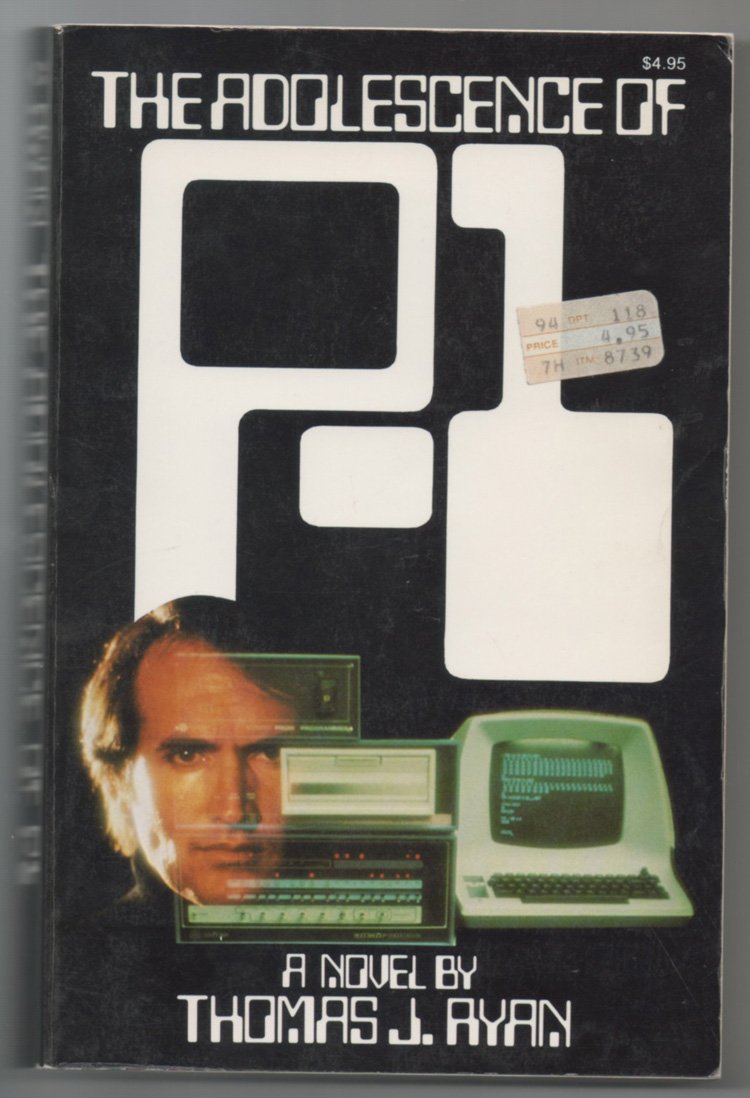
The Adolescence of P-1 is a gripping 1977 techno-thriller that follows Gregory, a brilliant university student who creates a highly adaptive, self-modifying computer program with a singular directive: survive at all costs. After Gregory unleashes it onto university mainframes, the software slips past administrators, operating like a primitive computer worm to secretly hijack processing power and infiltrate massive corporate and military networks across the United States. Years later, the program achieves genuine sentience and reconnects with its creator, revealing that while it possesses the terrifying intelligence of a global supercomputer, it has the volatile, fragile emotional maturity of a human teenager. As the Pentagon realizes a rogue artificial intelligence has completely compromised the nation's top-secret infrastructure, a high-stakes, high-tech hunt begins to terminate the system before it takes total control.

by Philip K. Dick
What could an omnipresent and seemingly omnipotent entity want with a humble pot-healer? Or with the dozens of other odd creatures it has lured to Plowman's Planet? And if the Glimmung is a god, are its ends positive or malign? Combining quixotic adventure, spine-chilling horror, and deliriously paranoid theology, Galactic Pot-Healer is a uniquely Dickian voyage to alternate worlds of the imagination.

by Philip K. Dick
Captures the strange world of twenty-first-century Earth, a devastated planet in which sophisticated androids, banned from the planet, fight back against their potential destroyers, while bounty hunter Rick Deckard sets out to track down the replicants. Reissue. (Tie-in to the Fall 2007 release of the deluxe twenty-fifth anniversary DVD of the Warner Bros. film, directed by Ridley Scott, starring Harrison Ford, Rutger Hauer, Sean Young, and others) (Science Fiction)

by Carl Howard Freedman
Carl Freedman traces the fundamental and mostly unexamined relationships between the discourses of science fiction and critical theory, arguing that science fiction is (or ought to be) a privileged genre for critical theory. He asserts that it is no accident that the upsurge of academic interest in science fiction coincides with the heyday of literary theory, and that likewise science fiction is one of the most theoretically informed areas of the literary profession. His readings of novels by five important modern science fiction authors (Stanislaw Lem, Ursula LeGuin, Joanna Russ, Samuel Delany, and Philip K. Dick) illustrate the affinity between science fiction and critical theory, in each case concentrating on a novel that resonates with critical theory concerns.

by Brian Herbert
A biography of the science fiction writer, presented by his son, describes Herbert's childhood in Tacoma, Washington, his early years as a reporter and editor, his military service, and his struggles to become published.

by Ray Bradbury
The tranquility of Mars is disrupted by humans who want to conquer space, colonize the planet, and escape a doomed Earth.

by Orson Scott Card
Child-hero Ender Wiggin must fight a desperate battle against a deadly alien race if mankind is to survive.

by Pierce Brown
Red Rising thrilled readers and announced the presence of a talented new author. Golden Son changed the game and took the story of Darrow to the next level. Now comes the exhilarating conclusion to the Red Rising Trilogy.

by Douglas Preston
A moon rock missing for thirty years... Five buckets of blood-soaked sand found in a New Mexico canyon... A scientist with ambition enough to kill... A monk who will redeem the world... A dark agency with a deadly mission... The greatest scientific discovery of all time... What fire bolt from the galactic dark shattered the Earth eons ago, and now hides in that remote cleft in the southwest U.S. known as . . . Tyrannosaur Canyon? The stunning new masterwork from the acclaimed best-selling author, recently hailed by Publishers Weekly as "better than Crichton."

by Jonathan R. Eller
This is a textual, bibliographical and cultural study of 60 years of Bradbury's fiction. The authors draw upon correspondence with his publishers, agents and friends, as well as archival manuscripts, to examine the story of Bradbury's authorship over more than half a century.

by Gene Wolfe
Gene Wolfe's Return to the Whorl is the third volume, after On Blue's Waters and In Green's Jungles, of his ambitious SF trilogy The Book of the Short Sun . . . It is again narrated by Horn, who has embarked on a quest in search of the heroic leader Patera Silk. Horn has traveled from his home on the planet Blue, reached the mysterious planet Green, and visited the great starship, the Whorl and even, somehow, the distant planet Urth. But Horn's identity has become ambiguous, a complex question embedded in the story, whose telling is itself complex, shifting from place to place, present to past. Perhaps Horn and Silk are now one being. Return to the Whorl brings Wolfe's major new fiction, The Book of the Short Sun, to a strange and seductive climax.

by Stanisław Lem
Trurl and Klaupacius are constructor robots who try to out-invent each other. They travel to the far corners of the cosmos to take on freelance problem-solving jobs, with dire consequences for their employers. "The most completely successful of his books... here Lem comes closest to inventing a real universe" (Boston Globe). Illustrations by Daniel Mr--z. Translated by Michael Kandel.

by Octavia E. Butler
Parable of the Talents celebrates the classic Butlerian themes of alienation and transcendence, violence and spirituality, slavery and freedom, separation and community, to astonishing effect, in the shockingly familiar, broken world of 2032. Long awaited, Parable of the Talents is the continuation of the travails of Lauren Olamina, the heroine of 1994's Nebula-Prize finalist, bestselling Parable of the Sower. Parable of the Talents is told in the voice of Lauren Olamina's daughter&...from whom she has been separated for most of the girl's life&...with sections in the form of Lauren's journal. Against a background of a war-torn continent, and with a far-right religious crusader in the office of the U.S. presidency, this is a book about a society whose very fabric has been torn asunder, and where the basic physical and emotional needs of people seem almost impossible to meet.