Top 15 in Politics & Social Sciences
Week of July 20, 2026

by Gananath Obeyesekere
In this radical reexamination of the notion of cannibalism, Gananath Obeyesekere offers a fascinating and convincing argument that cannibalism is mostly "cannibal talk," a discourse on the Other engaged in by both indigenous peoples and colonial intruders that results in sometimes funny and sometimes deadly cultural misunderstandings. Turning his keen intelligence to Polynesian societies in the early periods of European contact and colonization, Obeyesekere deconstructs Western eyewitness accounts, carefully examining their origins and treating them as a species of fiction writing and seamen's yarns. Cannibalism is less a social or cultural fact than a mythic representation of European writing that reflects much more the realities of European societies and their fascination with the practice of cannibalism, he argues. And while very limited forms of cannibalism might have occurred in Polynesian societies, they were largely in connection with human sacrifice and carried out by a select community in well-defined sacramental rituals. Cannibal Talk considers how the colonial intrusion produced a complex self-fulfilling prophecy whereby the fantasy of cannibalism became a reality as natives on occasion began to eat both Europeans and their own enemies in acts of "conspicuous anthropophagy."
by Eddie S. Glaude Jr.
The New York Times bestselling author of Begin Again confronts America’s unfinished story in this blistering reassessment of race, freedom, and the myths that bind us. “A thoughtful, insightful, beautifully written book that is timely and welcomed in these perilous times.”—Bryan Stevenson, #1 New York Times bestselling author of Just Mercy “Eddie S. Glaude Jr. opens a necessary conversation as we reflect on the meaning of our country’s 250th anniversary.”—Annette Gordon-Reed, Pulitzer Prize– and National Book Award–winning author of The Hemingses of Monticello Celebrated public intellectual Eddie S. Glaude, Jr. presents a groundbreaking analysis of the vicious cycles of American history and the country’s enduring refusal to face its true nature—especially at the moments when national anniversaries steer us back toward the mythology meant to disguise the truth. America, U.S.A., deliberately formulated and beautifully written, details a heart-wrenching exploration of America’s legacy. It is a magnificently complex combination of lessons and voices—from W.E.B. DuBois and John Dos Passos to Herman Melville and Martin Luther King, Jr.—that, together, paint a sprawling and honest tableau of the United States, its complicated past, and ever more tenuous future. Glaude’s is a powerful voice of conscience in our tumultuous world. He pulls no punches, calling on us to interrogate our conceptions of innocence and freedom and the stories we tell ourselves about our past and present. Centered around the major celebrations of America’s milestone birthdays across 250 years of history, the book offers a riveting look at the battles over who has a stake in writing the American story. Devastatingly candid, profoundly moving, and deeply reflective, America, U.S.A. is a shining meditation on how we must reckon with a grim past in order to strive for the better angels of our future.

by Jean Bodin
Contains four chapters from Jean Bodin's classic text "Six Livres de la Republique". These chapters form the core of the work, detailing Bodin's theory of sovereignty, which contended that the entire power of the state should be vested in a single individual or group.

by Justin A. Frank
A renowned Washington, D.C.-based psychoanalyst examines George W. Bush's public persona and asks serious questions about whether he's fit for the office he holds.

by Neal Bascomb
With the intrigue of a detective story, "Hunting Eichmann" follows the Nazi as he escapes two American POW camps, hides in the mountains, and builds an anonymous life in Buenos Aires, before finally being captured and brought to trial.

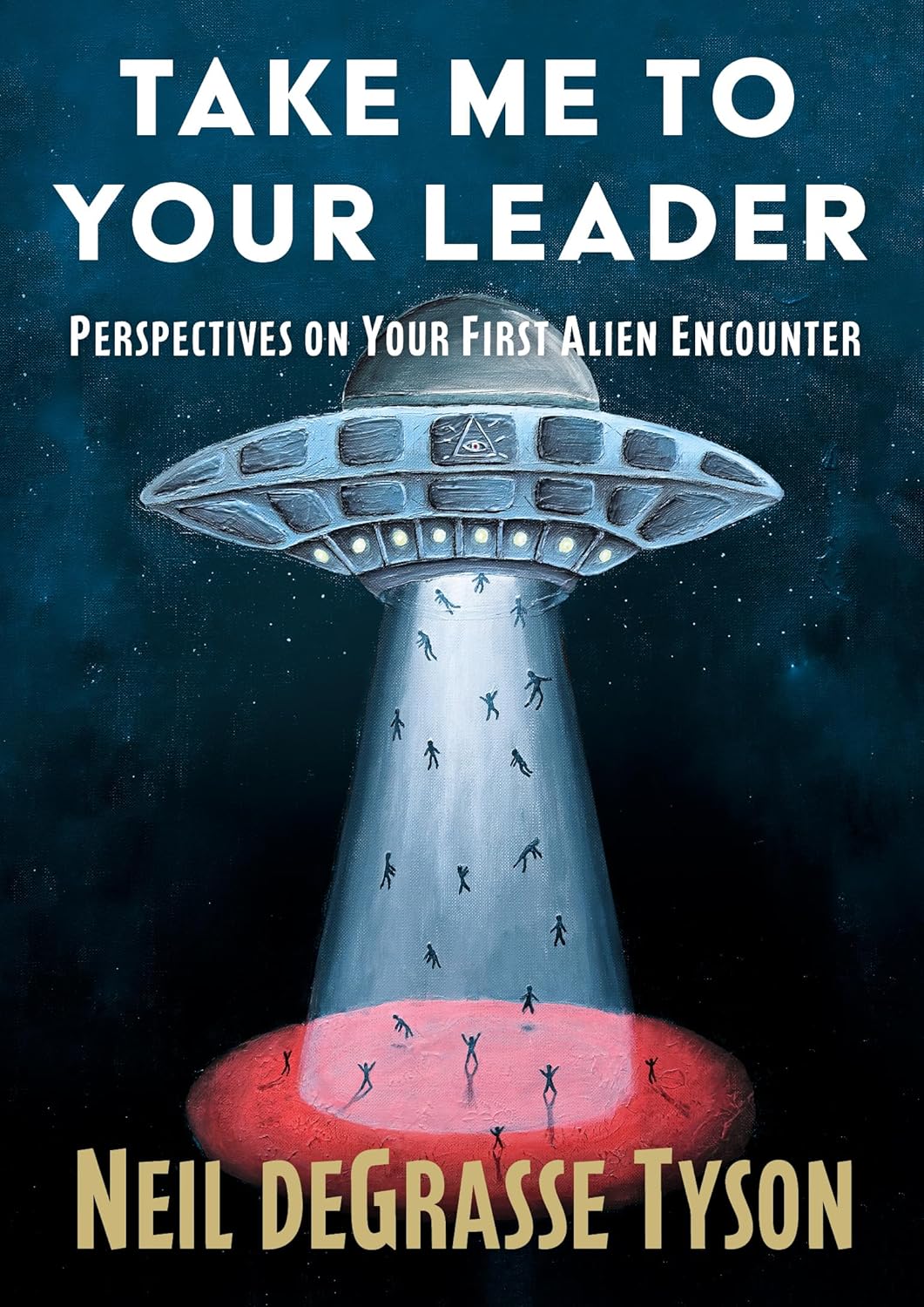
by Neil deGrasse Tyson
The culmination of a lifetime of fascination and speculation, Tyson applies the universal laws of physics to make the case for what aliens might look like, act like, how they might travel, what they might think. Should such an event occur, Tyson offers useful etiquettte tips for your first close encounter.
by Leslie A White
Provides information on the anthropology of modern capitalism. Drawing out on classic formulations of social organization, cultural evolution, and the relationship between technology, ecology, and culture, this work traces an expanse of history from the earliest forms of capitalism to the inner workings of contemporary democratic institutions

by Pippa Norris
The belief that religion was dying became the conventional wisdom in the social sciences during most of the 20th century. However, religion has not disappeared and is unlikely to do so, and the secularization thesis needs updating. This text develops a theory of secularization and existential security.

by Bob Woodward
In Obama’s Wars, Bob Woodward provides the most intimate and sweeping portrait yet of the young president as commander in chief. Drawing on internal memos, classified documents, meeting notes and hundreds of hours of interviews with most of the key players, including the president, Woodward tells the inside story of Obama making the critical decisions on the Afghanistan War, the secret campaign in Pakistan and the worldwide fight against terrorism. At the core of Obama’s Wars is the unsettled division between the civilian leadership in the White House and the United States military as the president is thwarted in his efforts to craft an exit plan for the Afghanistan War. “So what’s my option?” the president asked his war cabinet, seeking alternatives to the Afghanistan commander’s request for 40,000 more troops in late 2009. “You have essentially given me one option. ...It’s unacceptable.” “Well,” Secretary of Defense Robert Gates finally said, “Mr. President, I think we owe you that option.” It never came. An untamed Vice President Joe Biden pushes relentlessly to limit the military mission and avoid another Vietnam. The vice president frantically sent half a dozen handwritten memos by secure fax to Obama on the eve of the final troop decision. President Obama’s ordering a surge of 30,000 troops and pledging to start withdrawing U.S. forces by July 2011 did not end the skirmishing. General David Petraeus, the new Afghanistan commander, thinks time can be added to the clock i

by Ellen Seiter
Based on four years of experience teaching computers to 8-12 year olds, media scholar Ellen Seiter offers parents and educators practical advice on what children need to know about the Internet and when they need to know it. The Internet Playground argues that, contrary to the promises of technology boosters, teaching with computers is very difficult. Seiter points out that the Internet today resembles a mall more than it does a library. While children love to play online games, join fan communities, and use online chat and instant messaging, the Internet is also an appallingly aggressive marketer to children and, as this book passionately argues, an educational boondoggle.

by Michael Pollan
The Instant New York Times Bestseller "Pollan’s real genius—the word is not too strong—remains intact. That is his uncanny ability to scent the direction in which the culture is headed. He did it with food and psychedelics, and now, though A World Appears focuses on AI only intermittently, he has done it again." —Charles Finch, The Atlantic From the #1 New York Times bestselling author of How to Change Your Mind, a panoptic exploration of consciousness—what it is, who has it, and why—and a meditation on the essence of our humanity When it comes to the phenomenon that is consciousness, there is one point on which scientists, philosophers, and artists all agree: it feels like something to be us.

by Sasha Issenberg
Journalist Sash Issenberg traces sushi's journey from Tokyo street snack to global delicacy, in this fascinating history. Issenberg examines not just the foodstuff itself, but the history, economics and businesses behind the famous fish recipes. It covers topics including the birth of modern sushi, the mysterious underworld of pirates and the tuna black market, Nobu Matsuhisa and what sushi chefs really do behind the bar. It jumps from Mediterranean docks to tuna-auctions to cargo holds to Shanghai streets, all the while making a surprising case against eating local.

by Helen Thomas
White House journalist for more than five decades chronicles her work covering all of the presidents since John F. Kennedy. Shares personal reminiscences of the U.S. leaders as well as of the first ladies. Bestseller.
by Karl Polanyi
In this classic work of economic history and social theory, Karl Polanyi analyzes the economic and social changes brought about by the "great transformation" of the Industrial Revolution. His analysis explains not only the deficiencies of the self-regulating market, but the potentially dire social consequences of untempered market capitalism. New introductory material reveals the renewed importance of Polanyi's seminal analysis in an era of globalization and free trade.