Top 15 in Self-Help
Week of July 20, 2026

by Adele Faber
“This parenting book actually made me a better parent.”—Lydia Kiesling, The New York Times From #1 New York Times bestselling authors, the ultimate “parenting bible” (The Boston Globe)—a timeless, beloved book on how to effectively communicate with your child. This bestselling classic by internationally acclaimed experts on communication between parents and children includes fresh insights and suggestions, as well as the author’s time-tested methods to solve common problems and build foundations for lasting relationships, including innovative ways to: · Cope with your child’s negative feelings, such as frustration, anger, and disappointment · Express your strong feelings without being hurtful · Engage your child’s willing cooperation · Set firm limits and maintain goodwill · Use alternatives to punishment that promote self-discipline · Understand the difference between helpful and unhelpful praise · Resolve family conflicts peacefully Enthusiastically praised by parents and professionals around the world, Faber and Mazlish’s down-to-earth, respectful approach makes relationships with children of all ages less stressful and more rewarding.

by Leslie A. Perlow
Argues that monitoring one's electronic business communication 24/7 is actually counterproductive and offers a plan for companies to take time to "disconnect" in order to boost their productivity.

by Thomas S. Langner
"This book is written for academics and professionals in psychology, psychiatry, sociology, philosophy, and politics, and is also relevant to a wide general readership."--BOOK JACKET.

by Robert Greene
From the #1 New York Times-bestselling author of The 48 Laws of Power comes the definitive new book on decoding the behavior of the people around you. This is the only authorized paperback edition in the US. Robert Greene is a master guide for millions of readers, distilling ancient wisdom and philosophy into essential texts for seekers of power, understanding and mastery. Now he turns to the most important subject of all - understanding people's drives and motivations, even when they are unconscious of them themselves. We are social animals. Our very lives depend on our relationships with people. Knowing why people do what they do is the most important tool we can possess, without which our other talents can only take us so far. Drawing from the ideas and examples of Pericles, Queen Elizabeth I, Martin Luther King Jr, and many others, Greene teaches us how to detach ourselves from our own emotions and master self-control, how to develop the empathy that leads to insight, how to look behind people's masks, and how to resist conformity to develop your singular sense of purpose. Whether at work, in relationships, or in shaping the world around you, The Laws of Human Nature offers brilliant tactics for success, self-improvement, and self-defense.

by Mel Robbins
#1 New York Times Bestseller #1 Sunday Times Bestseller #1 Amazon Bestseller #1 Audible Bestseller This book was originally published with Mel Robbins as the sole author. A revised cover introduces her daughter, Sawyer Robbins, as the co-author. Customers will be shipped either of the covers at random. A Life-Changing Tool Millions of People Can’t Stop Talking About What if the key to happiness, success, and love was as simple as two words? If you've ever felt stuck, overwhelmed, or frustrated with where you are, the problem isn't you. The problem is the power you give to other people. Two simple words—Let Them—will set you free.

by Dale Carnegie
This new edition of the most influential self-help book of the last century features updated information from the author's daughter, with timeless advice on topics such as effective communication and navigating social situations.

by Chip Heath
#1 NEW YORK TIMES BESTSELLER • ONE MILLION COPIES SOLD! The ultimate guide to making changes and following through, from the authors of Made to Stick and Decisive—hailed as “witty and instructive” (The Wall Street Journal), “packed with examples and hands-on tools that will get you moving right away” (BusinessWeek) Why is it so hard to make lasting changes in our companies, in our communities, and in our own lives? The primary obstacle is a conflict that's built into our brains, say Chip and Dan Heath. Psychologists have discovered that our minds are ruled by two different systems—the rational mind and the emotional mind—that compete for control. The rational mind wants a great beach body; the emotional mind wants that Oreo cookie. The rational mind wants to change something at work; the emotional mind loves the comfort of the existing routine. This tension can doom a change effort—but if it is overcome, change can come quickly. In Switch, the Heaths show how everyday people—employees and managers, parents and nurses—have united both minds and, as a result, achieved dramatic results: • the lowly medical interns who managed to defeat an entrenched, decades-old medical practice that was endangering patients • the home-organizing guru who developed a simple technique for overcoming the dread of housekeeping • the manager who transformed a lackadaisical customer-support team into service zealots by removing a standard tool of customer service In a compelling, story-driven narrati

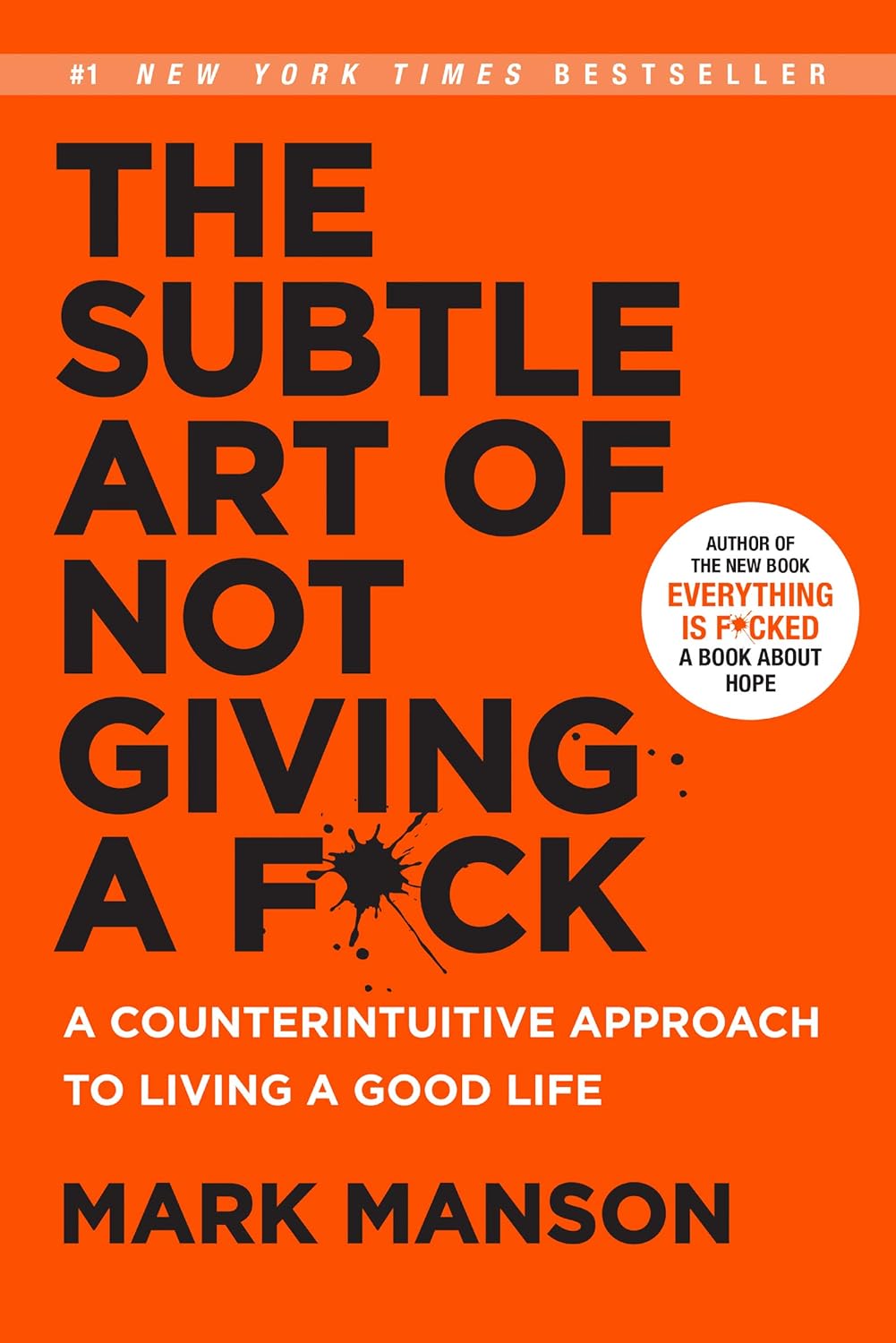
by Mark Manson
Life is a series of negotiations, and essential negotiation skills are at the heart of collaboration―whether you are a business executive, a salesperson, a parent , a community leader, or a spouse. As a former FBI hostage negotiator, Chris Voss gives you the tools for effective persuasion in any situation: negotiating a business deal, buying (or selling) a car, negotiating a salary, acquiring a home, renegotiating rent, deliberating with your partner, or communicating with your children. Taking the power of tactical empathy, active listening, and intuition to the next level, Never Split the Difference gives you the competitive edge in any difficult conversation or conflict resolution scenario. This book is a masterclass in influencing others, no matter the circumstances.

by John Eric Adair
Develop your Leadership Skills is John Adair's most accessible title on leadership. Full of exercises and checklists, it can help to boost confidence levels and guide and inspire anyone on their journey to becoming a leader of excellence.Acknowledged as a world expert, John Adair offers stimulating insights into recognizing and developing individual leadership qualities, aquiring personal authority, and most importantly, mastering core leadership functions such as planning, communicating and motivating.Suitable for anyone who wishes to improve or develop their leadership skills, this guide distils the essence of John Adair's teaching and provides a framework for becoming an effective leader.
by Claude M. Bristol
"One of the greatest inspirational and motivational books ever written." — Norman Vincent Peale In this bestselling self-help book, a successful businessman reveals the secrets behind harnessing the unlimited energies of the subconscious. Millions of readers have benefited from these visualization techniques, which show you how to turn your thoughts and dreams into actions that can lead to enhanced income, happier relationships, increased effectiveness, heightened influence, and improved peace of mind. World War I veteran Claude M. Bristol (1891–1951) wrote The Magic of Believing to help former soldiers adjust to civilian life. A pioneer of the New Thought movement and a popular motivational speaker, Bristol addressed those in all walks of life, from politicians and leaders to performers and salespeople. His timeless message of the powers of focused thinking and self-affirmation remains a vital source of inspiration and a practical path to achievement.

by David Brooks
#1 NEW YORK TIMES BESTSELLER With unequaled insight and brio, New York Times columnist David Brooks has long explored and explained the way we live. Now Brooks turns to the building blocks of human flourishing in a multilayered, profoundly illuminating work grounded in everyday life. This is the story of how success happens, told through the lives of one composite American couple, Harold and Erica. Drawing on a wealth of current research from numerous disciplines, Brooks takes Harold and Erica from infancy to old age, illustrating a fundamental new understanding of human nature along the way: The unconscious mind, it turns out, is not a dark, vestigial place, but a creative one, where most of the brain’s work gets done. This is the realm where character is formed and where our most important life decisions are made—the natural habitat of The Social Animal. Brooks reveals the deeply social aspect of our minds and exposes the bias in modern culture that overemphasizes rationalism, individualism, and IQ. He demolishes conventional definitions of success and looks toward a culture based on trust and humility. The Social Animal is a moving intellectual adventure, a story of achievement and a defense of progress. It is an essential book for our time—one that will have broad social impact and will change the way we see ourselves and the world.

by Daniel Coyle
NEW YORK TIMES BESTSELLER • The author of The Talent Code unlocks the secrets of highly successful groups and provides tomorrow’s leaders with the tools to build a cohesive, motivated culture. “A truly brilliant, mesmerizing read that demystifies the magic of great groups.”—Adam Grant, author of Think Again A BLOOMBERG AND LIBRARY JOURNAL BEST BOOK OF THE YEAR Where does great culture come from? How do you build and sustain it in your group, or strengthen a culture that needs fixing? In The Culture Code, Daniel Coyle goes inside some of the world’s most successful organizations—including the U.S. Navy’s SEAL Team Six, IDEO, and the San Antonio Spurs—and reveals what makes them tick. He demystifies the culture-building process by identifying three key skills that generate cohesion and cooperation, and explains how diverse groups learn to function with a single mind. Drawing on examples that range from Internet retailer Zappos to the comedy troupe Upright Citizens Brigade to a daring gang of jewel thieves, Coyle offers specific strategies that trigger learning, spark collaboration, build trust, and drive positive change. Coyle unearths helpful stories of failure that illustrate what not to do, troubleshoots common pitfalls, and shares advice about reforming a toxic culture. Combining leading-edge science, on-the-ground insights from world-class leaders, and practical ideas for action, The Culture Code offers a roadmap for creating an environment where innovation flourishes, pro
by Jenny Lawson
Warm, insightful, and witty, the first book of advice from New York Times bestselling author Jenny Lawson—aka the Bloggess Jenny Lawson is full of contradictions. She’s a celebrated author but battles self-doubt, paralysis, and anxiety. She’s an award-winning humorist but struggles with treatment-resistant depression. The questions people most often ask her are, “How do you do it? How do you keep going even when it feels impossible? How do you keep creating?” This book is her answer. In How to Be Okay When Nothing Is Okay, Jenny shares more than one hundred humorous, heartfelt, and genuine tools and tricks that she relies on to keep her going even when her brain isn’t working properly due to depression, anxiety, and ADHD. She also offers tips to stay passionate and focused on creative endeavors, especially when everything around you is saying to give up. With chapters like “Wash Your Brain More Than You Wash Your Bra” (sleep, you beautiful human), “Working on Easy Mode Is Still Working” (asking for accommodations is okay!), “Celebrate Good Times, Come On!” (make it a habit to celebrate the good things), and many more, How to Be Okay When Nothing Is Okay is a balm and companion, reminding us all that we are not alone. It’s for anyone who struggles with self-doubt, guilt, motivation, and mental blocks and wants to rekindle their passion for creating. Funny, simple, empathetic, and full of hope, it will encourage you not to just survive but to find and curate joy in the face of difficult times.
by Matthew McKay
A Clear and Effective Approach to Learning DBT Skills First developed for treating borderline personality disorder, dialectical behavior therapy (DBT) has proven effective as treatment for a range of other mental health problems, especially for those characterized by overwhelming emotions. Research shows that DBT can improve your ability to handle distress without losing control and acting destructively. In order to make use of these techniques, you need to build skills in four key areas-distress tolerance, mindfulness, emotion regulation, and interpersonal effectiveness. The Dialectical Behavior Therapy Skills Workbook, a collaborative effort from three esteemed authors, offers straightforward, step-by-step exercises for learning these concepts and putting them to work for real and lasting change. Start by working on the introductory exercises and, after making progress, move on to the advanced-skills chapters. Whether you are a professional or a general reader, whether you use this book to support work done in therapy or as the basis for self-help, you'll benefit from this clear and practical guide to better managing your emotions. This book has been awarded The Association for Behavioral and Cognitive Therapies Self-Help Seal of Merit — an award bestowed on outstanding self-help books that are consistent with cognitive behavioral therapy (CBT) principles and that incorporate scientifically tested strategies for overcoming mental health difficulties. Used alone or in conjun
by Marshall B. Rosenberg
5,000,000 COPIES SOLD WORLDWIDE • TRANSLATED IN MORE THAN 35 LANGUAGES What is Violent Communication? If "violent" means acting in ways that result in hurt or harm, then much of how we communicate—judging others, bullying, having racial bias, blaming, finger pointing, discriminating, speaking without listening, criticizing others or ourselves, name-calling, reacting when angry, using political rhetoric, being defensive or judging who's "good/bad" or what's "right/wrong" with people—could indeed be called "violent communication." What is Nonviolent Communication? Nonviolent Communication is the integration of four things: • Consciousness: a set of principles that support living a life of compassion, collaboration, courage, and authenticity • Language: understanding how words contribute to connection or distance • Communication: knowing how to ask for what we want, how to hear others even in disagreement, and how to move toward solutions that work for all • Means of influence: sharing "power with others" rather than using "power over others" Nonviolent Communication serves our desire to do three things: • Increase our ability to live with choice, meaning, and connection • Connect empathically with self and others to have more satisfying relationships • Sharing of resources so everyone is able to benefit