
Top 15 in Self-Help
Argues that monitoring one's electronic business communication 24/7 is actually counterproductive and offers a plan for companies to take time to "disconnect" in order to boost their productivity.
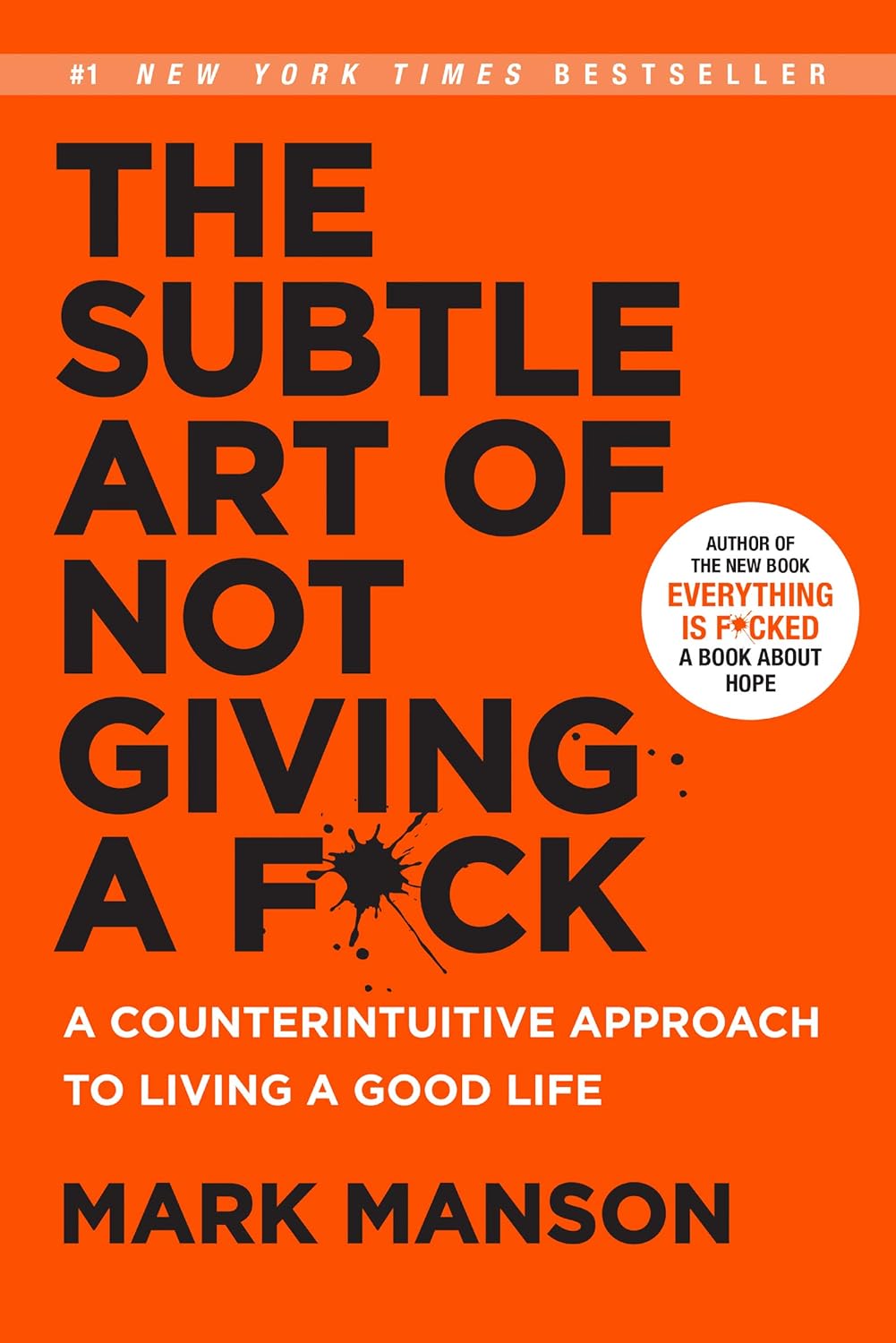
by Mark Manson
Life is a series of negotiations, and essential negotiation skills are at the heart of collaboration―whether you are a business executive, a salesperson, a parent , a community leader, or a spouse. As a former FBI hostage negotiator, Chris Voss gives you the tools for effective persuasion in any situation: negotiating a business deal, buying (or selling) a car, negotiating a salary, acquiring a home, renegotiating rent, deliberating with your partner, or communicating with your children. Taking the power of tactical empathy, active listening, and intuition to the next level, Never Split the Difference gives you the competitive edge in any difficult conversation or conflict resolution scenario. This book is a masterclass in influencing others, no matter the circumstances.
by Jenny Lawson
Warm, insightful, and witty, the first book of advice from New York Times bestselling author Jenny Lawson—aka the Bloggess Jenny Lawson is full of contradictions. She’s a celebrated author but battles self-doubt, paralysis, and anxiety. She’s an award-winning humorist but struggles with treatment-resistant depression. The questions people most often ask her are, “How do you do it? How do you keep going even when it feels impossible? How do you keep creating?” This book is her answer. In How to Be Okay When Nothing Is Okay, Jenny shares more than one hundred humorous, heartfelt, and genuine tools and tricks that she relies on to keep her going even when her brain isn’t working properly due to depression, anxiety, and ADHD. She also offers tips to stay passionate and focused on creative endeavors, especially when everything around you is saying to give up. With chapters like “Wash Your Brain More Than You Wash Your Bra” (sleep, you beautiful human), “Working on Easy Mode Is Still Working” (asking for accommodations is okay!), “Celebrate Good Times, Come On!” (make it a habit to celebrate the good things), and many more, How to Be Okay When Nothing Is Okay is a balm and companion, reminding us all that we are not alone. It’s for anyone who struggles with self-doubt, guilt, motivation, and mental blocks and wants to rekindle their passion for creating. Funny, simple, empathetic, and full of hope, it will encourage you not to just survive but to find and curate joy in the face of difficult times.

by Judy Blume
Jill goes along with the rest of the fifth-grade class in tormenting a classmate and then finds out what it is like when she, too, becomes a target.

by Mel Robbins
#1 New York Times Bestseller #1 Sunday Times Bestseller #1 Amazon Bestseller #1 Audible Bestseller This book was originally published with Mel Robbins as the sole author. A revised cover introduces her daughter, Sawyer Robbins, as the co-author. Customers will be shipped either of the covers at random. A Life-Changing Tool Millions of People Can’t Stop Talking About What if the key to happiness, success, and love was as simple as two words? If you've ever felt stuck, overwhelmed, or frustrated with where you are, the problem isn't you. The problem is the power you give to other people. Two simple words—Let Them—will set you free.

For every woman too tired, too busy or just too stressed to think of herself, this new, updated edition of Finding Time is an intimate, yet practical, guide to finding time. A treasure trove of time-honored techniques and inventive new ideas, Finding Time is ideal for every woman who finds herself doing more than there is time to do. Finding Time will help you: Say yes to yourself and no to others Schedule personal time Prioritize Limit interruptions
5,000,000 COPIES SOLD WORLDWIDE • TRANSLATED IN MORE THAN 35 LANGUAGES What is Violent Communication? If "violent" means acting in ways that result in hurt or harm, then much of how we communicate—judging others, bullying, having racial bias, blaming, finger pointing, discriminating, speaking without listening, criticizing others or ourselves, name-calling, reacting when angry, using political rhetoric, being defensive or judging who's "good/bad" or what's "right/wrong" with people—could indeed be called "violent communication." What is Nonviolent Communication? Nonviolent Communication is the integration of four things: • Consciousness: a set of principles that support living a life of compassion, collaboration, courage, and authenticity • Language: understanding how words contribute to connection or distance • Communication: knowing how to ask for what we want, how to hear others even in disagreement, and how to move toward solutions that work for all • Means of influence: sharing "power with others" rather than using "power over others" Nonviolent Communication serves our desire to do three things: • Increase our ability to live with choice, meaning, and connection • Connect empathically with self and others to have more satisfying relationships • Sharing of resources so everyone is able to benefit

A book to raise the spirits and warm the heart. Includes the famous Kindergarten essay that was read on the floor of the U.S. Senate.From the Hardcover edition.

by Chip Heath
#1 NEW YORK TIMES BESTSELLER • ONE MILLION COPIES SOLD! The ultimate guide to making changes and following through, from the authors of Made to Stick and Decisive—hailed as “witty and instructive” (The Wall Street Journal), “packed with examples and hands-on tools that will get you moving right away” (BusinessWeek) Why is it so hard to make lasting changes in our companies, in our communities, and in our own lives? The primary obstacle is a conflict that's built into our brains, say Chip and Dan Heath. Psychologists have discovered that our minds are ruled by two different systems—the rational mind and the emotional mind—that compete for control. The rational mind wants a great beach body; the emotional mind wants that Oreo cookie. The rational mind wants to change something at work; the emotional mind loves the comfort of the existing routine. This tension can doom a change effort—but if it is overcome, change can come quickly. In Switch, the Heaths show how everyday people—employees and managers, parents and nurses—have united both minds and, as a result, achieved dramatic results: • the lowly medical interns who managed to defeat an entrenched, decades-old medical practice that was endangering patients • the home-organizing guru who developed a simple technique for overcoming the dread of housekeeping • the manager who transformed a lackadaisical customer-support team into service zealots by removing a standard tool of customer service In a compelling, story-driven narrati
by Robin Sharma
Robin Sharma is known the world over as the man behind The Monk phenomenon, the #1 bestselling series of inspirational books spun around the engaging fable of a jet-setting lawyer who gives it all up to search for his best life. Well over a million copies of Sharma’s books have been sold, inspiring business people, parents and people from all walks of life to reach for -- and realize -- their highest potential. Now, in a remarkable book that will appeal to his legion of fans, as well as introduce him to a whole new audience, Robin Sharma has written a deeply personal guide that shares his own life journey, combined with 10 high-impact lessons for success. Readers will discover: how to transform fears into freedom lessons to find lasting happiness unique tools to build loving relationships powerful strategies to simplify life and reduce stress Rich with proven wisdom and packed with real-world examples, The Greatness Guide is an extraordinary resource for all those searching for peace, meaning and authentic success in every facet of their lives.

by David Brooks
#1 NEW YORK TIMES BESTSELLER With unequaled insight and brio, New York Times columnist David Brooks has long explored and explained the way we live. Now Brooks turns to the building blocks of human flourishing in a multilayered, profoundly illuminating work grounded in everyday life. This is the story of how success happens, told through the lives of one composite American couple, Harold and Erica. Drawing on a wealth of current research from numerous disciplines, Brooks takes Harold and Erica from infancy to old age, illustrating a fundamental new understanding of human nature along the way: The unconscious mind, it turns out, is not a dark, vestigial place, but a creative one, where most of the brain’s work gets done. This is the realm where character is formed and where our most important life decisions are made—the natural habitat of The Social Animal. Brooks reveals the deeply social aspect of our minds and exposes the bias in modern culture that overemphasizes rationalism, individualism, and IQ. He demolishes conventional definitions of success and looks toward a culture based on trust and humility. The Social Animal is a moving intellectual adventure, a story of achievement and a defense of progress. It is an essential book for our time—one that will have broad social impact and will change the way we see ourselves and the world.

This new edition of the most influential self-help book of the last century features updated information from the author's daughter, with timeless advice on topics such as effective communication and navigating social situations.

NEW YORK TIMES BESTSELLER • MORE THAN 3 MILLION COPIES SOLD • This instant classic explores how we can change our lives by changing our habits. “Few [books] become essential manuals for business and living. The Power of Habit is an exception.”—Financial Times A WALL STREET JOURNAL AND FINANCIAL TIMES BEST BOOK OF THE YEAR In The Power of Habit, award-winning business reporter Charles Duhigg takes us to the thrilling edge of scientific discoveries that explain why habits exist and how they can be changed. Distilling vast amounts of information into engrossing narratives that take us from the boardrooms of Procter & Gamble to the sidelines of the NFL to the front lines of the civil rights movement, Duhigg presents a whole new understanding of human nature and its potential. At its core, The Power of Habit contains an exhilarating argument: The key to exercising regularly, losing weight, being more productive, and achieving success is understanding how habits work. As Duhigg shows, by harnessing this new science, we can transform our businesses, our communities, and our lives. With a new Afterword by the author

From the #1 New York Times-bestselling author of The 48 Laws of Power comes the definitive new book on decoding the behavior of the people around you. This is the only authorized paperback edition in the US. Robert Greene is a master guide for millions of readers, distilling ancient wisdom and philosophy into essential texts for seekers of power, understanding and mastery. Now he turns to the most important subject of all - understanding people's drives and motivations, even when they are unconscious of them themselves. We are social animals. Our very lives depend on our relationships with people. Knowing why people do what they do is the most important tool we can possess, without which our other talents can only take us so far. Drawing from the ideas and examples of Pericles, Queen Elizabeth I, Martin Luther King Jr, and many others, Greene teaches us how to detach ourselves from our own emotions and master self-control, how to develop the empathy that leads to insight, how to look behind people's masks, and how to resist conformity to develop your singular sense of purpose. Whether at work, in relationships, or in shaping the world around you, The Laws of Human Nature offers brilliant tactics for success, self-improvement, and self-defense.
A Clear and Effective Approach to Learning DBT Skills First developed for treating borderline personality disorder, dialectical behavior therapy (DBT) has proven effective as treatment for a range of other mental health problems, especially for those characterized by overwhelming emotions. Research shows that DBT can improve your ability to handle distress without losing control and acting destructively. In order to make use of these techniques, you need to build skills in four key areas-distress tolerance, mindfulness, emotion regulation, and interpersonal effectiveness. The Dialectical Behavior Therapy Skills Workbook, a collaborative effort from three esteemed authors, offers straightforward, step-by-step exercises for learning these concepts and putting them to work for real and lasting change. Start by working on the introductory exercises and, after making progress, move on to the advanced-skills chapters. Whether you are a professional or a general reader, whether you use this book to support work done in therapy or as the basis for self-help, you'll benefit from this clear and practical guide to better managing your emotions. This book has been awarded The Association for Behavioral and Cognitive Therapies Self-Help Seal of Merit — an award bestowed on outstanding self-help books that are consistent with cognitive behavioral therapy (CBT) principles and that incorporate scientifically tested strategies for overcoming mental health difficulties. Used alone or in conjun